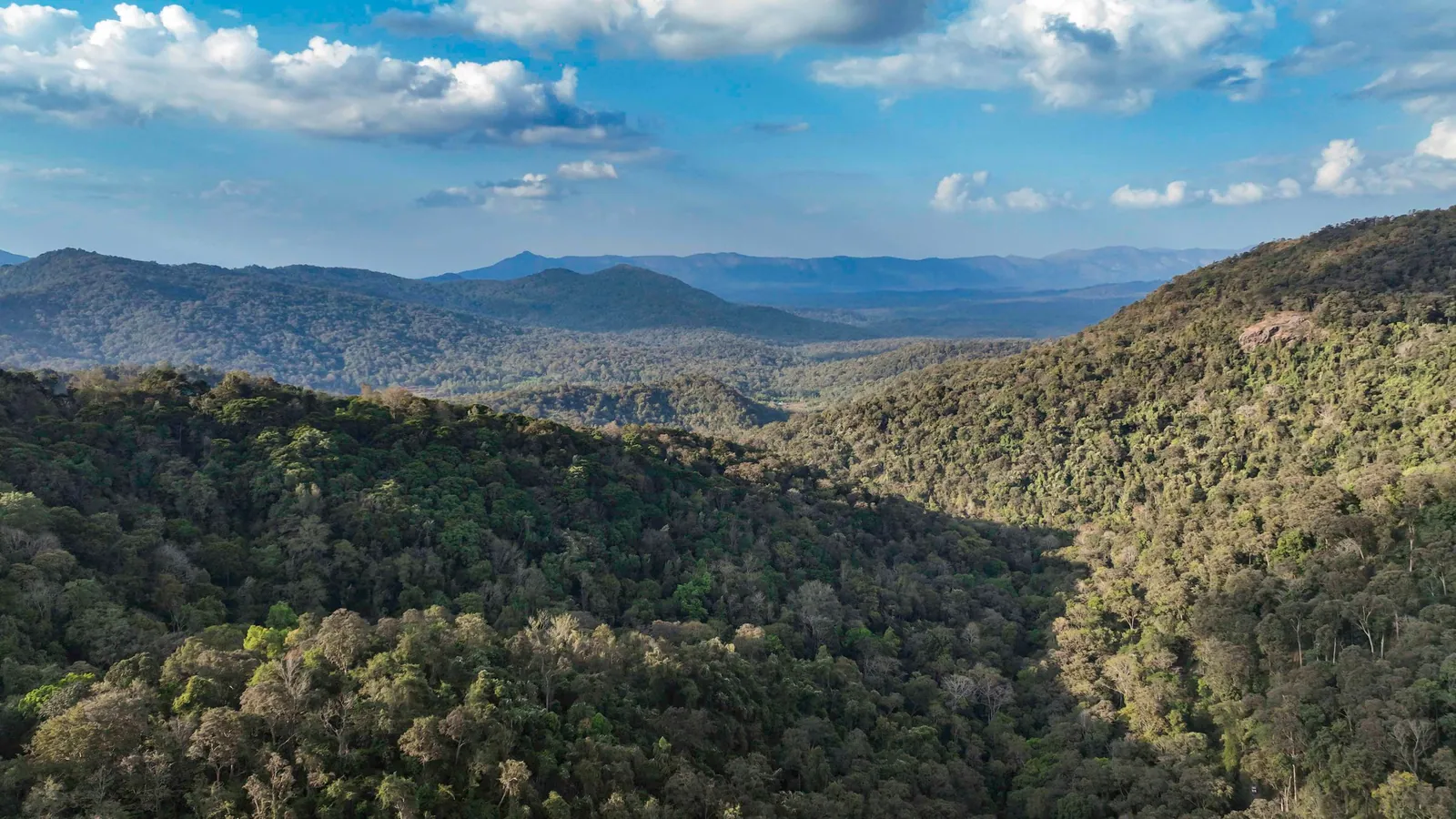
Monsoon transforms India's trekking trails — parched hills turn emerald green, waterfalls that are dry for nine months of the year come alive, and the air is cool and clean. It's also the season that demands the most respect: slippery rock, flash floods, and leeches. Here are the best monsoon treks across the Sahyadris, Western Ghats, and Himalayan foothills, along with the safety rules that make rainy-season trekking enjoyable instead of risky.
The monsoon season, roughly June to September, is when the Sahyadris and the wider Western Ghats are at their most dramatic. Every fold of the hills grows a waterfall that simply doesn't exist for the other nine months of the year, the sun-baked plateaus of March and April turn overnight into carpets of grass and wildflowers, and temperatures drop into a genuinely pleasant range even in the afternoon. It's a completely different trekking experience from the dry, clear-air winter season — mist rolls through valleys, visibility comes and goes in minutes, and the whole character of a trail changes with a single downpour. That's part of the appeal, but it also means monsoon trekking rewards short, well-known trails over long summit pushes, since conditions can shift faster than they do at any other time of year.
What makes monsoon trekking worth the extra caution is the sheer sensory contrast with every other season. Trails that feel dusty and ordinary in winter turn into something closer to a rainforest walk — moss climbs up rock faces, streams that don't exist the rest of the year cut fresh channels across the path, and the air smells distinctly of wet earth and crushed grass. Photographers chase this season specifically for the clouds sitting inside valleys rather than above them, and for waterfalls running at a volume no dry-season visit could match. The trade-off is that this same water is exactly what makes monsoon trekking riskier than any other season, which is why the treks below are chosen partly for scenery and partly because their trails, campsites, and access roads are established enough to handle the rain without becoming genuinely dangerous.
- Devkund Waterfall (Maharashtra) — a two-tiered waterfall trek near Bhira
- Kalu Waterfall (Maharashtra) — one of the tallest waterfall treks near Mumbai
- Sandhan Valley (Maharashtra) — the 'Valley of Shadows' canyon trek, monsoon needs caution
- Rajmachi Fort (Maharashtra) — a classic monsoon fort trek near Lonavala
- Kudremukh (Karnataka) — lush rolling grasslands in the Western Ghats
- Kumara Parvatha (Karnataka) — a demanding but stunningly green Western Ghats trek
- Valley of Flowers (Uttarakhand) — a rare Himalayan trek that peaks in monsoon (July-August)
Sahyadri & Maharashtra Monsoon Treks
Devkund Waterfall, near Bhira, is the trek most people in Mumbai and Pune reach for first once the rains set in — an easy-to-moderate walk through paddy fields and forest that opens up to a twin-cascade waterfall dropping into a wide pool. Kalu Waterfall, closer to Tungarli and Lonavala, asks more of you: it's a longer, more demanding trek better suited to trekkers who already have a monsoon season or two behind them.
Sandhan Valley, the dramatic canyon trek near Bhandardara nicknamed the 'Valley of Shadows', is at its most photogenic in the rains but also its most dangerous — water levels inside the canyon can rise with startling speed, so it's often restricted during heavy spells. Rajmachi Fort offers a gentler alternative: a forested trail near Lonavala with two forts, Shrivardhan and Manaranjan, to explore once you're up.
Further afield, Harishchandragad and Kalsubai are both doable in monsoon for the cloud cover and greenery, but the famous iron ladders and rock sections on both get genuinely slippery in the wet, so they call for grippy footwear and a slower, more deliberate pace.
- Devkund: easy-moderate, twin-cascade waterfall
- Kalu Waterfall: longer, for experienced monsoon trekkers
- Sandhan Valley: caution — flash flood risk
- Rajmachi Fort: gentle, forested, two forts
Western Ghats Monsoon Treks (Karnataka & Beyond)
Kudremukh's rolling, grass-covered hills turn a vivid, almost unreal green during the Karnataka monsoon, and on the clear stretches between showers the ridge-line views stretch further than you'd expect from a range this dense with cloud.
Kumara Parvatha, one of Karnataka's toughest treks in any season, becomes something else entirely in the rains — the forest and grassland sections turn lush and alive, but the same rain makes the already-difficult stretches slippery enough that this one is best left to fit, experienced trekkers.
For something gentler, the shorter forest walks and coffee-estate trails around Coorg and Chikmagalur are especially scenic in monsoon mist, with waterfalls tucked into nearly every estate boundary and a pace relaxed enough for a first-time visitor.
- Kudremukh: rolling grasslands, moderate
- Kumara Parvatha: tough, experienced trekkers only
- Coorg/Chikmagalur: gentle estate walks
Himalayan Foothill Options
The Himalayas mostly sit this season out, but there's one striking exception. Valley of Flowers, the UNESCO World Heritage site in Uttarakhand, is at its absolute best during monsoon — specifically from July to early September, when hundreds of alpine flower species bloom across the valley floor.
It's the rare Himalayan trek where monsoon isn't a season to avoid but the entire reason to go. Almost everywhere else in the Himalayan belt, peak monsoon (July-August) is best avoided altogether, since landslide-prone roads and swollen rivers make many approaches genuinely unsafe.
If you're set on a Himalayan trek during this window, Valley of Flowers or a rain-shadow region like Spiti is the far safer choice, since both lie largely outside the reach of the heaviest rain.
- Valley of Flowers: best July-early September
- Rain-shadow alternative: Spiti/Ladakh
- Avoid: most other Himalayan routes in Jul-Aug
Planning a Monsoon Trek: Timing and Group Choices
Weekday monsoon treks to the popular Sahyadri waterfalls are worth considering if your schedule allows it — the same trails that feel comfortably busy on a Saturday can be genuinely overcrowded on a rainy Sunday, with queues forming at narrow rock sections and waterfall viewpoints.
It's also the one season where going with an experienced local organiser makes an outsized difference, since local groups usually know which trails have flooded recently, which river crossings are currently unsafe, and which routes to swap in if the weather doesn't cooperate.
Weather in the Sahyadris and Western Ghats during monsoon can vary dramatically over a short distance — one valley might be in bright sunshine while the next is under a downpour — so treat any single forecast as a rough guide and build flexibility into your plan.
Gear That Actually Matters in the Rain
Monsoon trekking has its own gear priorities, and getting them right changes the entire experience. A genuinely waterproof rain jacket beats a cheap poncho on longer treks, since a poncho flaps in wind and offers little protection on scrambling sections, but a poncho remains the better, cheaper choice for a short, easy waterfall trek.
Quick-dry synthetic clothing is worth the investment over cotton, which stays wet and heavy for hours once soaked and does nothing for warmth in the process. Footwear deserves the most thought of all: trail shoes with deep, aggressive tread outperform regular sports shoes by a wide margin on wet rock.
Some monsoon trekkers switch to amphibious or quick-drain shoes so stream crossings stop being something to route around. Finally, a simple dry sack wrapped around a spare set of clothes is the cheapest insurance against finishing a trek cold and wet.
- Rain jacket over poncho for scrambling treks
- Quick-dry synthetics, not cotton
- Deep-tread trail shoes for wet rock
- Dry sack for spare clothes & electronics
Making the Call: Should You Go This Weekend?
Deciding whether to actually go ahead with a monsoon trek this weekend comes down to a handful of practical checks rather than gut feeling. Look at rainfall over the previous 48 to 72 hours in the region, not just the forecast for the day itself, since ground already saturated from earlier rain reacts very differently to a fresh downpour than dry ground does — this is exactly why river and stream levels can rise fast even under a clear morning sky. Cross-check any official landslide or trail advisories for the specific district you're heading to, since Maharashtra's forest and district authorities occasionally close specific routes like Sandhan Valley during heavy spells, and showing up regardless wastes the trip. If you're trekking with a local organiser, ask directly whether they've run the route in the past week and what conditions were like, since their on-ground read is usually more current and more useful than any app-based forecast. And if the honest answer to all of this is uncertainty, treat that as a signal to pick a shorter, lower-risk trail rather than the ambitious one you had originally planned — the Sahyadris and Western Ghats aren't going anywhere, and there's always next weekend.
Food, Recovery, and the Post-Trek Drive Home
Monsoon treks tend to leave you colder and more depleted than the distance alone would suggest, since staying wet for hours burns through body heat and energy faster than a dry winter trek of the same length.
Carrying something warm in a flask — tea, soup, or hot water with ginger — makes a real difference on the way down, and most popular Sahyadri trailheads have small local stalls selling hot bhajji and chai that are part of the ritual.
It's worth changing into dry clothes as soon as you're off the trail, both for comfort and to avoid a chill on the ride home. Monsoon roads can also be slower and more unpredictable, especially on ghat sections, so build extra time into your return journey.
Monsoon Trekking Etiquette and Environmental Impact
The same rain that makes monsoon trekking beautiful also makes the trails and forests more fragile than usual, and it's worth trekking a little more carefully because of it. Wet soil and fresh growth on Sahyadri and Western Ghats trails erode and get trampled far more easily than the hardened, dry-season ground, so sticking to established paths matters more in monsoon than at any other time of year.
Waterfall trekking spots in particular have seen real damage from plastic waste and litter left behind by the surge of monsoon-season visitors, so carrying your trash back out genuinely helps keep these places worth visiting for the next monsoon.
It's also worth being mindful around local villages on routes like Rajmachi or Sandhan Valley, where a little courtesy — from asking before photographing people to buying tea and snacks from local stalls — goes a long way toward keeping the relationship between trekkers and these communities a good one.
Frequently Asked Questions
Chase the Monsoon Greens
Discover upcoming monsoon treks and waterfall hikes near you, and connect with trek groups on TrekVerse.
Explore TreksMonsoon Trekking Safety Tips
Monsoon trekking is genuinely rewarding, but the risk profile is different from any other season, and it pays to plan around that rather than trek the way you would in winter. The single biggest danger is water: never attempt to cross a swollen stream or river, since levels can rise suddenly from rain falling upstream even on a day that looks calm where you're standing, and it's always worth checking local weather and landslide advisories before setting out, especially for canyon treks like Sandhan Valley or any Himalayan foothill route. Footwear and clothing matter more than usual too — wear trekking shoes with deep, grippy soles, since smooth soles turn wet rock and mud into a real hazard, and carry a proper rain jacket or poncho along with a rucksack rain cover, because staying dry is what actually prevents hypothermia even in weather that feels warm. On forested Western Ghats trails, use anti-leech socks or tie your pant legs and dust your socks with salt or tobacco powder, and build your day around finishing before dark, since monsoon daylight is shorter under heavy cloud cover and a slippery descent in fading light is a genuinely bad combination. Pack a dry bag or waterproof pouch for your phone, wallet, and any electronics — a single unexpected downpour can otherwise end a trek early for reasons that have nothing to do with fitness or trail conditions. As with any season, trek in a group where possible and let someone know your planned route and expected return time, and if the weather turns markedly worse than forecast, treat turning back as the safe and sensible choice rather than a failure of the trip.
More Monsoon Trekking Guides
Plan your monsoon trek with these TrekVerse resources: