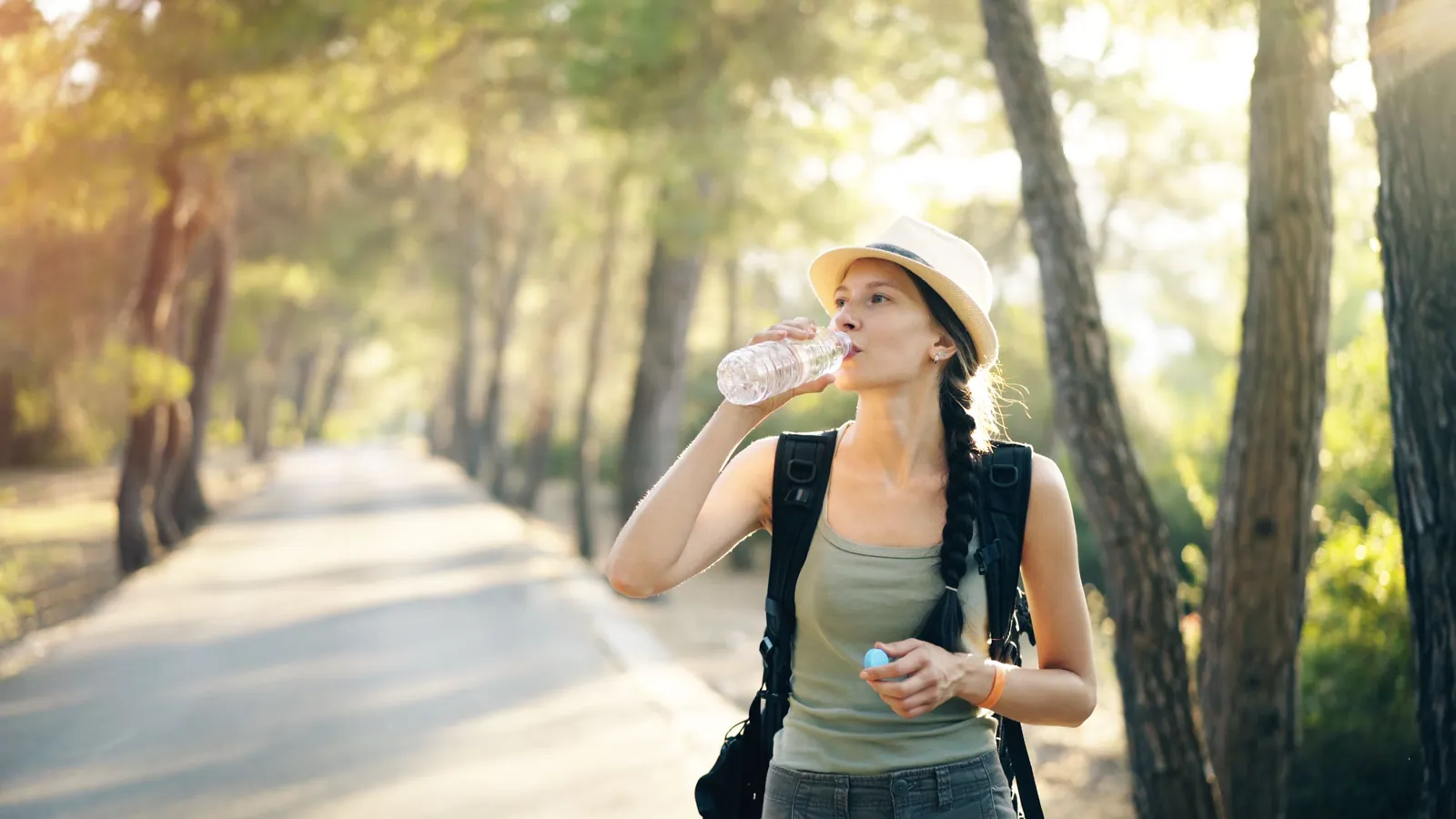
Hydration is the gear category people think least about and get wrong most often. Dehydration is behind a large share of the headaches, cramps and 'I just couldn't finish' stories on Indian trails - and almost all of it comes down to carrying too little water, or carrying it somewhere too annoying to reach. This guide covers how much to carry, what to carry it in, and how to refill safely.
The rule that matters more than any product recommendation: you drink what is easy to reach. A litre buried at the bottom of your rucksack is a litre you will not drink. Access beats capacity every time.
Beyond that, the choice is straightforward. Bottles for control and simplicity, bladders for volume and constant sipping, insulation if you are on an exposed summer trail, and a purification method the moment you plan to refill from anything that is not a sealed bottle.
How to Choose - Quick Decision Guide
- Short Sahyadri day trek, summer: one insulated 1-litre steel bottle plus one 1-litre plastic bottle.
- Monsoon Sahyadri trek: two 1-litre plastic bottles. Insulation is pointless in the rain and you will want the lower weight.
- Long day trek (6+ hours): 2-litre bladder plus a 1-litre bottle in a side pocket.
- Himalayan multi-day trek: 2-litre bladder plus a 1-litre wide-mouth bottle, chlorine dioxide tablets, and an insulated hose sleeve if it is a winter trail.
- Budget setup that works: two BPA-free 1-litre bottles and a strip of purification tablets. This covers ninety percent of Indian treks.
Season by Season
Summer (March to May) is when hydration planning matters most - carry insulated bottles, add 500 ml to your usual load, and start the trek early enough to be off exposed sections by mid-morning. In the monsoon, carry less water but more purification, because streams are everywhere and so is runoff contamination. On winter Himalayan trails, the risk inverts entirely: people drink far too little because cold water is unappealing, so carry an insulated bottle and fill it with warm water at camp.
How Much Water to Actually Carry
Capacity planning first - the container follows from it, not the other way round.
- Baseline: roughly 500 ml per hour of active walking. Increase it in heat, on exposed ridges, and when carrying a heavy pack.
- Sahyadri day trek (5-6 hours, summer): 2.5 to 3 litres, with no reliable refill on most fort trails.
- Sahyadri monsoon trek: 2 litres is usually enough - humidity is high but temperatures are much lower, and streams are everywhere.
- Himalayan trek day: 3 litres a day is the standard baseline. At altitude you lose a lot of water through respiration and barely feel thirsty, which is exactly why people get dehydrated up there.
- Multi-day trek with campsite sources: carry 2 litres on the move and refill at camp rather than carrying the whole day's supply.
- Add 500 ml for anyone new to trekking. Beginners consistently underestimate, and the group leader ends up sharing their supply.
One litre of water weighs one kilogram. Water is usually the single heaviest thing in a day pack, so plan it deliberately rather than by habit.
Hydration Bladders: When They Are Worth It
- The strong case for a bladder: the bite valve sits on your shoulder strap, so you sip constantly instead of stopping. On long, hot days this measurably increases how much you drink.
- Sizes: 2 litres is the standard trekking size; 3 litres for long Himalayan days; 1.5 litres for short treks and trail runs.
- Check your rucksack has a hydration sleeve and a hose port before buying. Most trekking packs from Decathlon, Wildcraft and the imported brands do; cheap daypacks often do not.
- Downsides worth knowing: you cannot see how much is left without stopping and pulling it out, cleaning is a chore, and a punctured bladder soaks everything in your pack.
- Cleaning matters. Rinse and dry after every trek, and store it in the freezer between trips if you cannot dry it fully - that is what stops the mould that ruins most bladders.
- In freezing Himalayan conditions the hose freezes before the reservoir does. Blow the water back into the bladder after each sip, or use an insulated hose sleeve.
Bottles: Materials and What to Buy
- Insulated stainless steel (double-wall vacuum): keeps water cold 8-12 hours or hot overnight. The best choice for summer Sahyadri day treks and for carrying tea on winter trails. Costs weight - roughly 350-450 g empty for a litre.
- Hard plastic, BPA-free Tritan or HDPE: light, cheap, tough, and the sensible default when you need three litres. Wide-mouth versions are far easier to refill from a stream and to clean.
- Collapsible soft flasks: extremely light and they shrink as you drink. Good as a supplementary litre; not durable enough as your only bottle.
- Single-wall steel: avoid for trekking. It carries the weight penalty of steel with none of the insulation benefit, and it gets uncomfortably hot in the sun.
- Avoid thin single-use PET bottles as your main container. They split at the neck, leak into your pack and are the most common source of trail litter in the Sahyadris.
- Wide mouth versus narrow mouth: wide mouth for refilling, cleaning and adding electrolyte powder; narrow mouth for drinking while walking without spilling. Wide mouth with a separate flip-cap lid gets you both.
The Setup Most Experienced Trekkers Actually Use
The common configuration on Indian trails is a 2-litre bladder in the pack for constant sipping plus a 1-litre bottle in a side pocket. The bladder does the volume work; the bottle lets you see how much you have left, share water, mix electrolytes and refill quickly at a stream without unpacking.
On short Sahyadri day treks, two 1-litre bottles in the side pockets is simpler and completely adequate. Save the bladder for days over five hours or for Himalayan trails.
Whatever you choose, make sure at least one litre is reachable without taking the pack off. That single detail changes how much you drink more than any product choice.
Purifying Water on the Trail
The moment you plan to refill from a stream, a village tap or a campsite source, you need a purification method. Indian trail water carries bacterial and protozoal risk almost everywhere, and Giardia on a Himalayan trek will end your trip.
- Chlorine dioxide tablets: lightest and cheapest, effective against bacteria, viruses and Giardia. Needs 30 minutes contact time (four hours for Cryptosporidium). The default for most Indian trekkers.
- Squeeze or straw filters (hollow-fibre): fast, no waiting, and removes bacteria and protozoa - but not viruses. Fine for high-altitude streams, less so for water downstream of villages.
- Boiling: the most reliable method if you already carry a stove. A rolling boil for one minute is enough; make it three minutes above 2,000 m.
- UV pens: effective and fast, but they need clear water and working batteries, and both fail in the cold.
- Pre-filter visibly silty water through a bandana or coffee filter before treating it. Chemicals and UV both work poorly in cloudy water.
- Refill from moving water above any habitation, never from a stagnant pool or downstream of a village or grazing area.
Electrolytes: The Part People Skip
- On long, hot days you lose salt as well as water. Drinking plain water alone can leave you cramping and headachy despite drinking plenty.
- ORS sachets are cheap, available at every pharmacy in India, and completely adequate. One sachet in a litre, once or twice on a hot day.
- Electrolyte tablets and powders are more palatable and easier to carry, and worth it if plain ORS puts you off drinking.
- Nimbu-sharbat, lemon-salt-sugar water in a bottle, does the same job for almost nothing and tastes better than any of the above.
- Skip sugary energy drinks as your main hydration - the sugar load slows absorption and leaves you thirstier.
- Signs you have got it wrong: headache, cramping calves, dark urine, or a sudden drop in pace in the last hour. All three usually resolve with water plus salt, not water alone.
Common Hydration Mistakes
- Carrying water where you cannot reach it. The single biggest cause of under-drinking on trails.
- Waiting until you feel thirsty. Thirst lags dehydration, and at altitude it barely registers at all.
- Drinking a litre at the summit instead of sipping through the climb. Your body cannot absorb it that fast.
- Carrying five litres 'to be safe' on a three-hour trek. Five kilograms of unnecessary weight will cost you more than it saves.
- Sharing a bite valve. Easy way to pass around whatever the group has.
- Leaving a bladder wet in a dark pack between treks. It will be mouldy and unusable by the next trip.
- Carrying disposable PET bottles and leaving them on the trail. Every Sahyadri fort has a plastic problem, and it comes almost entirely from day trekkers.
Hydration Safety Notes
- Never drink untreated water downstream of a village, campsite or grazing area, however clear it looks.
- Watch for hyponatremia on very long, hot days: drinking large volumes of plain water without any salt is genuinely dangerous. Add electrolytes on anything over four hours in heat.
- Dark urine, headache and cramping are early dehydration signs. Confusion, stumbling or stopping sweating are emergency signs - stop, shade the person, and rehydrate slowly with an ORS solution.
- At altitude, increase intake before you feel you need it. Dehydration makes AMS symptoms noticeably worse.
- Carry an extra half litre for the group if you are leading beginners. Someone will run out.
- Do not rely on a single bladder as your only water container on a multi-day trek. If it punctures, you have nothing.
Frequently Asked Questions
Keep Reading
More trekking gear guides:
Final Thoughts
You do not need expensive hydration gear. Two good one-litre bottles, a strip of purification tablets and an ORS sachet will cover almost every trek in India, and cost less than a single branded insulated flask.
What you do need is a plan: how many litres, where they sit on your body, and how you refill. Get those three right and hydration stops being the thing that ends your day early.
- Roughly 500 ml per hour of walking; 3 litres a day at altitude.
- At least one litre reachable without removing your pack.
- Purification tablets the moment you plan to refill from a stream.
- ORS or electrolytes on anything long and hot.