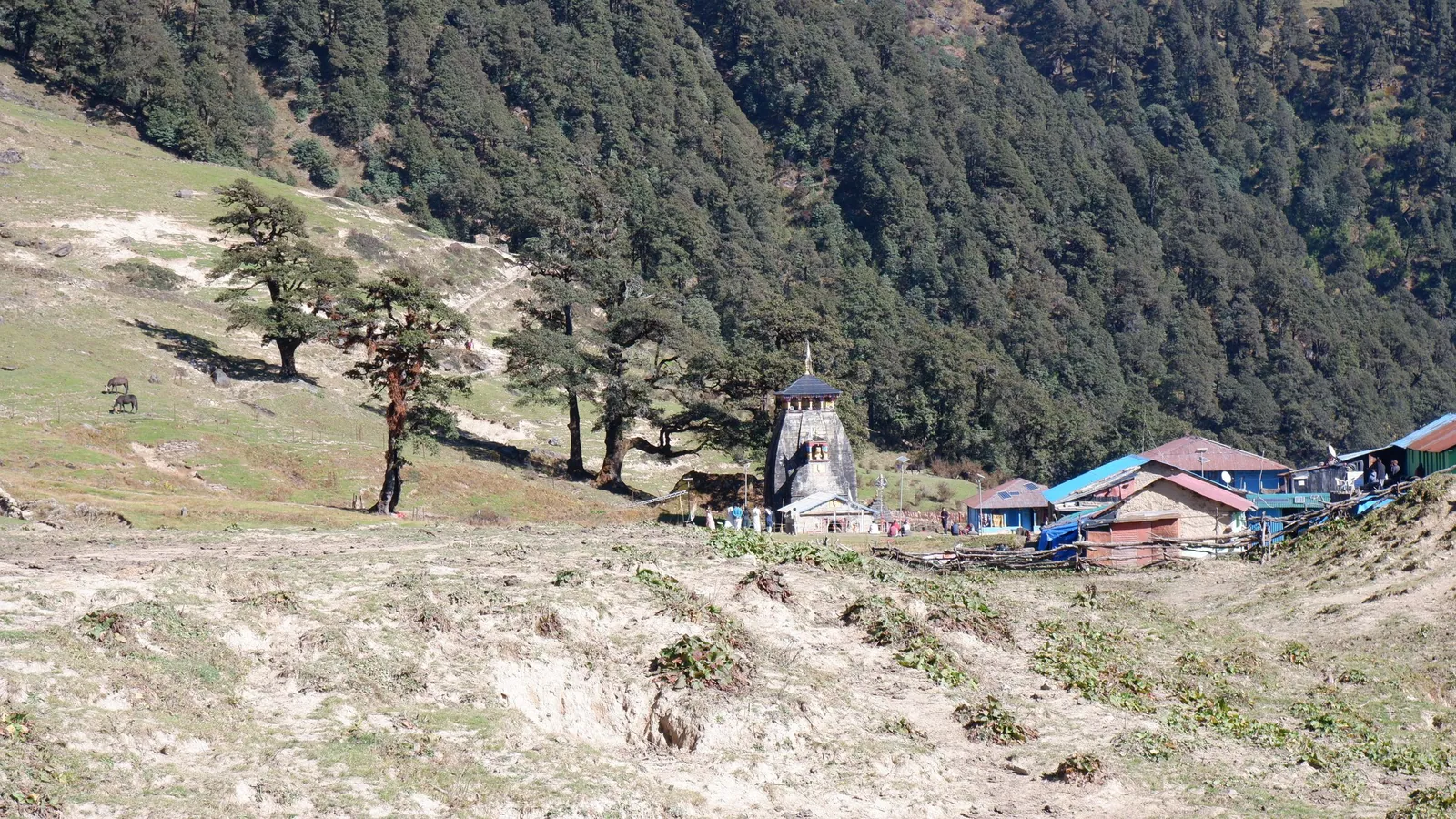
If you have only a few days and want a real Himalayan summit with views to match, Chopta is the answer. From a meadow camp in the forest, a paved path climbs to Tungnath, the highest Shiva temple in the world and one of the Panch Kedar, and a short, steep scramble beyond it reaches the summit of Chandrashila at about 4,000 m. The panorama, from Nanda Devi and Trishul to Chaukhamba and Kedarnath, is one of the finest in Uttarakhand.
At a Glance
- Chopta: about 2,600-2,700 m, a meadow and forest camp area in Rudraprayag district
- Tungnath temple: about 3,680 m
- Chandrashila summit: about 4,000 m
- Distance: about 3.5 km from Chopta to Tungnath, then about 1.5 km to Chandrashila
- Time: 3 to 4 hours up, 2 to 3 hours down
- Difficulty: easy to Tungnath; moderate and steep to Chandrashila
Getting to Chopta
Most people reach Chopta from Rishikesh or Haridwar, a drive of about 7 to 9 hours via Devprayag, Rudraprayag and Ukhimath. There are basic guesthouses and camps at Chopta and in nearby Sari and Ukhimath. Arriving the day before your climb gives you a night at around 2,600 m, which helps with the altitude.
Chopta to Tungnath
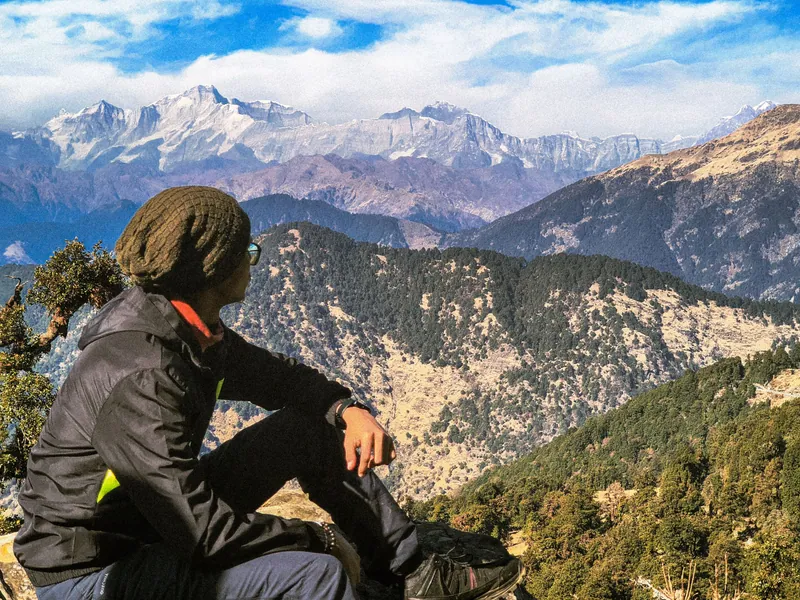
From the road at Chopta a wide, stone-paved path climbs through rhododendron and oak forest and then across open bugyal meadows to Tungnath. It is steady and well made, with tea stalls on the way, and is walked by pilgrims of every age. Take it slowly: you gain about 1,000 m, and the altitude is noticeable near the top.
Tungnath is one of the Panch Kedar, the five temples associated with the Pandavas, and is believed to be over a thousand years old. It is small, made of dark stone, and perched on a ridge with a remarkable view.
Tungnath to Chandrashila
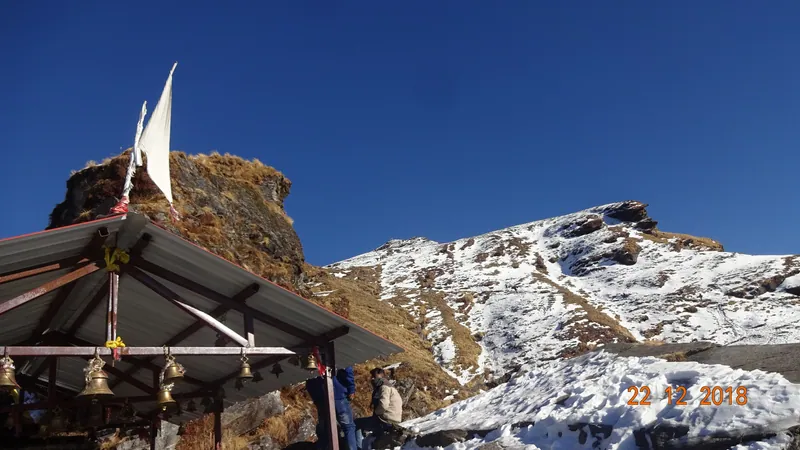
Beyond the temple, a narrower, steeper path climbs about 300 m in roughly 1.5 km to the summit of Chandrashila, the 'moon rock'. There is a small temple on top and a 360-degree view: Nanda Devi, Trishul, Kedarnath, Chaukhamba, Bandarpunch and many more on a clear morning.
Many trekkers start in the dark to reach Chandrashila for sunrise. In winter the upper path is often under snow and can be icy; microspikes and a guide are sensible then.
When the Temple Closes
Tungnath closes for winter, usually around the time of Diwali or shortly after, and the deity is carried down to Makkumath for the winter months. It reopens in spring, typically in late April or May; the exact dates are announced each year by the temple committee.
The trek itself remains possible through much of the winter, and the snowy route to Chandrashila is popular from December to March, but the temple will be closed and facilities on the path fewer.
Best Time to Go
- April to June: rhododendrons and clear mornings; the temple opens
- July to August: monsoon cloud, rain and landslide risk on the roads
- September to November: the clearest views of the year
- December to March: snow trek; very cold, temple closed
Add-Ons
- Deoriatal: a lake near Sari village with a reflection of the Chaukhamba massif, about 3 km from Sari
- Ukhimath: the winter seat of Kedarnath
- Kartik Swami: a ridge-top temple near Rudraprayag with wide views
What to Carry
- Warm layers and a windproof jacket; Chandrashila is cold and windy at dawn
- A headlamp for a sunrise start
- Microspikes in winter
- Water and snacks; stalls may be shut early or late in the season
- Cash; ATMs are limited beyond Ukhimath
Frequently Asked Questions
Find a Chopta Trek
Browse Chopta, Tungnath and Chandrashila departures, including winter snow treks.
Browse Upcoming TreksKeep Reading
More from the TrekVerse journal: