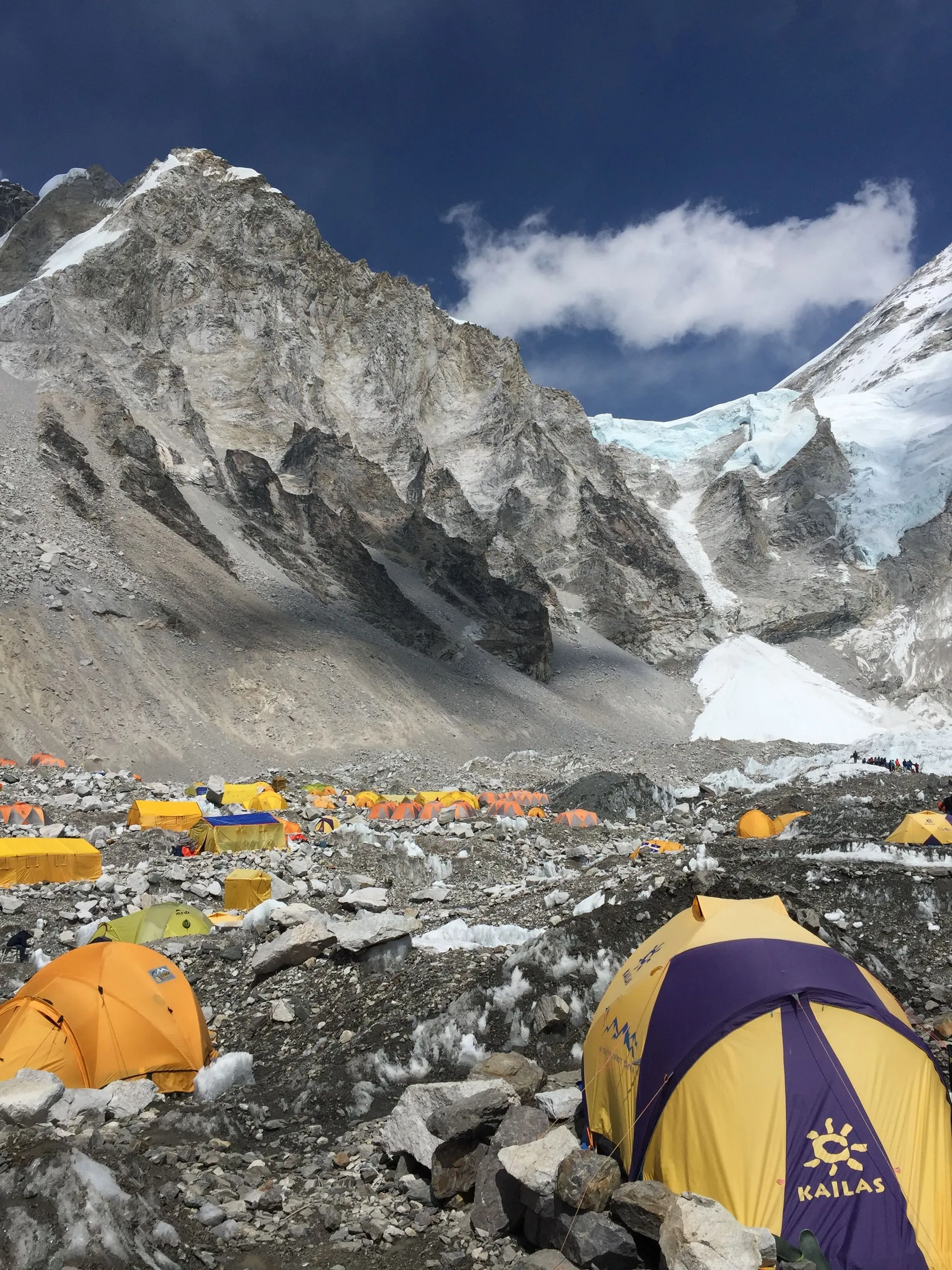
Everest Base Camp is the trek many Indian trekkers save up for: two weeks walking up the Khumbu valley through Sherpa villages and monasteries, to the foot of the world's highest mountain. For Indians it is also one of the easiest major Himalayan treks to organise abroad, with no visa and familiar food and currency close at hand. This guide covers the practical side, from documents to permits to cost. For the full story of the route and the mountain, see our Everest sub-site.
EBC at a Glance
- Everest Base Camp: about 5,364 m; Kala Patthar viewpoint: about 5,644 m
- Start: Lukla, reached by a short mountain flight
- Duration: 12 to 14 days from Lukla and back
- Distance: roughly 120-130 km round trip
- Difficulty: moderate trekking at high altitude; acclimatisation is the challenge
- Best seasons: March to May and late September to November
Documents for Indian Citizens
Indian citizens do not need a visa for Nepal. To enter and to fly, you need a valid passport or a voter ID card; airlines generally require one of these, and a passport is the simplest choice for the trek because permits and lodges may ask for it. Carry several passport photos and photocopies.
Carry Nepalese rupees for the trek. Indian 100-rupee notes are widely accepted in Nepal; larger Indian notes have long faced restrictions, so do not rely on them, and do not expect card payments or ATMs above Namche Bazaar.
Permits and Guide Rules
Two permits are required in the Khumbu: the Sagarmatha National Park entry permit and the Khumbu Pasang Lhamu Rural Municipality permit, which replaced the TIMS card in this region. Recent figures put the park permit at about 3,000 Nepalese rupees for foreigners, with a lower rate published for SAARC nationals, and the municipality fee at 2,000 to 3,000 Nepalese rupees after an increase reported in 2025. The park permit is available in Kathmandu or at Monjo, and the municipality permit at Lukla or Monjo.
Since April 2023 Nepal has required foreign trekkers to hire a licensed guide or trek through a registered agency, and sources disagree on how strictly this applies in the Khumbu and to Indian citizens. The safe plan is to trek with a licensed guide or agency, which also makes logistics and emergencies far easier.
Fees and rules are set in Nepalese rupees and change periodically. Confirm current rates and whether SAARC rates apply to you with the Nepal Tourism Board or your agency.
Getting to Lukla
From India, fly to Kathmandu or travel overland via Sunauli or Raxaul. From Kathmandu, the trek begins with a 30-minute flight to Lukla's famous short runway. In peak seasons, many Lukla flights operate from Manthali (Ramechhap) instead of Kathmandu, which means a long early-morning drive to the airport, so check with your agency.
Lukla flights are often delayed or cancelled by weather. Build at least one, ideally two, buffer days into your plan before your flight home.
A Standard 12-Day Itinerary
- Day 1: Fly to Lukla, trek to Phakding (about 2,600 m)
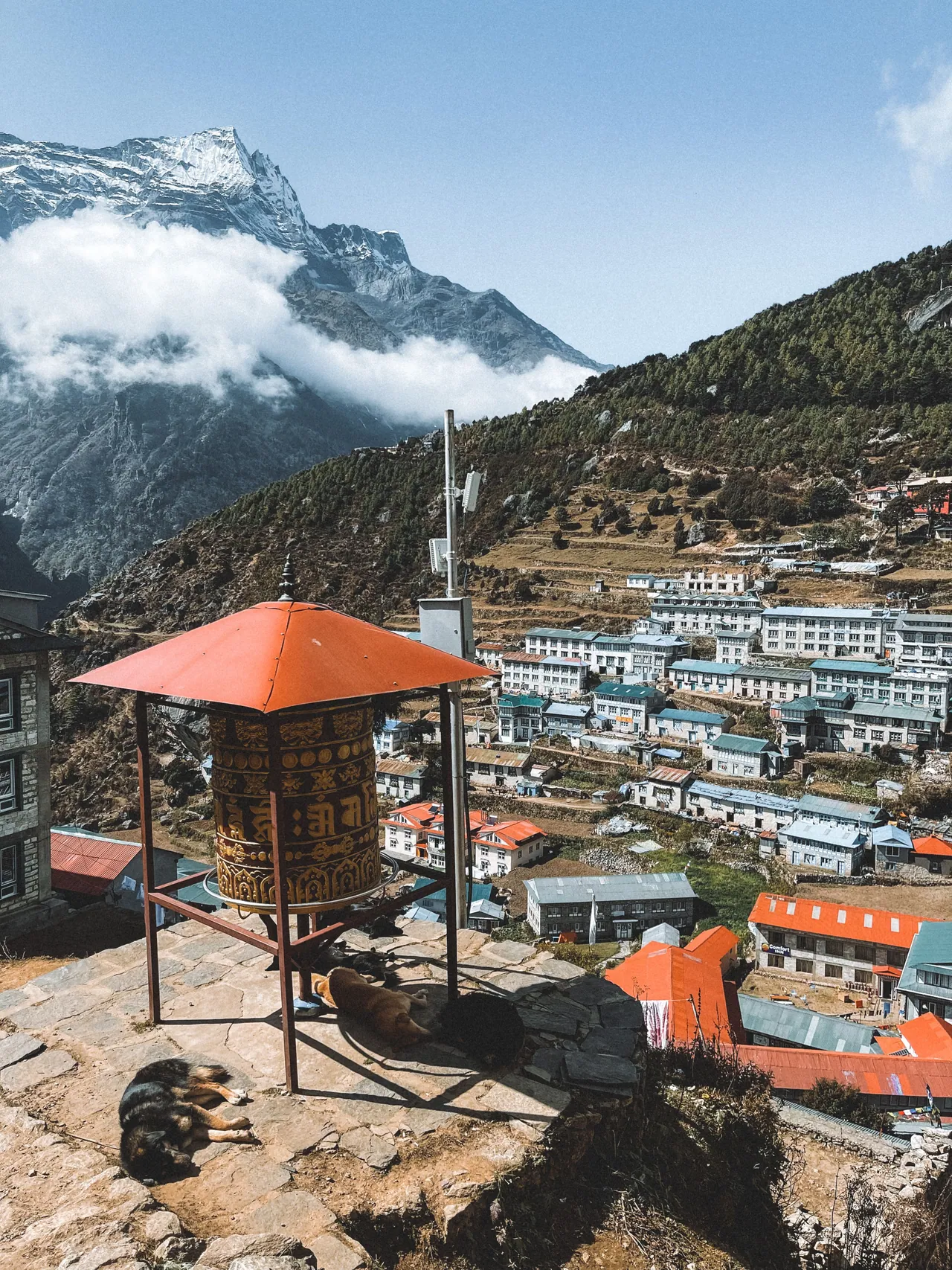
- Day 2: To Namche Bazaar (about 3,440 m)
- Day 3: Acclimatisation day in Namche
- Day 4: To Tengboche (about 3,860 m)
- Day 5: To Dingboche (about 4,410 m)
- Day 6: Acclimatisation day in Dingboche
- Day 7: To Lobuche (about 4,940 m)
- Day 8: To Gorak Shep and Everest Base Camp
- Day 9: Kala Patthar at dawn, descend to Pheriche
- Days 10-12: Descend via Namche to Lukla
Acclimatisation: The Real Challenge
The walking on the EBC trail is not technically difficult. The altitude is. Above 3,000 m, a safe ascent adds no more than about 300 to 500 m of sleeping altitude per day, with a rest day every three or four days, which is exactly what the two acclimatisation days in the itinerary do. Resist the temptation to skip them.
Know the symptoms of acute mountain sickness and the danger signs of HAPE and HACE before you go, and agree with your group that anyone with worsening symptoms descends. Our altitude sickness guide covers this in detail.
What It Costs From India
Most Indian trekkers book an agency package from Kathmandu, which bundles flights, permits, guide, porter and lodging. Compare what each package includes carefully, especially meals, Lukla flights and buffer-day costs.
- Return travel to Kathmandu: varies widely by city and season
- Kathmandu-Lukla return flights: a significant cost; check current fares
- Permits: the two Khumbu permits together, roughly 5,000-6,000 Nepalese rupees
- Guide and porter: daily wages plus their food and lodging
- Teahouse food and lodging: rises steeply with altitude; budget more per day above Namche
- Extras: hot showers, charging, Wi-Fi and bottled water all cost more higher up
How to Prepare
- Train for 8 to 12 weeks: long walks with a pack, stairs, and cardio
- Do a shorter Himalayan trek first, such as Kedarkantha or Hampta Pass
- Buy insurance that covers trekking up to about 6,000 m and helicopter evacuation
- Break in your boots and test your layering system in cold conditions
- Talk to a doctor about altitude medication before you go
Frequently Asked Questions
Explore the Everest Guide
Our free Everest sub-site covers the route, the physiology and the logistics in depth.
Open the Everest GuideKeep Reading
Go deeper on Everest and on preparing for altitude: