Everest Base Camp Trek
The trek from Lukla to Everest Base Camp takes about 8 to 10 days. It climbs through Sherpa villages and monasteries to the foot of the Khumbu Icefall, with rest days at Namche Bazaar and Dingboche so your body can adjust. No climbing skills are needed — the challenge is the altitude.
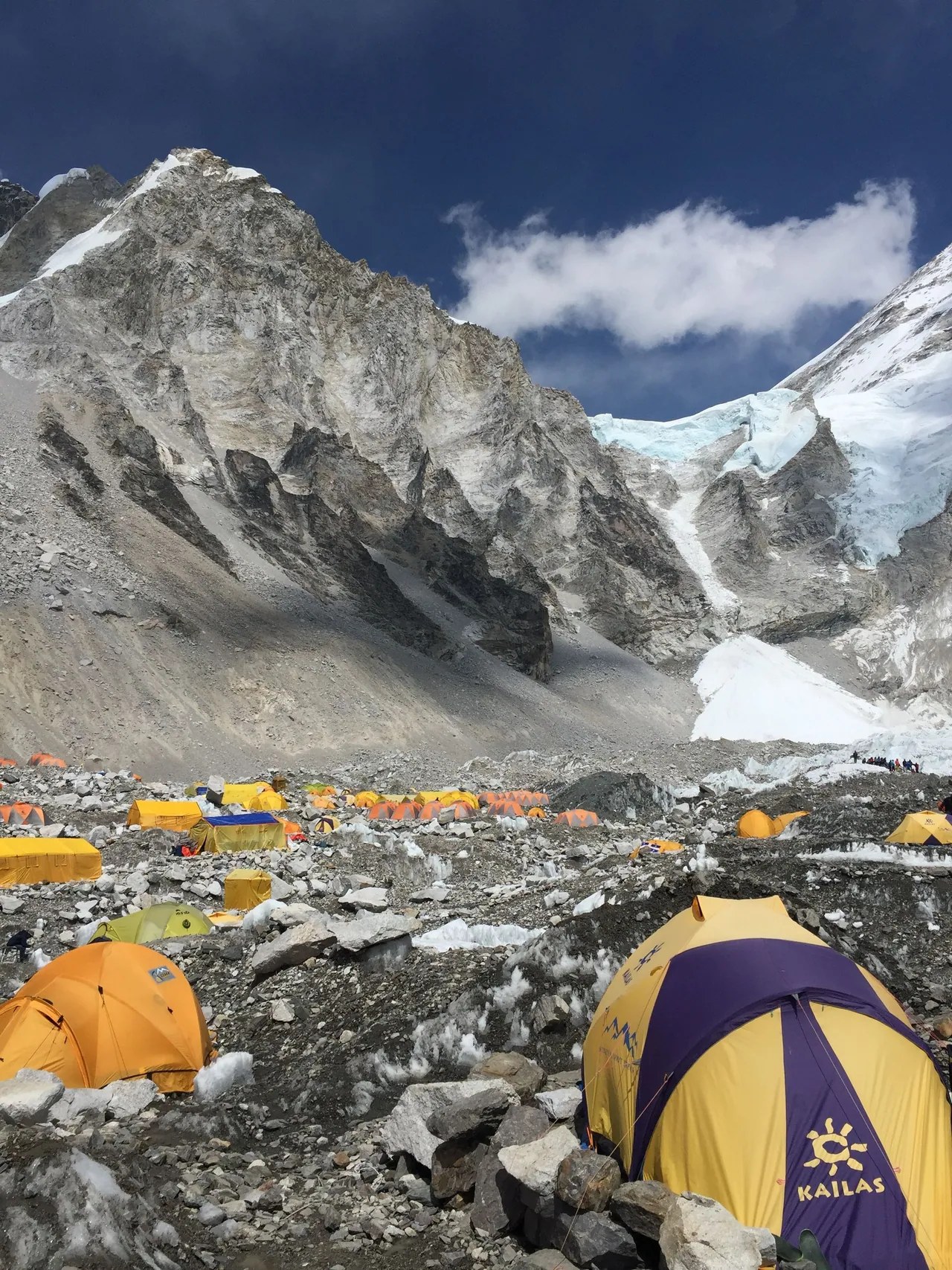
The walk in is the first stage of acclimatisation
Everest Base Camp trek itinerary, day by day
The standard 8-day ascent from Lukla. The way down usually takes 3 to 4 days, back through Pheriche and Namche.
| Day | Route | Sleep at (m) | What to expect |
|---|---|---|---|
| 1 | Kathmandu / Ramechhap → Lukla → Phakding | 2,610 | Short, easy day downhill then along the Dudh Koshi river. |
| 2 | Phakding → Namche Bazaar | 3,440 | Suspension bridges, national park entry at Monjo, then the steep climb to Namche. |
| 3 | Rest day in Namche | 3,440 | Hike up to about 3,800 m to acclimatise, and come back down to sleep. |
| 4 | Namche → Tengboche or Deboche | 3,860 | Tengboche monastery, and the first big views of Everest and Ama Dablam. |
| 5 | Tengboche → Dingboche | 4,410 | The tree line ends; the landscape turns high and open. |
| 6 | Rest day in Dingboche | 4,410 | Hike to the Nangkartshang viewpoint, about 5,000 m. |
| 7 | Dingboche → Lobuche | 4,940 | Past the climbers' memorials at Thukla Pass. |
| 8 | Lobuche → Gorak Shep → Everest Base Camp | 5,364 | Via Gorak Shep (5,160 m), then up the moraine to Base Camp. |
How to reach Everest Base Camp from India
Fly to Kathmandu (Tribhuvan International Airport). Pune has no direct flight, so most people connect through Delhi or Mumbai. From Kathmandu, small planes fly to Lukla in about 35 minutes. In the busy spring and autumn seasons, flights often leave from Manthali airport in Ramechhap, a 4–5 hour drive from Kathmandu. Lukla flights are frequently delayed by cloud and wind, so plan 2–3 buffer days.
Indian citizens do not need a visa for Nepal; carry your passport or valid Indian ID as your operator advises.
Everest Base Camp trek permits
You need a Sagarmatha National Park entry permit and the local Khumbu area permit. Operators normally arrange both. Fees are set by Nepal and revised from time to time — confirm the current rates with your operator before you budget.
Best time to go: spring (March–May) and autumn (late September–November), when the skies are clearest.
Places you'll pass, and how to trek well
- Namche Bazaar: The Sherpa capital: shops, bakeries, ATMs, gear shops and internet. Your last chance to buy or rent missing gear.
- Khumjung & Khunde: Villages above Namche with a school and hospital founded with help from Edmund Hillary's Himalayan Trust.
- Pheriche: Home to the Himalayan Rescue Association clinic, staffed by volunteer doctors in the trekking seasons.
- Gorak Shep: The last lodge settlement, and the start of the climb to Kala Patthar — the classic Everest viewpoint.
- Walk slower than feels necessary. A steady pace where you can still talk is ideal.
- Build 2–3 buffer days into your plan: Lukla flights are often delayed by cloud and wind.
- Drink only treated or boiled water; many lodges sell filtered refills instead of bottles.
- Wear a buff over your mouth on dusty trails to protect your throat.
- Step to the mountain side of the trail when yak and zopkio caravans pass.
- Record your SpO2, pulse and how you feel every morning from day one.
Everest Base Camp trek FAQ
How many days is the Everest Base Camp trek?
About 8 to 10 days walking up from Lukla to Base Camp, including rest days at Namche Bazaar and Dingboche, and usually 3 to 4 days back down. Most itineraries are 12 to 14 days from Lukla, plus travel to Kathmandu and 2 to 3 buffer days for Lukla flight delays.
How high is Everest Base Camp?
Everest Base Camp on the Nepal side is at about 5,364 m. Kala Patthar, the viewpoint most trekkers climb from Gorak Shep for the best view of Everest, is about 5,545 m.
Can Indians do the Everest Base Camp trek without a visa?
Yes. Indian citizens do not need a visa for Nepal. Carry your passport or another valid Indian ID as your operator advises — you will need it for the trekking permits.
How do I reach Everest Base Camp from India?
Fly to Kathmandu (Tribhuvan International Airport) — from Pune you connect via Delhi or Mumbai. From Kathmandu a small plane flies to Lukla in about 35 minutes; in the busy seasons flights often leave from Manthali (Ramechhap), a 4–5 hour drive from Kathmandu. The trek starts at Lukla.
What permits are needed for the Everest Base Camp trek?
Two: the Sagarmatha National Park entry permit and the local area (Khumbu) permit. Fees are set by Nepal and change, so confirm current rates with your operator before you go; most operators arrange both.
When is the best time for the Everest Base Camp trek?
The two main seasons are spring (March to May) and autumn (late September to November), when skies are clearest and the trail is busiest. Winter is very cold, and the summer monsoon brings cloud, rain and frequent flight cancellations.
How difficult is the Everest Base Camp trek?
There is no technical climbing, but it is a long high-altitude trek: several days above 4,000 m, ending above 5,300 m. The real difficulty is altitude, not terrain. Good fitness, a slow pace and the rest days matter more than speed.
Is altitude sickness a risk on the trek?
Yes — it is the main risk. Ascend slowly, take the acclimatisation days, drink enough and learn the warning signs of AMS, HAPE and HACE. If symptoms worsen, the cure is to descend. The Physical & Medical Guide covers this in detail.