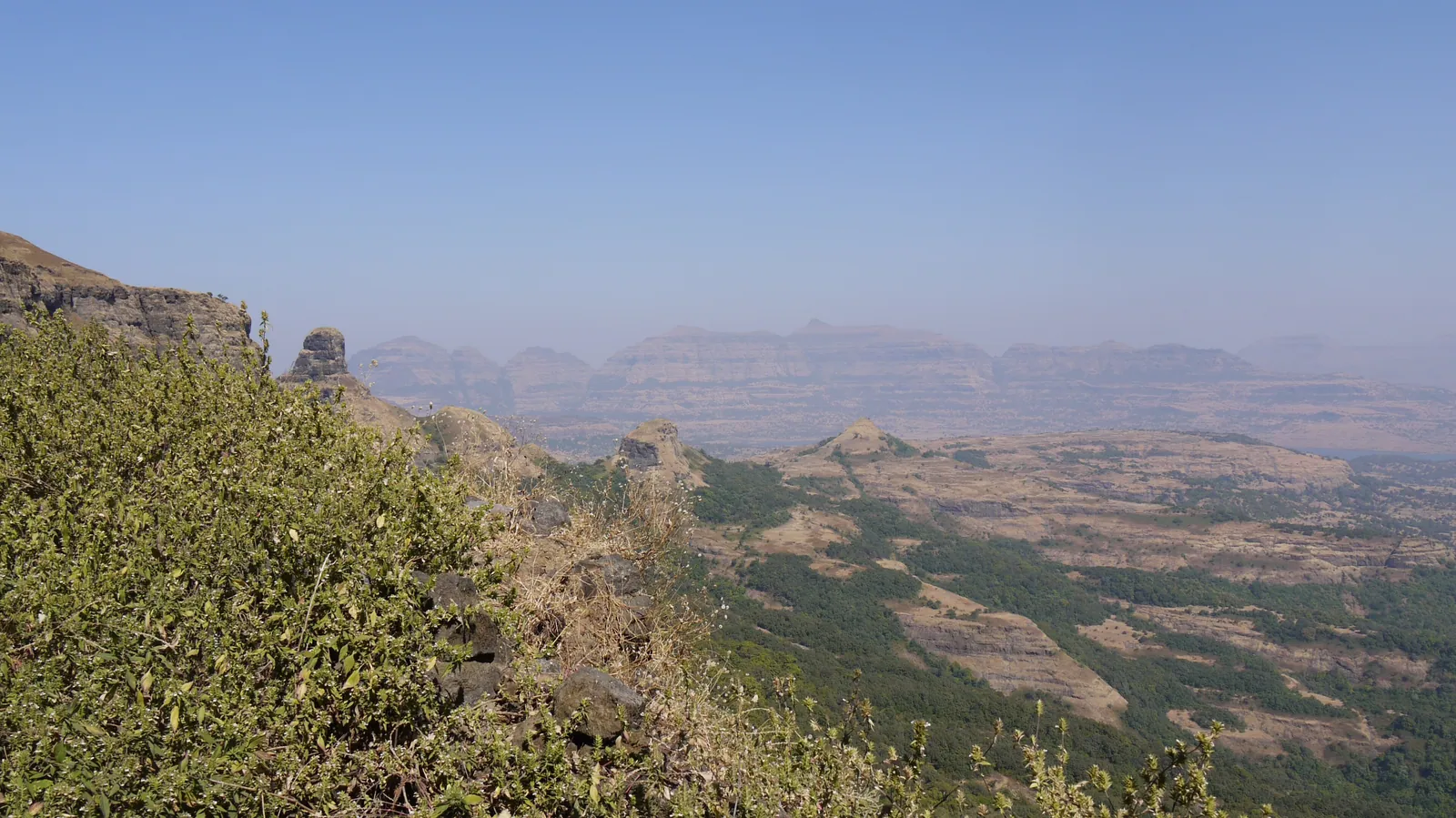
Ratangad, 'the jewel fort', rises above the Bhandardara lake country in Ahilyanagar district. It has everything a Sahyadri trek can offer in one outing: a centuries-old carved temple at the base, steel ladders bolted to the rock, caves to sleep in, a natural rock window, and a view that takes in Kalsubai, Harishchandragad and Ajoba. It is a little further from Mumbai and Pune than the usual weekend forts, which is precisely why it is worth the drive.
Ratangad at a Glance
- Height: about 1,297 m
- Main base: Ratanwadi village, beside the Amruteshwar temple
- Alternative base: Samrad village, near Sandhan Valley
- Climb time: 3 to 4 hours from Ratanwadi
- Difficulty: moderate, with ladders and a few steep sections
- Best season: August to February; fireflies in the area in late May and June
Getting to Ratanwadi
Ratanwadi sits on the far side of the Bhandardara reservoir. By road, it is reached from Igatpuri or Bhandardara town around the lake; from Mumbai most groups travel overnight via Kasara or Igatpuri, and from Pune via Sangamner and Akole. In some seasons a boat crosses the reservoir from Shendi towards Ratanwadi, which shortens the journey considerably.
Expect 4 to 5 hours from Mumbai and 4 to 5 hours from Pune by road, which is why Ratangad is usually done as an overnight trip, sleeping either on the fort or in Ratanwadi.
The Amruteshwar Temple
Before you start climbing, spend time at the Amruteshwar temple in Ratanwadi. It is a black-stone Shiva temple in the Hemadpanti style, around a thousand years old or more, with intricately carved walls and pillars, and a small stepped tank beside it. It is one of the finest old temples in the Sahyadri villages and is easy to rush past on the way to the fort.
The Climb and the Ladders
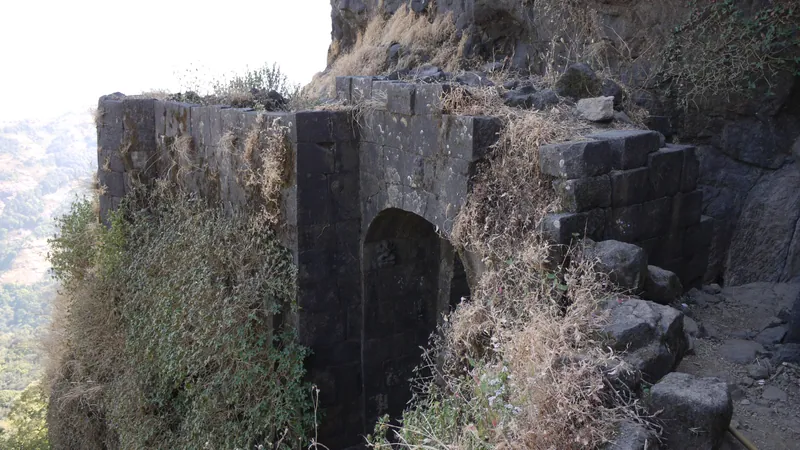
From the temple the trail crosses the Pravara stream and climbs through forest, with the gradient steepening as you go. The last part reaches the rock band of the fort, where steel ladders have been fixed to get you up two steep sections. They are solid but steep, and in the monsoon they are wet; climb one person at a time and keep three points of contact.
You enter the fort through the Ganesh Darwaja, with its carved gateway, and the Hanuman Darwaja. Allow 3 to 4 hours from Ratanwadi including rests.
On Top: Caves, Cisterns and the Nedhe
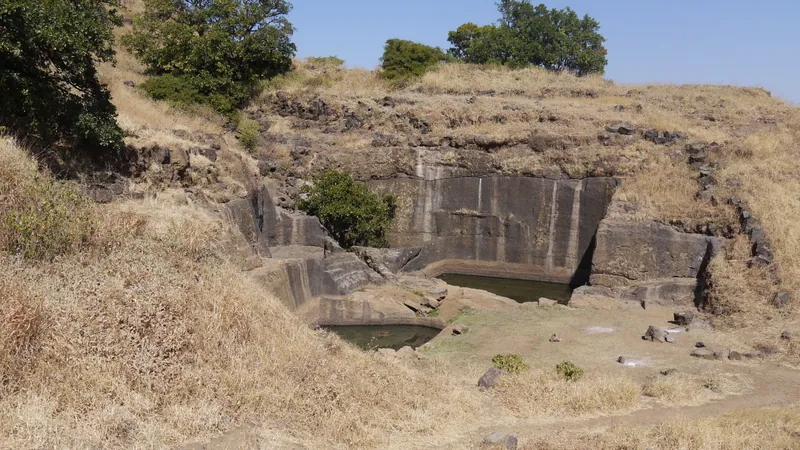
Ratangad's top has caves that groups use for overnight stays, a temple of Ratnadevi, and rock-cut water cisterns that hold water much of the year. Treat any water before drinking it. The Pravara river is said to begin from a spring on this hill, which is why the fort has long been connected with the river below.
The most famous feature is the Nedhe, the 'needle's eye', a natural window in the rock at the top of the fort that you can climb into. The view through it, across a sea of ridges, is one of the best in the region. Kalsubai, Maharashtra's highest peak, is visible on clear days, as are Alang, Madan and Kulang and the cliffs of Harishchandragad.
The Samrad Route
Ratangad can also be climbed from Samrad village, the base for Sandhan Valley. This route is quieter and gives a different view of the fort's walls, and experienced groups often combine the two: up from one village and down to the other, with transport arranged at the end. Route-finding matters here; go with someone who knows it.
Best Time to Go
- August to September: lush and full of waterfalls, but the ladders are wet; go with an experienced group
- October to February: the best season, with clear views and cold nights for camping
- March to May: hot; climb early
- Late May to mid-June: fireflies across the Bhandardara area before the rains
What to Carry for an Overnight Trip
- A sleeping bag or warm layer; the caves are cold from November to February
- A water filter or purification tablets for the cistern water
- Food for dinner and breakfast, or arrange meals with villagers in Ratanwadi
- Headlamp, first aid, and a power bank
- Bags to carry all rubbish back down
Frequently Asked Questions
Plan a Weekend at Ratangad
Find overnight Ratangad and Bhandardara treks from Mumbai and Pune.
Browse Upcoming TreksKeep Reading
More from the TrekVerse journal: