More trekkers get cold, wet, and miserable from wearing the wrong clothing than from any single piece of missing gear. The fix isn't buying one perfect jacket — it's understanding the layering system, so you can adapt to changing weather and effort levels through the day. Here's how to build a layering system that works across India's very different trekking conditions.
Trekking clothing works best as a system of layers rather than one heavy outfit, and once you understand why, half the guesswork in packing disappears. Each layer has a distinct, narrow job: the base layer manages moisture against your skin, the mid layer traps the warmth your body generates, and the outer layer blocks wind and rain from stealing it away. Because a trek is rarely one steady condition — you sweat hard on a climb, cool off fast at a windy ridge, and sometimes get rained on out of nowhere — the layering approach lets you respond to each of those moments individually instead of committing to one outfit for the whole day. Trekkers who show up in a single heavy jacket almost always end up either soaked in their own sweat on the ascent or shivering the moment they stop moving at the top, because there's no way to dial a single garment up or down.
Fabric choice matters just as much as how many layers you're wearing, and this is where a lot of first-time trekkers get caught out by what's already sitting in their wardrobe. Cotton feels comfortable in everyday life, but on a trail it holds onto sweat and rain and stays wet for hours, and wet fabric pulls heat away from your body the entire time it's against your skin — it's one of the most common, and most avoidable, causes of trekker discomfort, and in genuinely cold conditions it becomes a real safety concern rather than just an inconvenience. Synthetic fabrics like polyester and nylon, and natural merino wool, behave completely differently: they dry quickly and keep working to insulate you even when they're damp, which is exactly why they've become the default across almost all dedicated trekking clothing. Spend on fabric before you spend on brand names — a cheap polyester t-shirt will serve you far better on the trail than an expensive cotton one.
The Three-Layer System, Explained
The base layer sits directly against your skin, and its only job is moving sweat away from your body so it doesn't sit there cooling you down. The mid layer goes over it and is your primary source of warmth, trapping the heat your body produces in the air pockets of the fabric.
The outer layer, or shell, has a narrower but critical job: blocking wind and rain from reaching the layers underneath without trapping all your body heat and turning you into a sauna. A breathable rain jacket handles the overwhelming majority of Indian trekking conditions, from a sudden Sahyadri downpour to a windy Himalayan ridge; a dedicated hardshell only earns its extra weight and cost on high-altitude winter treks where sustained wind and snow are a given rather than a possibility.
What makes this system genuinely useful is that the three layers work together dynamically rather than as a fixed outfit you put on once at the trailhead. You might start a climb in just the base layer because your own effort is generating enough heat, add the mid layer the moment you stop for a break, and pull the shell over everything only when the wind picks up or rain starts. Trekkers who master this — checking in every 20-30 minutes and adjusting rather than just enduring — stay noticeably more comfortable than those who set their clothing once and leave it.
- Base layer: merino wool or synthetic t-shirts/leggings worn against skin — wicks sweat away so it doesn't chill you
- Mid layer: fleece for most conditions, or a down/synthetic-fill jacket on genuinely cold treks — traps body heat
- Outer layer (shell): breathable rain jacket for most Indian conditions, hardshell only for high-altitude winter treks
- Cotton has no place in the base layer — it holds moisture instead of wicking it away
Sahyadri Monsoon Trekking: What Actually Matters
Monsoon trekking in the Western Ghats presents a different problem entirely from cold-weather trekking, and trekkers who bring a cold-weather mindset to a Sahyadri monsoon climb usually end up overheating and miserable. Humidity, not cold, is the defining challenge here — how fast your clothing dries matters far more than how much it insulates. Heavy layering that would serve you well in the Himalayas becomes a liability here, trapping heat and sweat in already humid conditions.
For these conditions, synthetic t-shirts paired with quick-dry trekking shorts or convertible pants consistently outperform anything heavier — you want fabric that sheds water fast rather than fabric that keeps you warm. A breathable rain jacket or poncho is worth carrying, but it's worth setting expectations honestly: on a proper monsoon trek you will get somewhat wet regardless of what you wear, and the real goal is managing dampness and staying comfortable rather than chasing an impossible fully-dry hike.
The detail that trips up more trekkers than any gear choice is what happens after the trek ends. Carrying a complete, dry change of clothes sealed in a plastic bag for the journey home matters more than most people realise, because sitting in wet clothes in an air-conditioned car or bus for hours afterward is the single most common cause of the colds and chills people blame on 'the monsoon trek' — when really it's the two hours after the trek that did the damage. Synthetic moisture-wicking socks are also worth the small extra cost here; cotton socks stay soggy for the entire hike and are the main driver of blisters on wet monsoon trails.
- Quick-dry synthetic t-shirts + trekking shorts or convertible pants over heavy layering
- Breathable rain jacket or poncho — expect some dampness regardless, aim to manage it, not avoid it
- A complete dry change of clothes sealed in a plastic bag for after the trek
- Synthetic moisture-wicking socks — cotton socks stay soggy and cause blisters
Himalayan Winter Trekking: Building a Real Cold-Weather System
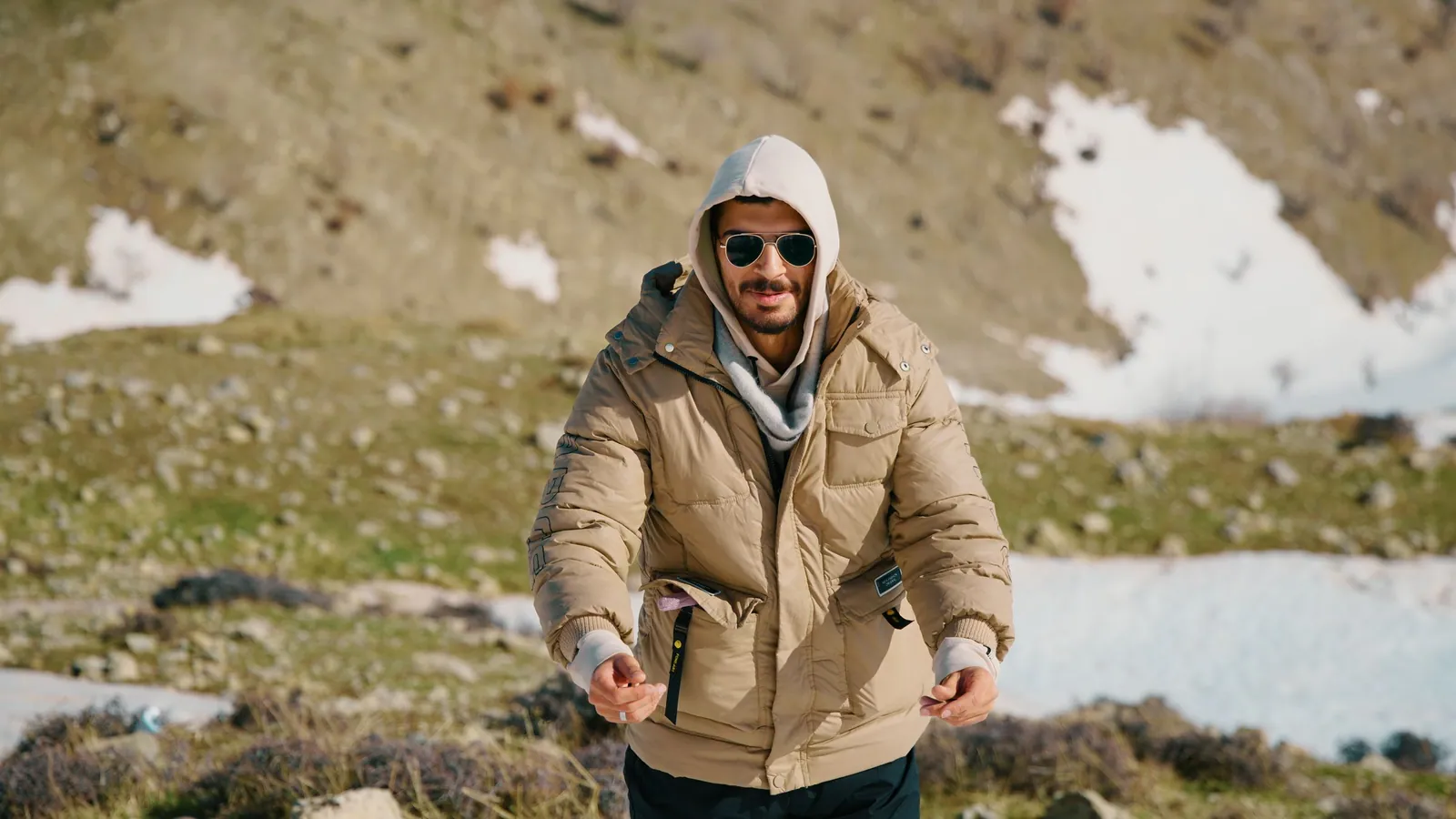
Himalayan winter trekking is where the layering system earns its keep the most, because the margin for getting it wrong is genuinely thin. Start with a moisture-wicking thermal base layer covering both your top and bottom — a damp base layer chills you rapidly the moment you stop moving, and at altitude that chill is harder to reverse. Build from there with a fleece mid layer for regular movement, adding a down or synthetic-fill insulated jacket for camp time, breaks, and summit pushes.
A windproof, waterproof outer shell stops being optional once you're at altitude, where wind chill routinely makes the air feel far colder than the thermometer reading suggests — a still, sunny -5°C day and a windy -5°C day are two completely different experiences on an exposed ridge. Extremities lose heat fastest of all, so insulated gloves paired with a thin liner glove for dexterity, a warm beanie that fully covers your ears, and thermal socks rated for the conditions deserve as much attention as your jacket choice, not an afterthought bought at the last minute.
Experienced Himalayan trekkers also pack a spare base layer and an extra mid-layer piece as backup, and this isn't excessive caution — a wet or lost layer at high altitude, where the nearest shop is a day's walk away, is a serious problem rather than a minor inconvenience. The extra few hundred grams in your pack is a small price for not having to improvise warmth on a night when temperatures have dropped further than forecast.
- Moisture-wicking thermal base layer (top and bottom) — non-negotiable at sub-zero temperatures
- Fleece mid layer for regular movement, plus a down/synthetic-fill jacket for camp time and breaks
- Windproof, waterproof outer shell — essential once wind chill enters the picture at altitude
- Insulated gloves with a liner glove, a beanie covering the ears, and rated thermal socks
- Spare base layer and extra mid-layer piece as backup on multi-day high-altitude routes
Fabric Cheat Sheet: What to Look for on the Label
Once you understand the layering system, the fabric labels on trekking clothing start to make a lot more sense, and it's worth knowing the trade-offs rather than just buying whatever's marketed as 'trekking wear.' Merino wool has a loyal following for good reason, though the trade-off is that it's slower to dry than synthetics and noticeably pricier.
Polyester and synthetic blends are the workhorse fabric of Indian trekking: they dry fast, cost comparatively little, and perform reliably on most treks. Insulation follows a similar down-versus-synthetic trade-off — down packs down small but fails when wet, so it only makes sense paired with a genuinely waterproof shell; synthetic-fill is a touch heavier but far more forgiving in unpredictable weather.
- Merino wool: odour-resistant, insulates even when damp, but slower to dry and pricier
- Polyester/synthetic blends: dry fast, affordable, reliable workhorse for base and mid layers
- Down insulation: best warmth-to-weight ratio, but loses insulating power when wet
- Synthetic-fill insulation: slightly heavier, but keeps working when damp — safer for unpredictable weather
Frequently Asked Questions
Dress Right, Trek Comfortably
Once your layering system is sorted, find your next trek — from Sahyadri monsoon trails to Himalayan winter climbs — on TrekVerse.
Explore TreksRelated Reading
Round out your trekking kit with these guides: