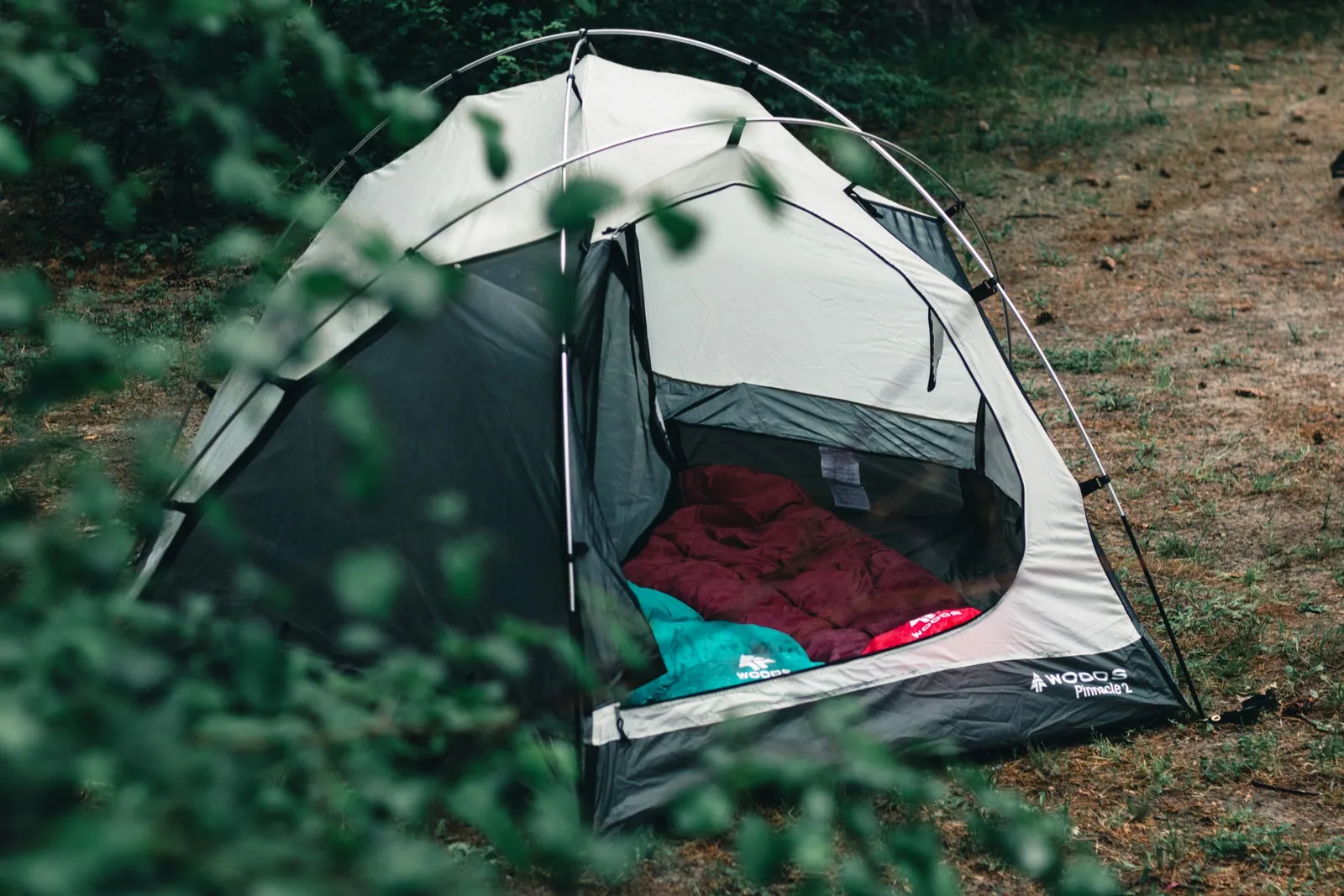
A poorly matched sleeping bag turns a Himalayan trek into a genuinely cold, sleepless ordeal, and at altitude, poor sleep compounds every other problem. Here's how to actually read temperature ratings, choose between down and synthetic fill, pick the right shape, and keep your bag performing trek after trek.
Sleeping bag shopping gets confusing fast, mostly because the ratings and terminology printed on the label aren't standardised in any meaningful way across brands. Two bags can carry near-identical temperature numbers on their tags and perform very differently once you're actually inside one at 3 a.m. at 4000 metres. The goal of this guide is to give you a practical framework built around three factors — temperature rating, fill type, and shape — so you can compare bags meaningfully on their real-world performance rather than getting swayed by whatever number a brand chooses to print largest on the packaging.
As a general rule, buy warmer than you think you'll need, because the two failure modes here are not symmetric. A bag that turns out slightly too warm is easily fixed on the trail by unzipping it or venting a leg out — mild discomfort at worst. A bag that's too cold has no fix once you're lying in it at altitude with nothing warmer to add; you simply shiver through the night, and that has real consequences beyond just a bad sleep. This asymmetry matters even more at high altitude specifically, where camp temperatures routinely drop below what the forecast predicted, and a genuinely cold, sleepless night measurably affects your judgement, coordination, and decision-making the following day — exactly when you need all three intact.
Understanding Temperature Ratings
Most sleeping bags list two numbers: a 'comfort' rating and a 'limit' or 'extreme' rating, and the difference between them matters more than either number alone. For planning an actual night's sleep, the comfort figure is the one to build your decision around, not the more dramatic-sounding limit number often quoted in marketing.
It's also worth understanding what these ratings assume in the first place: they're typically tested assuming you're wearing a base layer and lying on an insulated sleeping pad underneath the bag. A sleeping bag laid directly on cold ground, or paired with an inadequate pad, performs noticeably worse than its printed rating suggests, because a large share of heat loss on a cold night happens downward into the ground rather than upward into the air.
Given how much real-world variation exists — wind, humidity, how cold a sleeper you personally are, pad quality — it pays to build in a genuine safety margin rather than cutting it close to the forecast low. Choosing a bag rated at least 10°C colder than the lowest temperature you realistically expect is a sensible baseline, since actual camp conditions vary from the forecast and naturally cold sleepers need extra buffer regardless of what any rating promises. For most winter Himalayan treks — think Kedarkantha- or Brahmatal-style routes — a bag with a comfort rating around -10°C to -15°C is a reasonable starting point, while shoulder-season treks at lower altitude can comfortably go warmer.
- Comfort rating: temperature an average sleeper stays comfortable at — use this for planning
- Limit/extreme rating: survivable but uncomfortable — don't plan a night's sleep around it
- Ratings assume a base layer and an insulated sleeping pad underneath the bag
- Buy a bag rated at least 10°C colder than the lowest temperature you realistically expect
- Winter Himalayan treks (Kedarkantha, Brahmatal-style): aim for a comfort rating around -10°C to -15°C
Down vs Synthetic Fill
The choice between down and synthetic fill is the single biggest factor shaping how a bag performs, packs, and costs. Down fill offers an excellent warmth-to-weight ratio and compresses to a genuinely small size, which is why it's popular for high-altitude treks where every kilogram counts.
Synthetic fill takes the opposite trade-off. It's heavier and bulkier than down for equivalent warmth, so it costs you more pack space and shoulder weight, but it keeps a meaningful portion of its insulating value even when damp, dries considerably faster, and is generally the more budget-friendly option to begin with. If your trek route involves high humidity, frequent rain or snow exposure, or you're simply less experienced at keeping your gear consistently dry over multiple days, synthetic fill is the more forgiving, lower-risk choice, and the modest weight penalty is usually worth the peace of mind. For dry, cold, high-altitude conditions specifically — where pack weight genuinely matters and the moisture risk is comparatively low — down's efficiency becomes a real, tangible advantage that justifies its higher price and greater care requirements.
- Down: excellent warmth-to-weight ratio, compresses small — best for dry, cold, high-altitude conditions
- Down's weakness: loses most insulating power when wet and dries painfully slowly on the trail
- Synthetic: heavier and bulkier, but retains insulation when damp, dries faster, and costs less
- Choose synthetic for humid, rain- or snow-exposed routes, or if you're less experienced at keeping gear dry
Mummy vs Rectangular Shape
Shape affects warmth almost as much as fill type does, which surprises a lot of first-time buyers who assume it's purely a comfort preference. Mummy bags taper toward the feet and include a hood that cinches snugly around your head, minimising the total air space your body has to warm.
Rectangular bags trade that efficiency for room to move, and many can unzip fully flat into a blanket, which is genuinely appealing for warm-weather car camping or casual use. But they're heavier and meaningfully less warm per unit of fill than a mummy bag, which makes them a poor match for genuinely cold Himalayan nights where every bit of thermal efficiency counts. For any Himalayan trek where temperatures approach or drop below freezing, a mummy-shaped bag is the practical choice, even if it feels more restrictive the first night or two you sleep in one. Semi-mummy or 'modified mummy' designs offer a reasonable middle ground for trekkers who find the full mummy shape claustrophobic, giving slightly more shoulder room while retaining most of the thermal efficiency that makes the mummy shape worthwhile in the first place.
- Mummy: tapers toward the feet with a cinching hood — minimises air space, most thermally efficient
- Rectangular: unzips flat like a blanket, more room, but heavier and less warm per unit of fill
- Semi-mummy: a middle ground with more shoulder room, retaining most of the thermal efficiency
- For any trek near or below freezing, a mummy-shaped bag is the practical choice
Caring for Your Sleeping Bag
A well-cared-for sleeping bag maintains its loft, and with it its warmth, for years, while a neglected one loses effective insulation surprisingly fast regardless of how much it cost. The single most important habit is airing out and fully drying your bag after every trek before storing it — trapped moisture quietly degrades insulation over time, especially in down bags.
Storage matters almost as much as post-trek drying. Keep the bag loosely stored in a large breathable sack rather than compressed in its small stuff sack when it's not actively in use, since long-term compression flattens the very loft that creates the bag's insulating power — only compress it into its stuff sack immediately before and during an actual trek, not for the months in between. A sleeping bag liner is a small, inexpensive addition that keeps the bag itself cleaner and adds a modest amount of extra warmth, which in turn means you need to wash the bag far less often. When you do need to wash it, follow the manufacturer's specific instructions closely — down bags in particular require a specialised down-safe detergent and careful, thorough drying, since a poorly washed and dried down bag can end up with permanently clumped, less effective insulation.
- Air out and fully dry the bag after every trek before storing it
- Store loosely in a large breathable sack, not compressed in its stuff sack, between treks
- Use a sleeping bag liner to keep it cleaner and add a bit of extra warmth
- Follow manufacturer wash instructions closely — down needs a specialised down-safe detergent
Frequently Asked Questions
Sleep Warm, Trek Well
With the right sleeping bag sorted, find your next Himalayan trek and verified organisers on TrekVerse.
Explore TreksRelated Reading
More gear guides for cold-weather trekking: