A trekking tent is one of the more expensive gear purchases you'll consider, and also one of the easiest to get wrong for your actual needs. This guide covers the main tent types, how to read seasonal ratings, capacity considerations, and — for most occasional trekkers — whether renting makes more sense than buying at all.
Most organised multi-day treks in India already provide shared tents as part of the package, which means the first question to ask isn't 'which tent should I buy' but 'do I need to own one at all.' A surprising number of trekkers buy an expensive tent after their first trek out of enthusiasm, only to have it sit unused because their next three treks were all organised group departures with shared tents included. If you're trekking independently, camping regularly enough to justify the cost, or you specifically want full control over your own setup rather than sharing, then understanding tent types and ratings genuinely helps you avoid an expensive mismatch between what you bought and what you actually needed.
Tents are typically described along three dimensions — shape (dome, tunnel, ultralight), season rating (2-season, 3-season, 4-season), and capacity (1-person, 2-person, and so on) — and it helps to understand what each of these actually promises before you compare products. None of these numbers are standardised across brands or enforced by any regulator, so a '3-season' rating from one manufacturer and another can mean meaningfully different things in practice. Treat every spec on the label as a useful starting point for comparison rather than an exact, guaranteed promise, and where possible, read independent reviews from people who've actually used the tent in conditions similar to yours.
Tent Types Compared
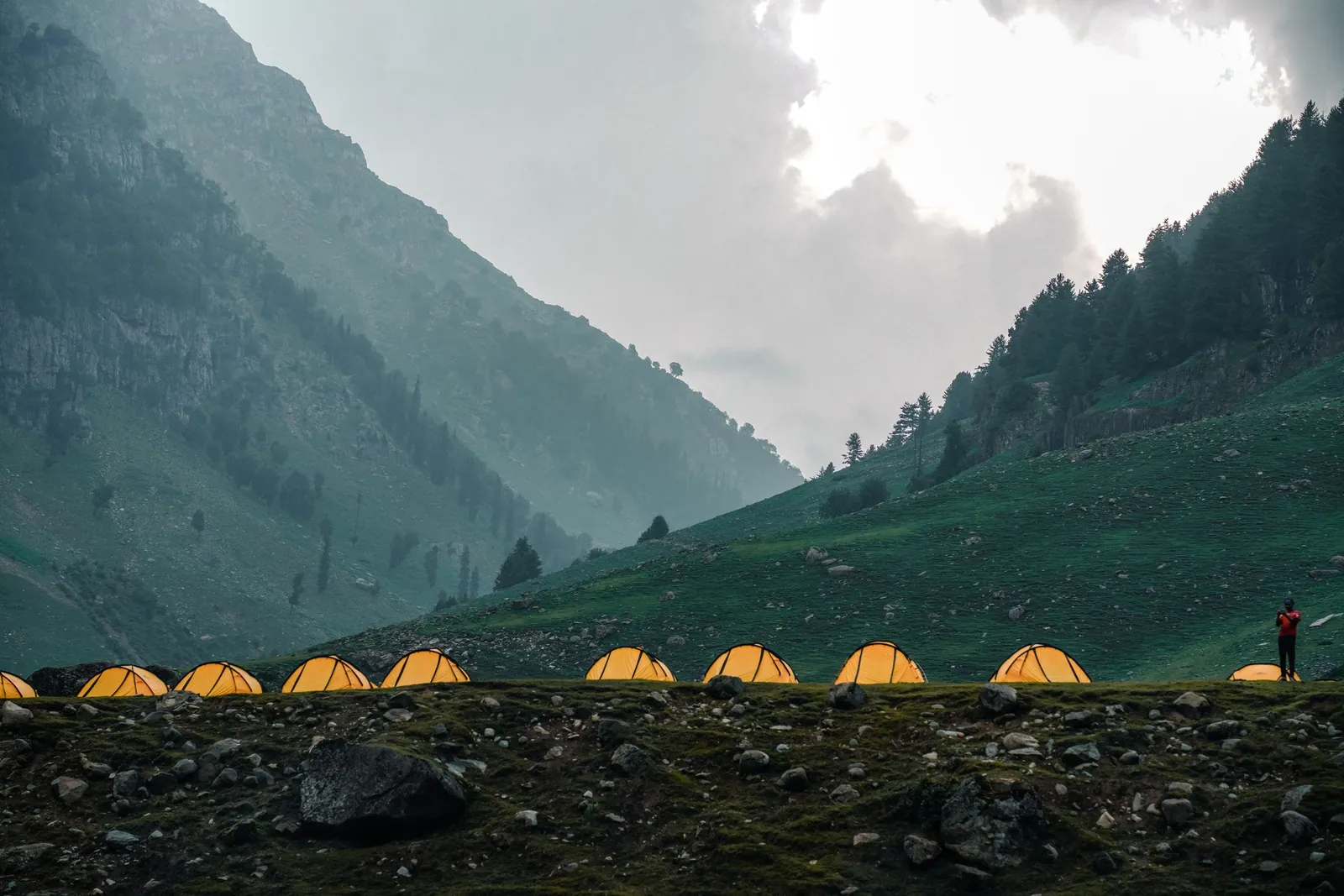
Dome tents are the most common shape for good reason: they're self-supporting with poles that cross near the top, giving solid wind stability, reasonable interior volume relative to weight, and quick setup even for a beginner. For the range of conditions a typical Indian trek throws at you, a dome tent is the most versatile single choice.
Tunnel tents take a different approach, using parallel arched poles to create a longer, roomier interior with more headroom and storage space than a comparable dome. This makes them genuinely appealing for group camping on relatively sheltered sites where the extra room is worth the trade-off, but that same shape makes them noticeably less stable in strong crosswinds, so they're a poorer choice for exposed ridgelines or unpredictable mountain weather. Ultralight tents sit at the opposite end of the spectrum, using minimal pole structures or trekking-pole-supported designs that prioritise low pack weight above almost everything else — they typically sacrifice interior space, wind resistance, or ease of pitching to get there, which makes them a specialist's tool best suited to experienced trekkers on long, self-supported routes where every gram in the pack has been carefully weighed against its benefit.
For genuine high-altitude winter expeditions, geodesic or semi-geodesic tents — built with multiple crossing poles for maximum structural stability under high wind and heavy snow load — are the standard choice among serious mountaineers, though they come at a real cost in both weight and price compared to a standard dome. Unless your trekking plans specifically include winter snow camping at altitude, this category is more tent than you need, and the extra investment is better spent elsewhere in your kit.
- Dome: self-supporting, stable in wind from most directions, quick to pitch — the versatile default choice
- Tunnel: more headroom and storage, great for sheltered group camping, but weak in strong crosswinds
- Ultralight: minimal weight, sacrifices space and wind resistance — for experienced trekkers on long routes
- Geodesic/semi-geodesic: maximum stability for high wind and snow load — only for winter expeditions
Understanding Seasonal Ratings
Seasonal ratings tell you what conditions a tent is actually built to handle, and getting this wrong is one of the more consequential mistakes a trekker can make, since it directly affects your safety rather than just your comfort. 2-season tents are fine for fair-weather summer camping at low altitude, but not for a Himalayan trek where conditions can turn quickly.
3-season tents are the workhorse of Indian trekking and the most common choice for good reason: they strike a practical balance between ventilation and reasonable wind and rain resistance across spring, summer, and autumn conditions, and they comfortably suit the majority of Indian treks outside of dedicated winter routes. 4-season, or winter/mountaineering, tents use reinforced pole structures and heavier fabric specifically to handle sustained snow load and high wind, and they're built for genuine winter and high-altitude expeditions — necessary only if your treks specifically involve snow camping, and overkill everywhere else.
The practical rule worth internalising is to match the tent's rating to the hardest trek you plan to take it on, not your average one. A 3-season tent that performs fine on nine trips out of ten is still the wrong tent for the tenth trip if that one happens to bring an unexpected early snowfall — at that point the mismatch isn't just discomfort, it's a real risk to manage.
- 2-season: lightweight, well-ventilated, mild weather only — no business on a Himalayan trek
- 3-season: the workhorse rating, balances ventilation and wind/rain resistance for most Indian treks
- 4-season: reinforced for snow load and high wind — necessary only for genuine winter expeditions
- Rule of thumb: match the rating to your hardest planned trek, not your average one
Capacity and Fit
Manufacturer capacity ratings deserve a healthy dose of skepticism, because they tend to describe the tightest possible fit rather than a comfortable one. A tent listed as '2-person' usually fits exactly two sleeping pads laid side by side with essentially no room left over for backpacks or boots.
For a solo trekker who values comfort, sizing up to a 2-person tent used alone is a common and sensible choice — it leaves room to store gear inside during rain. Beyond the person-count label, pay attention to peak height and floor dimensions specifically, especially if you're taller than average or like to sit up inside the tent.
- '2-person' usually means two sleeping pads side by side with no room for gear
- Solo trekkers who value comfort: consider sizing up to a 2-person tent used alone
- Two trekkers with full packs: consider a 3-person tent if pack weight allows
- Check peak height and floor dimensions, not just the person-count label
Rent or Buy? A Practical Framework
Tents represent a genuinely significant investment compared to most other trekking gear, which makes the rent-versus-buy decision matter more here than it does for a pair of socks or a water bottle. As a rough rule, if you camp fewer than three or four times a year, renting is almost always the cheaper overall choice once you account for the tent's upfront cost.
It's also worth double-checking your specific trek's inclusions before assuming you need your own tent at all — most organised group treks in India already include shared tents in the package price, and buying one anyway before confirming this is a common way first-timers waste money. If you do decide to buy, a 3-season dome tent is the sensible first purchase for almost everyone, since it covers the widest range of realistic conditions before you'd ever need anything more specialised like a 4-season or ultralight design. And whichever route you choose — rented or bought — always pitch the tent at home first, in daylight, with no pressure, so you actually understand the setup before you're relying on it in the dark or in bad weather on the trail.
- Camp fewer than 3-4 times a year: renting is almost always cheaper overall
- Check whether your organiser already includes a shared tent before buying anything
- First purchase for most buyers: a 3-season dome tent covers the widest range of conditions
- Always pitch a new (or rented) tent at home in daylight before relying on it on the trail
Frequently Asked Questions
Camp Smart, Trek Further
Whether you rent or own your tent, find your next multi-day trek and camping-included packages on TrekVerse.
Explore TreksRelated Reading
More gear guides to round out your camping setup: