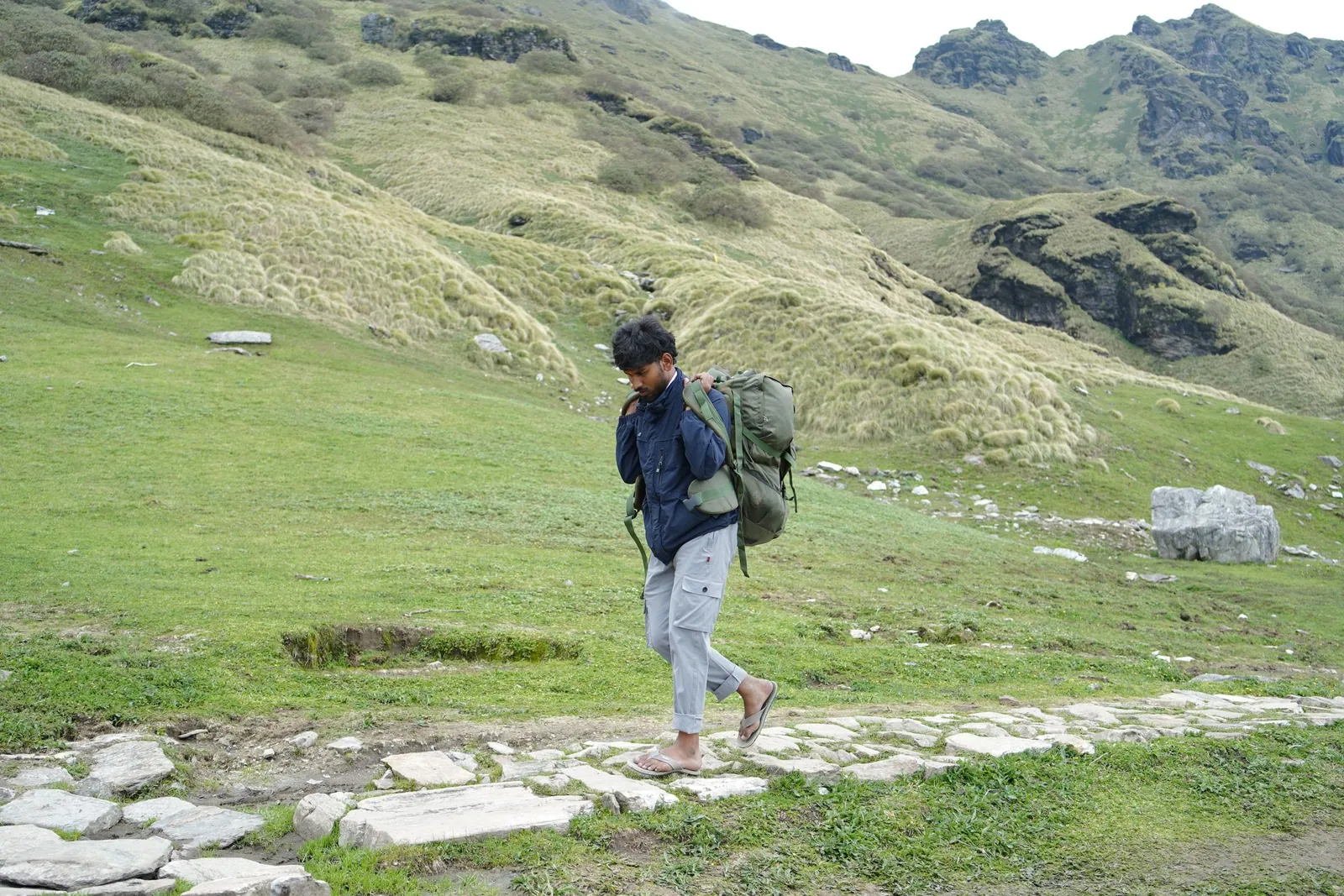
Trekking in India can be genuinely inexpensive or it can add up fast, depending mostly on where you go and how you plan it. A Sahyadri weekend trek can cost less than a night out; a Himalayan expedition can run into tens of thousands of rupees. This guide breaks down real costs by trek type and shows where you can save without cutting corners on safety.
Trekking cost in India splits roughly into three buckets: the trek/package cost itself, travel to and from the base point, and gear. Of these, travel is very often the largest and most overlooked cost, especially for Himalayan treks where the base town can be a full day's journey from the nearest city.
The good news is that trekking remains one of the most affordable adventure activities available in India compared to most other outdoor sports, and there are legitimate ways to cut cost at every stage without compromising on safety.
Cost Breakdown: Sahyadri Weekend Trek
- Transport from Mumbai/Pune: ₹300-₹800 (shared vehicle/bus) or free if you have your own transport
- Guide/local fee (if applicable): ₹100-₹300 per person, often included in organised trek packages
- Food: ₹100-₹300 for basic meals at base village or self-carried snacks
- Entry/forest fees: ₹20-₹100 depending on the fort or protected area
- Total for an organised weekend trek: roughly ₹800-₹2,000 per person; independent trekking with your own transport can come in well under ₹500
Cost Breakdown: Multi-Day Himalayan Trek
Travel is by far the most variable line item — the same trek can cost noticeably different amounts depending purely on which city you're starting from and how early you book your tickets.
- Trek package (5–6 days, e.g. Kedarkantha, Brahmatal): ₹6,000–₹12,000 — camping, meals, permits, trek leader
- Travel to base town: ₹2,000–₹6,000 depending on origin city and booking lead time
- Gear rental (jacket, sleeping bag, gaiters, poles): ₹500–₹1,500
- Miscellaneous (medication, snacks, crew tips): ₹500–₹1,000
- All-in total: roughly ₹9,000–₹18,000
Ways to Genuinely Cut Cost
The single biggest lever most trekkers underuse is booking travel early. Train tickets to Himalayan hill towns should be booked sixty to a hundred and twenty days in advance wherever possible, because last-minute fares to these destinations can double or triple as the date approaches.
Travelling and trekking in a group helps too — shared cabs from the base town to the trailhead are the single biggest per-person saving on any Himalayan trek, since that final stretch is usually priced per vehicle rather than per person.
- Choose off-peak (weekday) trek dates where safety allows
- Rent gear instead of buying if you trek only occasionally
- Carry your own snacks and a reusable/filter water bottle
- Compare packages by inclusions, not just headline price
Hidden Costs Trekkers Often Miss
Beyond the obvious line items, a few costs catch first-time budget trekkers off guard because they don't show up on any package brochure. Travel insurance is one — a genuine medical evacuation from altitude can run into lakhs of rupees, and a basic adventure-travel policy costing a few hundred rupees is cheap insurance against a catastrophic bill.
Tips for porters, cooks, and trek crew are another quiet cost that rarely appears in the headline package price — budget a few hundred rupees per day if you plan to tip.
Acclimatisation days can also be unbudgeted: an extra night at base camp due to weather or altitude symptoms means an extra day of food and accommodation, so pad your total by ten to fifteen percent as a buffer. And don't discount travel to the departure city itself — that leg is easy to forget when you're only looking at prices quoted from a metro city.
Budgeting by Trekker Type
How much a trekking habit costs in a year depends heavily on what kind of trekker you are. An occasional weekend trekker doing a handful of Sahyadri forts a year is looking at a genuinely low annual spend — a few thousand rupees total, with gear rented as needed and travel shared with friends.
A trekker aiming for one Himalayan trek a year alongside regular weekend trips has to plan more carefully, since a single Himalayan trip can cost as much as the rest of the year's weekend treks combined — it often makes sense to book that trek early to lock in lower travel fares.
For trekkers doing multiple Himalayan treks a year, gear ownership starts to make more financial sense than renting every time. Whatever category you fall into, the biggest single lever remains the same: booking travel early can consistently save thirty to forty percent over a year compared to booking last-minute.
Sample Budget Itineraries
The gap between these two examples illustrates the core budgeting lesson of Indian trekking: it's not that trekking is expensive, it's that Himalayan trekking specifically carries a travel premium that a Sahyadri weekend simply doesn't have.
A trekker who does ten Sahyadri weekend treks and one budget Himalayan trek in a year is likely to spend less in total than someone who does three underplanned, last-minute-booked Himalayan trips. Planning around that asymmetry is really the whole trick to trekking on a budget in India.
- Weekend Sahyadri fort trek: ₹400 cab + ₹50 entry fee + ₹200 meals = under ₹700/day
- 5-day Kedarkantha-style Himalayan trek: ₹7,000 package + ₹3,000 travel + ₹800 gear rental + ₹600 misc = ~₹11,400 all-in
Free and Near-Free Ways to Trek More Often
For trekkers whose budget is genuinely tight, there are ways to trek regularly that don't show up in a typical cost breakdown. Local trekking clubs and college outdoor societies organise weekend Sahyadri treks at close to cost price, since they're run by volunteers rather than commercial organisers — joining one can cut weekend trek costs by half or more, at the trade-off of a less polished, more DIY experience.
- Carpool via local trekking WhatsApp/Telegram groups to split fuel cost
- Trek off-season — weekday rates are often noticeably lower than weekend/holiday rates
- Volunteer with organisers (logistics, photography) for discounted or free batches
A Final Word on Trading Money for Time
It's worth being honest about the trade-off underlying most of this guide: nearly every cost-saving tip here trades convenience or flexibility for a lower price. Booking a train sixty days out means committing to dates you can't easily change. Shared cabs mean waiting for a group to fill up rather than leaving the moment you're ready.
None of these trade-offs are bad, but knowing you're consciously choosing time and flexibility for cost, rather than discovering it as a frustrating surprise mid-trip, makes budget trekking feel like a deliberate choice rather than a compromise.
For most trekkers, the right approach ends up being a mix — spending a little more for convenience when time is tight, and going fully budget-conscious when the plan is flexible. Trekking in India remains, by almost any comparison to other adventure activities, an accessible hobby.
Gear: Rent vs Buy
This is where most first-time trekkers overspend, and a simple rule of thumb sorts most of it out.
- Fewer than 3–4 treks a year: rent sleeping bags, down jackets, poles, gaiters
- Buy early: trekking shoes (fit matters too much to rent) and a daypack (useful beyond trekking)
- Never skimp on: a properly fitted, broken-in pair of shoes and a working headlamp
- Ask around first — borrowing from a friend for a one-off trek is a legitimate zero-cost option
Frequently Asked Questions
Find a Trek That Fits Your Budget
Compare organised trek packages, pricing, and inclusions from verified organisers on TrekVerse.
Explore TreksRelated Gear & Planning Guides
Useful reads for planning your next budget trek: