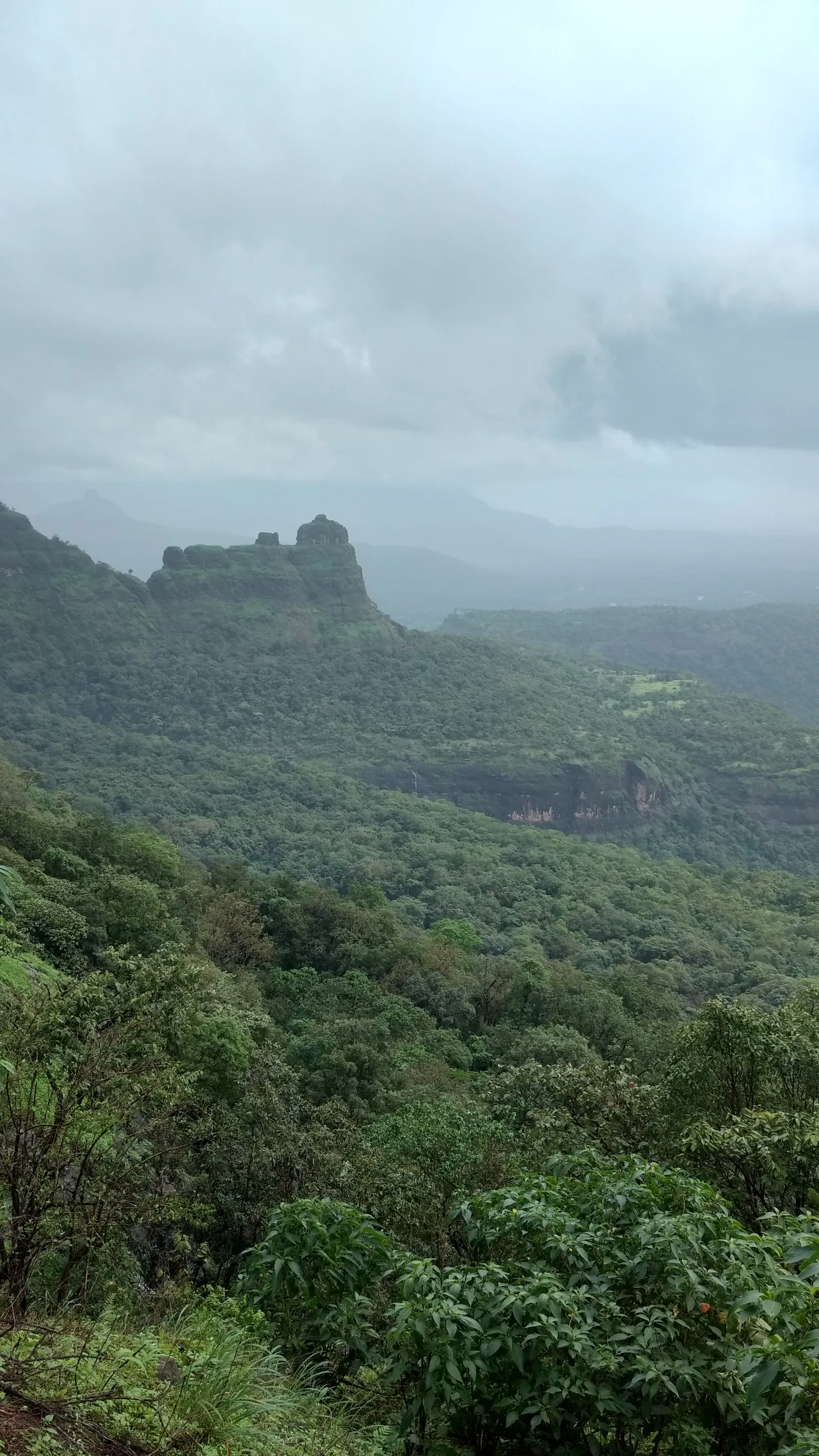
Bhimashankar is one of the twelve Jyotirlingas, set in the forests at the edge of the Sahyadri crest, and walking up to it from the Konkan side is one of the great long day treks near Mumbai. Two routes climb from the village of Khandas: Ganesh Ghat, a long but straightforward forest path, and Shidi Ghat, a shorter, steeper route with iron ladders bolted to the rock. Choosing between them is the main decision.
At a Glance
- Start: Khandas village, about 35 km from Karjat or Neral
- End: Bhimashankar temple, on the crest of the Sahyadri
- Elevation gain: roughly 900 m
- Ganesh Ghat: about 4 to 5 hours up, moderate
- Shidi Ghat: about 3 to 4 hours up, difficult, with ladders
- Best season: September to February
Ganesh Ghat: the Longer, Easier Route
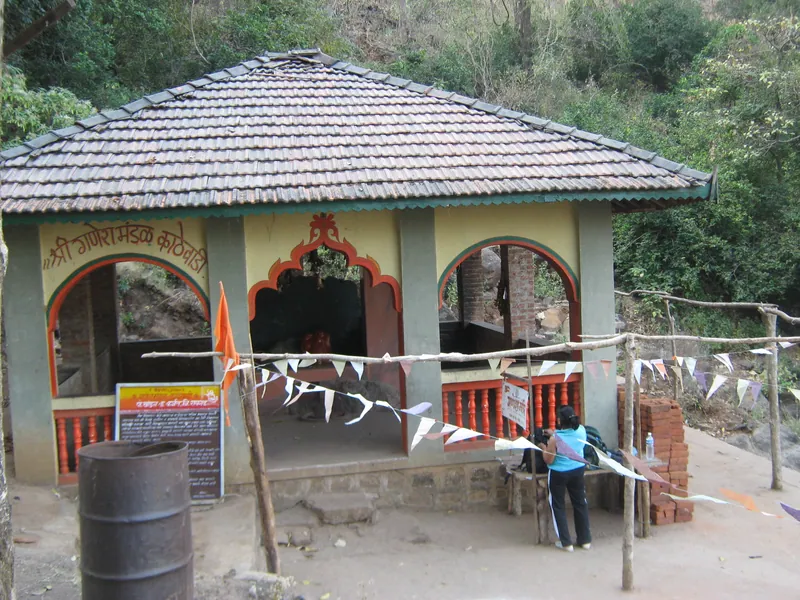
Ganesh Ghat is named for the small Ganesh temple that sits about halfway up. The path climbs steadily through forest with occasional open views back over the Konkan, and has no technical sections. It is long and sustained rather than steep, and it is the route to choose for a mixed group, for the monsoon, or for descending.
In the rains the forest is full of streams; most are small, but they rise quickly in heavy rain. In the dry season the path can be dusty and hot in the lower, open sections.
Shidi Ghat: Ladders and Exposure
Shidi means ladder, and this route earns its name: several sections climb iron ladders and steep rock steps, some fairly exposed. It is shorter and far more exciting than Ganesh Ghat, and much more demanding. It is not a route for beginners, for anyone uneasy with heights, or for the monsoon, when the rock and ladders are wet and streams pour across them.
A common plan for experienced groups is to climb Shidi Ghat and descend by Ganesh Ghat, keeping the ladders for the direction in which they are safer.
Shidi Ghat in heavy rain is genuinely dangerous. Several district monsoon orders in the region have restricted access to waterfalls and risky trails; check before going between June and September.
At the Top: The Temple and the Sanctuary
The trail emerges near the Bhimashankar temple, an old stone temple in the Nagara style that is one of the twelve Jyotirlingas of Shiva and the source of the Bhima river. It is a major pilgrimage site, crowded on Mondays, during Shravan and at Mahashivratri, so expect queues if you plan darshan.
The temple sits inside the Bhimashankar Wildlife Sanctuary, a protected forest known for the Indian giant squirrel, the shekru, which is Maharashtra's state animal. Walks such as Gupt Bhimashankar and the viewpoints around the plateau are worth an extra hour.
Getting Back
Most trekkers either walk back down to Khandas, which makes a very long day, or take transport from Bhimashankar back towards Pune or Mumbai, which is a long road journey around the hills. Organised groups typically arrange a vehicle at the top. Decide before you start, and know when the last bus or jeep leaves.
Best Time to Go
- September to November: green forest, flowing streams and cooler air
- December to February: dry and pleasant; the best season for Shidi Ghat
- March to May: hot in the lower open sections; start at dawn
- June to August: lush but slippery; Ganesh Ghat only, and only in moderate rain
What to Carry
- Three litres of water; refills are scarce until the top
- Gloves for the ladders on Shidi Ghat
- Shoes with good grip and a headlamp
- Leech protection in the monsoon
- Cash for transport and food at the top
Frequently Asked Questions
Find a Bhimashankar Trek
Organised Bhimashankar treks arrange transport back from the top. See what's running.
Browse Upcoming TreksKeep Reading
More from the TrekVerse journal: