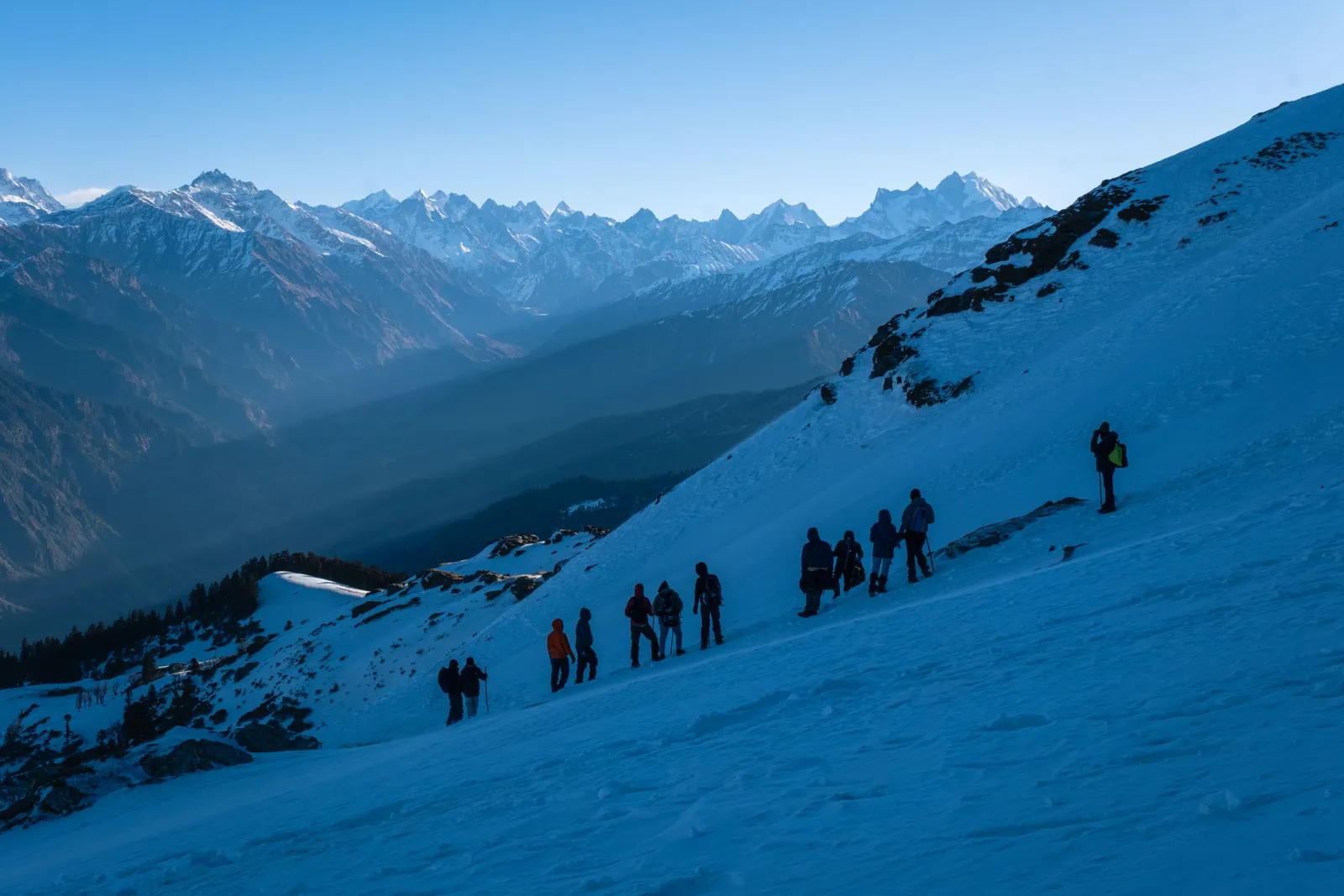
The Himalayas can feel intimidating for a first-timer, but a handful of well-marked, moderately graded treks make an ideal entry point — snow-capped ridgelines, alpine meadows, and summit views without needing technical climbing skills. Here are the Himalayan treks that consistently work best for beginners, why they're beginner-friendly, and how to choose between them.
Not every Himalayan trek suits a first-timer. Routes like Roopkund or Kashmir Great Lakes involve longer duration, higher altitude, and more exposure than a beginner should take on, and the consequences of getting it wrong on your first mountain outing can range from a miserable trip to a genuinely dangerous one. The treks below are chosen because they combine manageable daily distances, well-established trails, reliable base camps, and altitudes that rarely trigger serious altitude sickness — while still delivering the real Himalayan experience of snow, ridgeline views, and high-altitude camping. None of them are watered down; they are simply forgiving of a body and a mind that have never done this before.
A good beginner Himalayan trek should top out somewhere between 8,000 and 13,000 feet, run over 4 to 6 days, and fall in an established trekking season with enough footfall that the trail is worn-in and the campsite infrastructure — tents, kitchens, toilets, mule support — is dependable rather than improvised. That last point matters more than people expect: a well-trodden trail means a clearer path even under fresh snow, and a busy season means help is never far away if something goes wrong. All five treks below meet that bar, and each has its own personality — from a frozen lake to a plunging valley to rolling meadows.
- Kedarkantha (Uttarakhand) — 3,800 m, 5-6 days, winter snow trek
- Brahmatal (Uttarakhand) — 3,700 m, 5-6 days, winter snow trek with lake views
- Nag Tibba (Uttarakhand) — 3,022 m, 2 days, easiest true Himalayan trek
- Har Ki Dun (Uttarakhand) — 3,566 m, 6-7 days, valley trek with village culture
- Dayara Bugyal (Uttarakhand) — 3,024 m, 4-5 days, meadow trek with gentle gradients
1. Kedarkantha — The Classic First Snow Trek
Kedarkantha begins at Sankri, a small mountain village on the edge of the Govind Wildlife Sanctuary that has grown into the busiest trekking base in this part of Uttarakhand. From there the trail climbs gently through pine and oak forest before opening into wide snow meadows, gaining height in daily stretches of just 4 to 6 km that rarely feel punishing even to someone who has never worn crampons.
What makes Kedarkantha the trek every trekking company recommends first isn't just the gentle grading — it's that the sheer popularity of the route means the trail is packed down, the campsites are established with proper kitchen tents and toilets, and trek leaders here have shepherded thousands of first-timers up and down safely.
The summit push itself is short and steep, maybe an hour of real effort, and it rewards you with an honest 360-degree view that takes in the Swargarohini and Bandarpoonch massifs — a payoff completely disproportionate to how manageable the climb actually was.
- Altitude: 3,800 m
- Duration: 5-6 days (incl. buffer day)
- Best season: December-April
- Base camp: Sankri
- Difficulty: Easy-moderate
2. Brahmatal — Snow, Frozen Lake, and Fewer Crowds
Brahmatal starts from Lohajung in the Chamoli district and follows almost the same difficulty curve as Kedarkantha, but with noticeably thinner crowds on the trail, which some first-timers actually prefer. The route threads through dense oak and rhododendron forest for the first couple of days before breaking into open ridgelines with Mt. Trishul and Nanda Ghunti filling the skyline ahead.
The trek's namesake, Brahmatal lake, freezes over completely in peak winter, and camping beside a sheet of ice with those peaks catching the last light is the kind of image that brings people back to the mountains a second and third time.
Because it shares Kedarkantha's grading and season without the queues on narrow sections, Brahmatal is often the pick for beginners who want the same snow-trek experience with a bit more solitude.
- Altitude: 3,700 m
- Duration: 5-6 days
- Best season: December-March
- Base camp: Lohajung
- Highlight: Frozen Brahmatal lake
3. Nag Tibba — The Easiest True Himalayan Trek
If Kedarkantha still sounds like a lot, Nag Tibba is the answer. Perched above Dehradun and Mussoorie, it's reachable by road in a few hours from the plains, which makes it the shortest approach of any genuine Himalayan trek — you can leave a city on a Friday evening and be back by Sunday night.
The whole trek is done in two days, often as a single overnight, climbing through gentle forest trail to a modest 3,022 metres, low enough that altitude is a non-issue and easy enough for someone who has never done more than a Sahyadri fort trek.
It's doable almost year-round except during the heaviest monsoon weeks, which makes it a genuinely flexible weekend option. For a lot of trekkers, Nag Tibba is the honest starting point — the trek you do to find out whether high-altitude camping is something you actually enjoy.
- Altitude: 3,022 m
- Duration: 2 days
- Best season: Year-round (avoid Jul-Aug)
- Base: Dehradun/Mussoorie
- Difficulty: Easiest Himalayan trek
4. Har Ki Dun — Valley Culture Meets High-Altitude Views
Har Ki Dun trades summit-chasing for something gentler and, in its own way, richer. Starting near Sankri in Govind National Park, the trail follows a wide, cradle-shaped valley rather than climbing a peak, which keeps the gradient forgiving even as you gain altitude over several days.
What sets this trek apart is what you pass on the way: centuries-old villages like Osla, with wood-carved temples and a way of life that has changed remarkably little, sit right along the route, so the trek doubles as a walk through Garhwali culture.
The valley itself is framed by the Swargarohini and Bandarpoonch peaks, and the extra day or two compared with Kedarkantha or Brahmatal buys a slower, more immersive pace rather than added difficulty.
- Altitude: 3,566 m
- Duration: 6-7 days
- Best season: April-June, September-November
- Base camp: Sankri
- Highlight: Osla village culture
5. Dayara Bugyal — Rolling Meadows for a Gentle Introduction
Dayara Bugyal, near Uttarkashi, is arguably the gentlest ascent of any trek on this list in terms of daily elevation gain, which is exactly why it works so well as a first Himalayan trek. Instead of switchbacking up a ridge, the trail opens quite quickly into a vast bugyal — a high-altitude meadow — that rolls on for kilometres with barely a technical step.
Go between April and June and you'll find the meadow carpeted in wildflowers with the Bandarpoonch range as a backdrop; go in December through February and the same meadow is under snow, offering a completely different but equally photogenic version of the same gentle trek.
Because there's very little steep climbing involved, Dayara is often recommended for families, older trekkers, or anyone easing back into fitness — proof that a Himalayan trek doesn't have to hurt to be memorable.
- Altitude: 3,024 m
- Duration: 4-5 days
- Best season: April-June or Dec-Feb
- Base: Uttarkashi
- Difficulty: Gentle gradient throughout
What to Expect on Your First Night in the Mountains
No amount of reading fully prepares you for the first night of high-altitude camping, so it helps to know roughly what's coming. Temperatures drop fast once the sun goes behind a ridge — even in a 'warm' season, a campsite that felt pleasant at 4 p.m. can be well below freezing by 9 p.m.
Sleep is often lighter than usual thanks to the altitude and the unfamiliar cold, and a pre-dawn wake-up call for a summit push is standard on most of these treks, so going to bed early on day one sets you up far better than staying up late around the campfire.
None of this is a warning to stay away — it's simply the part of a Himalayan trek that no brochure photo captures, and knowing it in advance turns it from an unpleasant surprise into just another part of the adventure.
After Your First Trek: What Comes Next
Finishing your first Himalayan trek tends to answer a question you didn't fully know you were asking — whether this kind of trekking is actually for you, or whether it was a one-time bucket-list tick.
If Kedarkantha or Nag Tibba leaves you already thinking about the next trip, the natural progression from here runs toward slightly longer, slightly higher routes like Har Ki Dun in its full length or a proper Chandrashila-style ridge trek, before eventually working up to multi-day, higher-altitude routes like Kashmir Great Lakes or Roopkund.
There's no need to rush this progression — plenty of trekkers happily repeat Kedarkantha or Brahmatal in different seasons for years before pushing higher, and there's real value in returning to a trek you already know well enough to notice the details you missed the first time.
Frequently Asked Questions
Ready for Your First Himalayan Trek?
Find upcoming Kedarkantha, Brahmatal, and Nag Tibba batches, connect with trek organisers, and plan your first Himalayan adventure on TrekVerse.
Explore TreksHow to Prepare for Your First Himalayan Trek
Beginner-graded doesn't mean no preparation is needed — a little groundwork in the weeks before you leave makes an outsized difference to how much you actually enjoy the trek. Start building basic cardio fitness three to four weeks out with brisk walking, jogging, or stair climbing for 30 to 45 minutes a day; you don't need to be an athlete, but legs that are used to sustained effort make every uphill stretch feel shorter. Break in your trekking shoes well before you leave, since new shoes on day one are the single most common cause of blisters that ruin an otherwise good trek, and pack layers rather than one heavy jacket — a thermal base layer, a fleece, and a windproof/waterproof outer shell adapt far better to changing mountain weather than a single bulky coat. For a first Himalayan trek, going with an established trek organiser is genuinely worth it: they handle permits and campsite logistics, and their trek leaders are trained to make the judgment calls around altitude and weather that a first-timer simply doesn't have the experience to make alone. Round out your kit with a basic first-aid pouch, sunscreen, and proper sunglasses — snow glare at altitude is intense even under cloud cover — and resist the urge to skip the buffer or acclimatisation day built into the itinerary just because you're feeling strong; that day is there for a reason that isn't always obvious until it matters.
Who Should Attempt These Treks
These beginner Himalayan treks suit a wider range of people than the word 'Himalayan' might suggest. First-time trekkers with basic fitness who want a genuine high-altitude experience without technical risk will find all five approachable with a bit of preparation and a good group. Sahyadri and Western Ghats trekkers who have done their share of monsoon fort climbs and are ready to graduate to real altitude and snow will find the jump smaller than expected — the skills transfer, only the elevation and cold are new. Winter trek enthusiasts chasing snow without any mountaineering training will find Kedarkantha and Brahmatal built almost exactly for that craving, while anyone easing back into fitness or trekking with family will lean toward Nag Tibba or Dayara Bugyal for their gentler gradients. And for solo trekkers or small groups of friends, joining an organised batch on any of these routes adds both safety and the kind of camaraderie that tends to define a first mountain trek more than the scenery does.
Safety Tips for Beginner Himalayan Treks
Even easy-graded Himalayan treks demand real respect for the mountains, and most of the serious problems trekkers run into are preventable with a few habits. Never skip the acclimatisation day built into the itinerary — altitude sickness doesn't discriminate by fitness level, and skipping the rest day to 'save time' is how otherwise strong trekkers end up in trouble. Stay properly hydrated, aiming for 3 to 4 litres of water a day even in cold weather when your thirst cues are naturally weaker than usual, and tell your trek leader immediately if you notice a headache, nausea, or breathlessness beyond what normal exertion explains — these are early warning signs, not things to push through quietly. Trust your trek leader's call if they decide to turn back or delay a summit push because of weather; Himalayan conditions can shift from clear to dangerous within an hour, and the people who make that call daily have seen it happen. Finally, if you're trekking in winter on packed snow or ice sections, carry basic gaiters and micro-spikes or crampons — most operators provide or rent these, and using them is far cheaper than a fall.
Plan Your Himalayan Trip
Continue your Himalayan trek research with these guides: