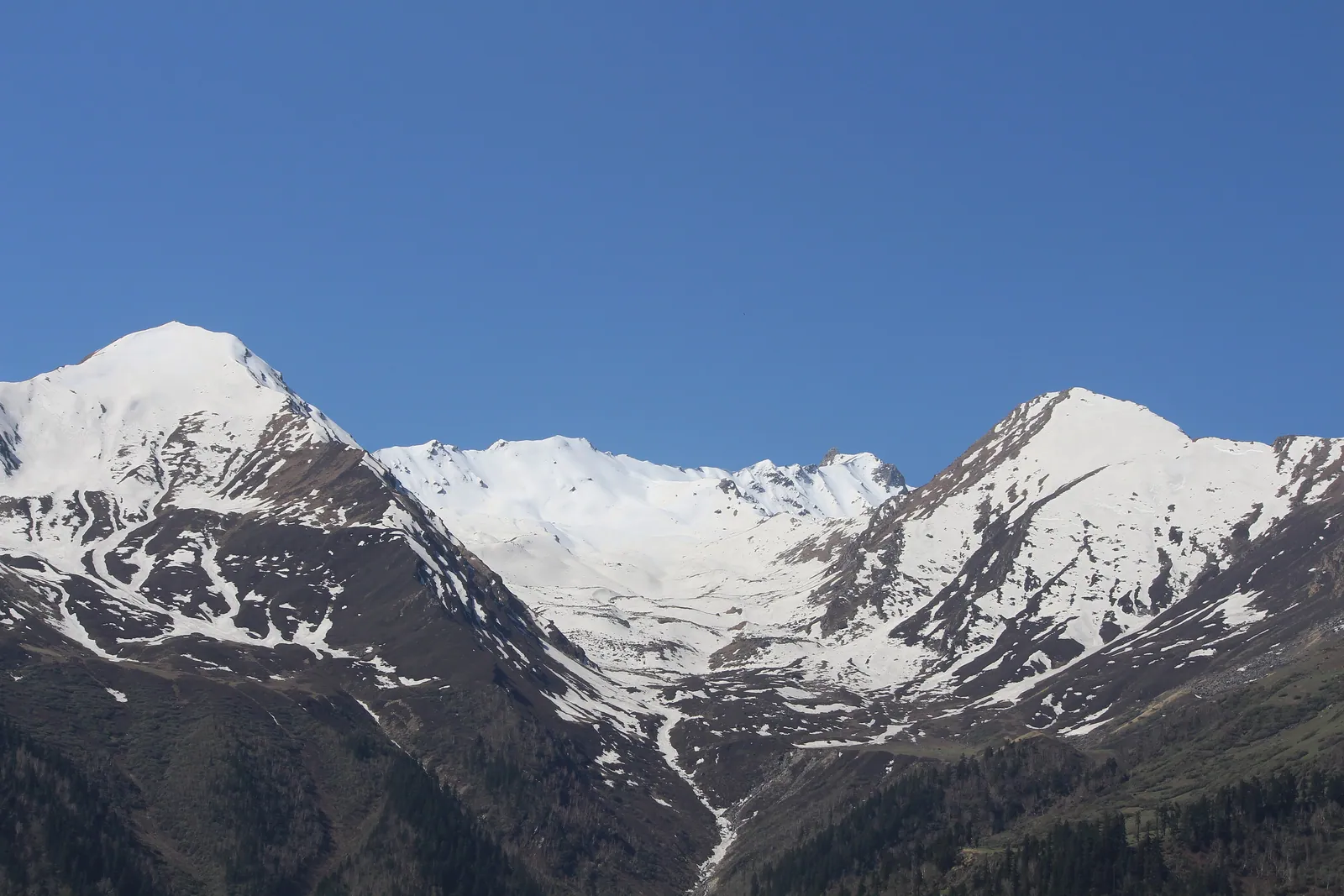
Har Ki Dun is a long, wide valley at the head of the Supin river, cradled below the snow peaks of the Swargarohini group. Its name is often translated as 'valley of the gods', and the walk to it passes through some of the most remarkable old villages in the Garhwal Himalaya, with intricately carved wooden houses and temples tied to stories from the Mahabharata. It is a gentle, culturally rich trek that works in more seasons than most.
Har Ki Dun at a Glance
- Valley height: about 3,550 m
- Base: Sankri, then a road to Taluka where the walk begins
- Duration: 6 to 7 days from Dehradun and back
- Distance: roughly 45-50 km on foot over the trek
- Difficulty: easy to moderate; long days but gentle gradients
- Best seasons: April to June and September to December
Getting There
Like Kedarkantha, Har Ki Dun starts with the long drive from Dehradun to Sankri, 8 to 10 hours via Mussoorie, Purola and Mori. From Sankri a rough road continues about 12 km to Taluka, where the trail begins along the Supin river. Road conditions to Taluka change with the season, and early in the year you may walk part of it.
A Typical Itinerary
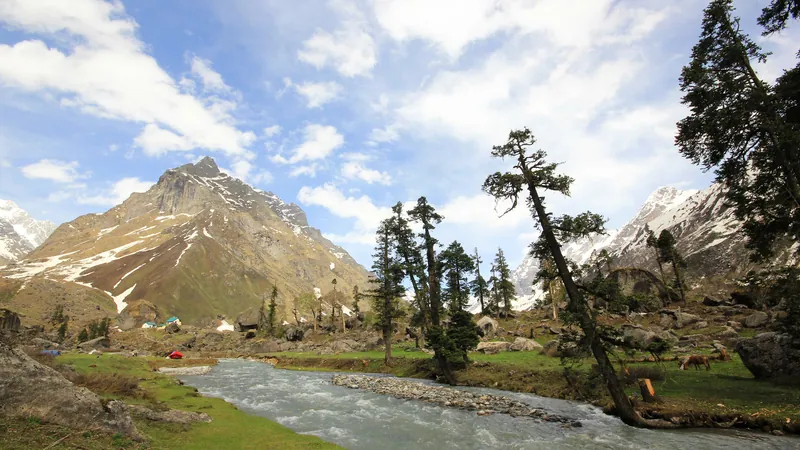
Campsite names and day splits vary between operators. What matters is that the climb into the valley is spread over at least two days so the altitude gain is gradual.
- Day 1: Dehradun to Sankri
- Day 2: Sankri to Taluka by road, then walk along the Supin to Pauni Garaat or the Seema area
- Day 3: On to Kalkattiyadhar or a campsite above Osla
- Day 4: To Har Ki Dun; afternoon to explore the valley
- Day 5: Optional day to Marinda Tal or towards the Jaundhar glacier, then descend
- Day 6: Descend to Taluka and drive to Sankri
- Day 7: Sankri to Dehradun
Osla and the Supin Valley Villages
The trek's cultural highlight is Osla, a village of stacked wooden houses with carved balconies, set on the slope across the Supin. The Someshwar temple here is associated in local tradition with Duryodhana, and villages in this valley are known for their distinctive deities and customs. Be respectful when visiting: ask before photographing people or entering temples, and follow any guidance from your guide about where visitors may go.
The terraced fields around the villages turn golden in autumn, and in spring the valley floor is green with new crops.
In the Valley
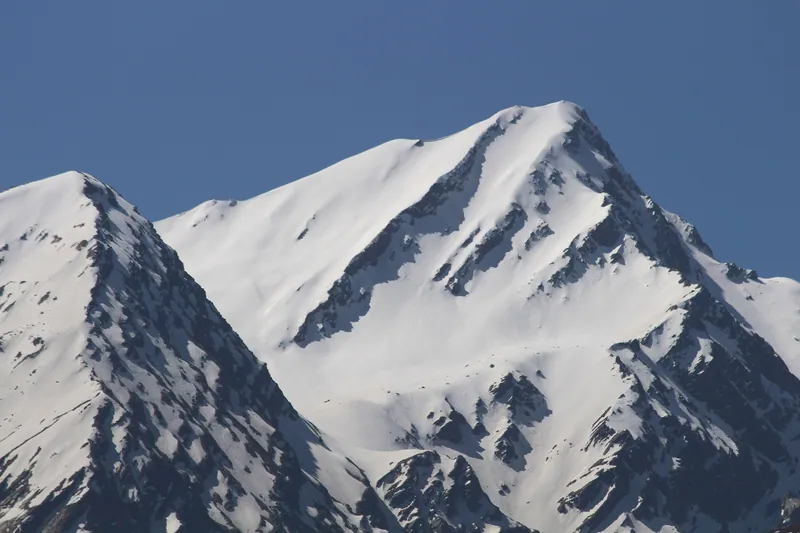
Har Ki Dun opens into a broad meadow where streams meet below a semicircle of peaks. Swargarohini, the 'stairway to heaven', dominates the view; in the Mahabharata it is the mountain by which the Pandavas are said to have begun their final ascent. Spending a second night here, or a day exploring, gives you time to walk towards the Jaundhar glacier or to Marinda Tal, a small lake a short walk away.
When to Go
- April to June: snowmelt, flowers and long days; snow can linger near the valley in April
- July to August: monsoon; landslides on the approach road and wet trails
- September to November: the clearest skies and golden fields; cold nights
- December to March: snow; parts of the route can be hard to pass, so go with an experienced team
Cost and Permits
Operator packages for Har Ki Dun are typically a little more than for Kedarkantha because of the extra days, often in the region of 10,000 to 14,000 rupees plus GST, with transport and gear rental sometimes extra. The trail lies in the Govind protected area, where forest entry and camping charges apply. Operators normally handle the permit; independent trekkers should confirm the current process with the forest office in Sankri.
Packing
- Layers for cold nights, even in May and October
- A rain jacket in any season
- Waterproof trekking shoes
- Cash: there are no ATMs beyond Sankri and limited ones there
- A small gift or contribution for a homestay if you stay in a village
Frequently Asked Questions
Find a Har Ki Dun Batch
Compare Har Ki Dun departures by season, group size and inclusions.
Browse Upcoming TreksKeep Reading
More from the TrekVerse journal: