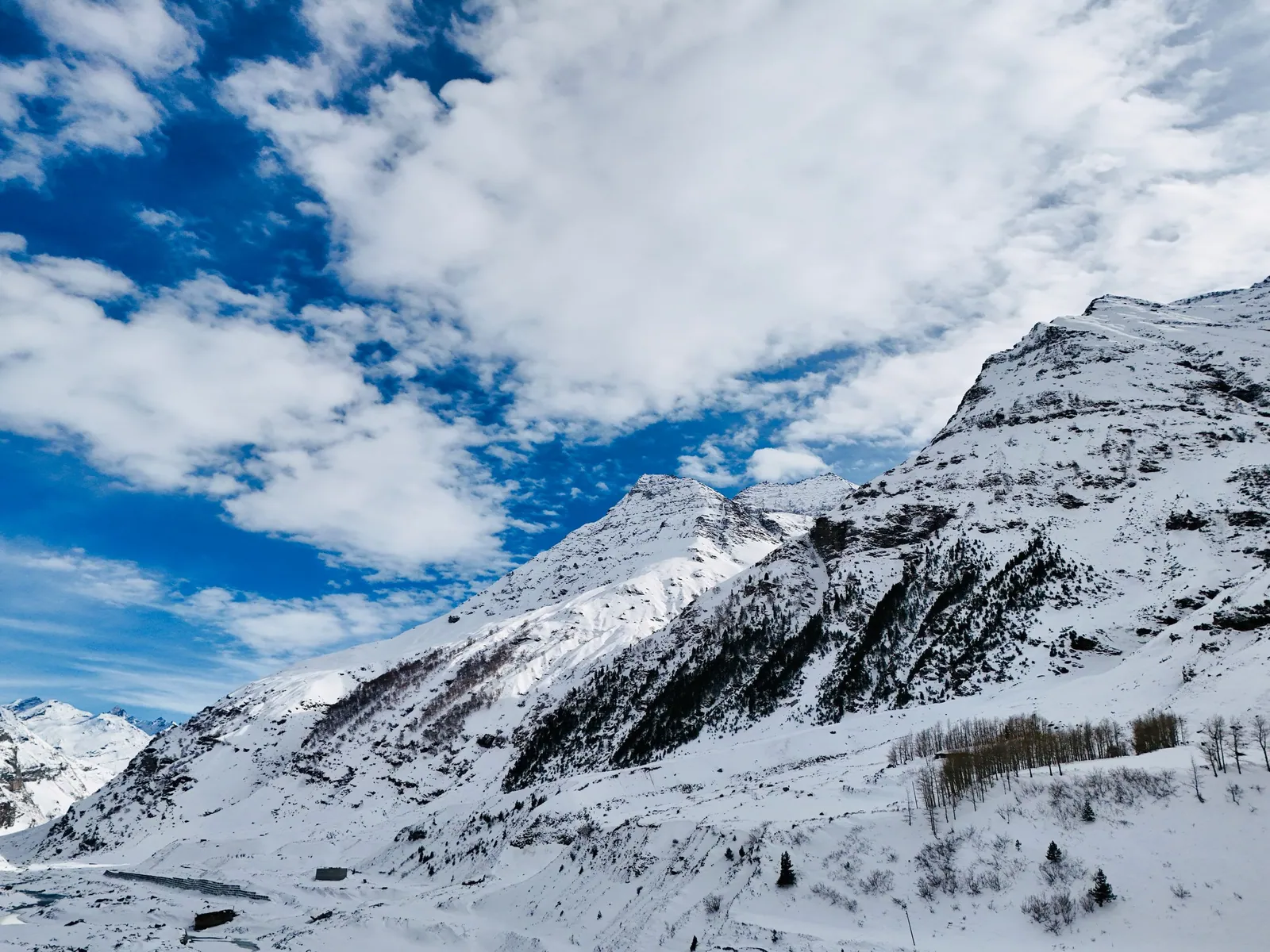
The Himalayas don't have one 'best' season — they have several, each suited to different treks and different kinds of trekkers. Snow-seekers, flower-chasers, and clear-summit hunters should all be looking at different months. Here's a season-by-season breakdown of what the Himalayas offer through the year and which treks make the most of each window.
Himalayan trekking seasons are shaped by two opposing forces. The monsoon brings heavy, often dangerous rain to most of the range from roughly July to September, while winter snow closes high passes from December through February, sealing off entire regions until the thaw. Between these two blackout periods, spring and autumn emerge as the two headline trekking windows — the moments when the mountains are at their most cooperative — but summer and winter both have their own specialities if you know exactly where to look and what to expect from them.
None of these seasons is universally 'best' — the right one depends entirely on what you want from the trek. Someone chasing a snow-covered summit and someone chasing a valley full of wildflowers should be looking at completely different months, sometimes on the very same trail. Here's what each season actually delivers, region by region and month by month.
Spring (March–June): Blooms and Building Warmth
Spring in the Himalayas is a season of thaw and colour. Winter snow at lower altitudes starts melting away through March, rhododendron forests and wildflower meadows burst into bloom through April and May, and the weather grows progressively warmer and more stable as the season advances.
It's a good window for mid-altitude treks like Har Ki Dun, or for Kedarkantha in late spring once the snow has softened into something more forgiving underfoot, and for the lower valley treks across Himachal and Uttarakhand where the meadows come alive with colour.
One caveat worth knowing: early spring, particularly March, can still carry leftover snow and real cold at higher camps, so it's only by May or June that conditions turn reliably clear and pleasant across most regions.
- Window: March-June
- Best for: Har Ki Dun, late-spring Kedarkantha
- Highlight: rhododendron & wildflower bloom
- Caveat: March still cold/snowy at higher camps
Summer (May–June): The Pre-Monsoon Window
The short pre-monsoon window of May and June brings warm days, cool nights, and generally stable weather in the gap before the rains arrive — though it's also peak tourist season for many of the hill stations that feed into trek bases.
This is the best stretch for high-altitude treks that need snow-free passes, including parts of the Great Lakes region and the higher meadow treks, since accumulated winter snow has usually cleared from these routes but the monsoon hasn't yet made them unsafe.
- Window: May-June
- Best for: high-altitude lake treks, snow-cleared passes
- Trade-off: busier trails, peak tourist season
Monsoon (July–September): Rain Shadow and the Valley of Flowers
For most of the Himalayan belt, monsoon means heavy rainfall, landslide-prone roads, and swollen rivers that make many routes genuinely unsafe or simply inaccessible — this is the season to plan around rather than into.
But there's one striking exception: Valley of Flowers hits its peak bloom exactly in this window, from July to early September, when the valley becomes a rare case where monsoon is the ideal time to visit. The other exception is geographic — Ladakh, Spiti, and Zanskar sit in the rain shadow and receive very little rainfall even at the height of monsoon.
If you're set on trekking during monsoon, steer clear of the road-heavy approaches through Uttarakhand and Himachal's outer ranges, and choose a rain-shadow region or Valley of Flowers instead.
- Window: July-September
- Best for: Valley of Flowers (Jul-early Sep)
- Rain-shadow alternative: Ladakh, Spiti, Zanskar
- Avoid: Uttarakhand/Himachal outer ranges
Autumn (Late September–November): The Clearest Skies
Autumn is, by most measures, the best all-round Himalayan trekking season. Once the monsoon clears, the skies settle into their cleanest state of the year — minimal haze, stable weather, and mountain visibility that routinely beats every other season by a wide margin.
It's prime time for almost everything: Kedarkantha in its early season before the deep snow sets in, Har Ki Dun, Brahmatal as autumn tips into winter, and most of the classic Himachal and Uttarakhand routes hit their stride here.
The one thing to plan for is temperature — nights grow progressively colder through November as winter approaches, so late-season autumn treks need noticeably warmer gear than an early-October trip would.
- Window: late September-November
- Best for: nearly all classic Himalayan treks
- Highlight: clearest skies, best visibility
- Note: pack warmer gear later in the season
Winter (December–February): Snow Treks and the Chadar
Winter shuts down large parts of the high Himalaya — heavy snowfall closes many routes and passes, and overnight temperatures drop sharply enough that this becomes a season for specialists rather than casual trekkers.
But for snow-seekers, it's the whole point: Kedarkantha and Brahmatal are at their most popular precisely in winter, when guaranteed snow cover turns them into genuine alpine experiences. The most unusual winter trek of all is the Chadar Trek, which follows the frozen Zanskar river on foot.
Winter treks demand proper cold-weather gear — down jackets, thermal layers, and good insulated footwear are non-negotiable — and many routes require micro-spikes for packed snow and ice sections.
- Window: December-February
- Best for: Kedarkantha, Brahmatal, Chadar Trek
- Chadar Trek: mid-January-February
- Gear: down jacket, micro-spikes required
Quick Reference: Season and Trek Match
If you just want the short version: spring, from March to June, suits Har Ki Dun, blooming valleys, and mid-altitude meadow treks. Summer, in May and June, is best for high-altitude lake treks and routes that need snow-cleared passes.
Monsoon, from July to September, belongs to Valley of Flowers and the rain-shadow regions of Ladakh, Spiti, and Zanskar, with almost everywhere else best avoided. Autumn, from late September to November, is the season for nearly all classic treks.
Winter, from December to February, is reserved for snow specialists — Kedarkantha, Brahmatal, and the Chadar Trek — where guaranteed cold and snow are the entire appeal rather than something to work around.
- Spring (Mar-Jun): Har Ki Dun, meadow treks
- Summer (May-Jun): high-altitude lake treks
- Monsoon (Jul-Sep): Valley of Flowers, rain-shadow
- Autumn (Sep-Nov): nearly all classic treks
- Winter (Dec-Feb): snow treks, Chadar
Why the Same Trek Can Feel Completely Different by Season
One thing that surprises first-time Himalayan trekkers is how much a single trail can change depending on when you walk it. Kedarkantha in December is a snow trek in the truest sense, with ice underfoot and a summit push through fresh powder; the same route in late September is a green, grassy climb with none of the alpine drama but considerably easier footing.
Har Ki Dun in April feels like walking through a valley waking up from winter, with meadows just starting to green and rivers running high with snowmelt, while the same trail in October is drier, warmer, and framed by crisp autumn light.
This is worth knowing not just for planning purposes but because it means a trek you've already done isn't necessarily a trek you've already seen — many experienced trekkers deliberately repeat routes in a different season.
Booking Windows: Why Season Also Decides Availability
Season doesn't just determine the weather you'll get — it also determines how easily you can actually book a spot. Kedarkantha and Brahmatal batches fill up weeks in advance through peak winter, particularly around the Christmas and New Year window, when demand spikes hard enough that popular dates sell out well before the trek itself.
Autumn carries a similar, if slightly gentler, surge, since it's the season most experienced trek organisers recommend to beginners, which concentrates demand into the same eight or nine weeks every year.
Off-peak windows — early spring before the crowds arrive, or the quieter stretches of summer — tend to have far more flexibility on dates and group sizes. Booking early is worth it regardless of season, but it matters most during the windows everyone else has read the same advice about.
Reading Beyond the Calendar: Altitude and Regional Variation
The seasonal windows above are a reliable starting point, but the Himalayas are too vast a range for a single calendar to apply everywhere equally. A trek's exact altitude shifts its season by weeks in either direction — a route topping out at 3,000 metres clears of snow well before one that climbs past 4,500 metres.
Geography matters just as much as elevation: Uttarakhand and Himachal, closer to the plains and more exposed to the monsoon, follow the spring-autumn pattern fairly closely, while Ladakh, Spiti, and Zanskar effectively run on their own separate calendar where June through September is prime season.
Before locking in dates for any specific trek, it's worth checking recent trip reports or asking a local organiser, since unusual snowfall or a delayed monsoon can shift the practical window by two or three weeks from what a general guide would suggest.
Building Flexibility into Your Trip Dates
Even with a good seasonal plan, it's worth building a few days of flexibility into your travel dates rather than locking in a single fixed window months in advance, especially for weather-sensitive treks like Chadar or Valley of Flowers where a delayed freeze or a late monsoon can shift the ideal dates by a week or more.
Trek organisers running these routes regularly track exactly this kind of variation and can often tell you, closer to the date, whether conditions are running early, on schedule, or late for that particular year.
If your schedule genuinely can't flex, lean toward the safer, more reliable middle of a season's window rather than its very first or last week, since the edges of any trekking season are where unpredictable weather is most likely to disrupt a tightly planned trip.
A Season-by-Season Snapshot for Quick Decisions
If you're deciding between two windows and need a fast gut check, it helps to think in terms of trade-offs rather than a single 'correct' answer. Choosing spring over autumn generally means accepting a slightly higher chance of leftover snow in exchange for blooming meadows and thinner crowds.
Choosing summer over autumn usually means better availability and fewer people on trail, at the cost of missing autumn's exceptional visibility. Choosing winter is really a choice about wanting the guaranteed experience of snow and cold rather than a general-purpose 'best' pick.
And choosing monsoon at all, outside Valley of Flowers or the rain-shadow regions, usually isn't a trade-off worth making, since the risk profile rises sharply for a marginal scenic gain that autumn or spring can usually deliver more safely anyway.
Frequently Asked Questions
Time Your Himalayan Trek Right
Browse upcoming Himalayan treks by season and connect with trek organisers on TrekVerse.
Explore TreksHow to Choose Your Season
A few quick questions usually narrow down your ideal window fast. If you want guaranteed snow underfoot, go December to February for Kedarkantha, Brahmatal, or the Chadar Trek, and pack accordingly for real winter cold. If clear mountain views matter most to you, aim for late September through November, when post-monsoon skies are at their sharpest all year. If you're chasing flowers and greenery, April to June delivers blooming meadows across most regions, while July to early September is the one window built specifically for Valley of Flowers. If you're trekking during monsoon regardless of the season's reputation, stick firmly to rain-shadow regions like Ladakh, Spiti, or Zanskar rather than the main monsoon belt. And if you're a first-timer simply looking for the most reliable conditions with the least planning risk, autumn remains the safest all-round bet — it's the season almost every experienced Himalayan trekker defaults to when in doubt.
Plan Your Himalayan Trek
Continue researching your Himalayan trip with these guides: