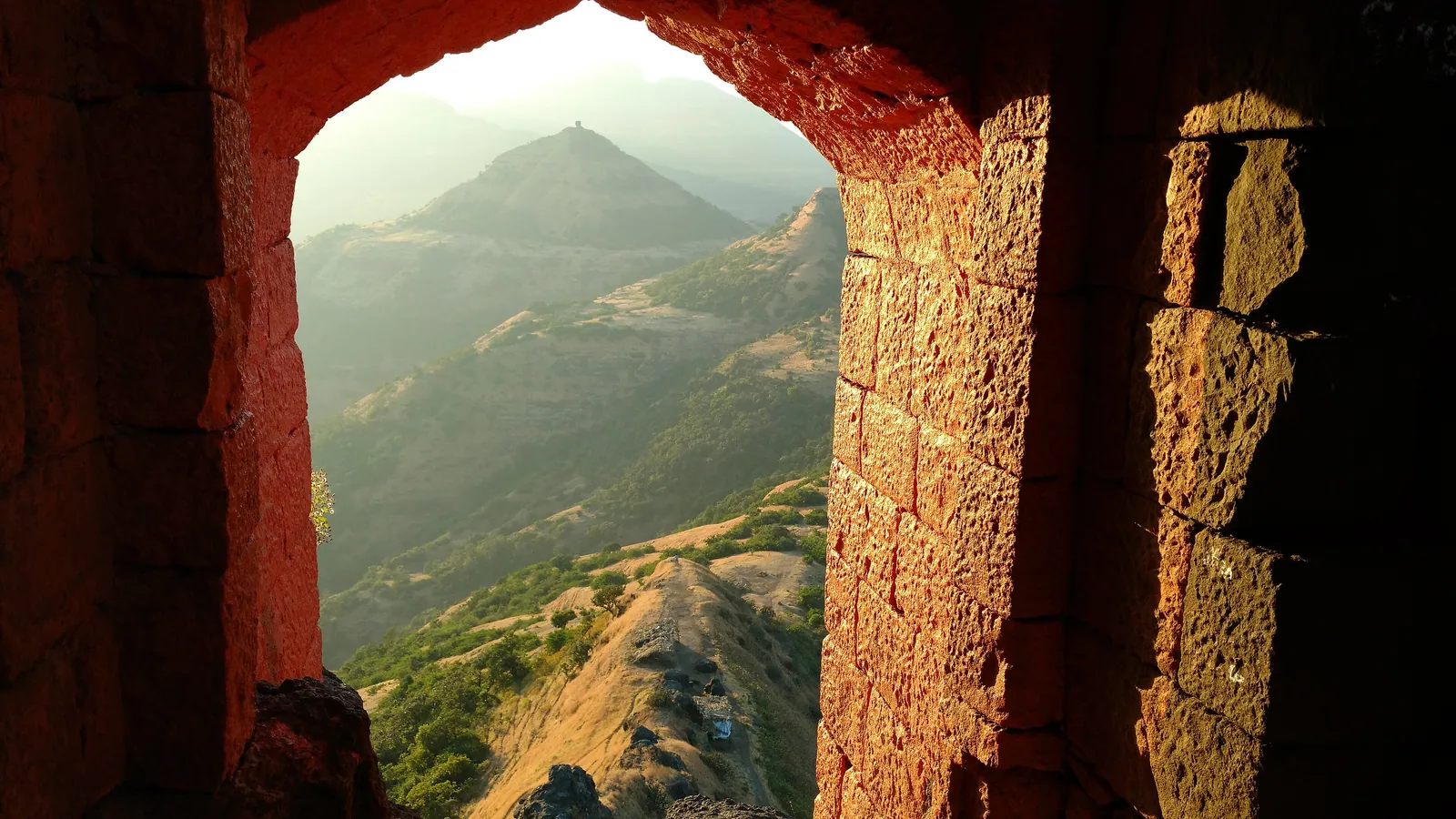
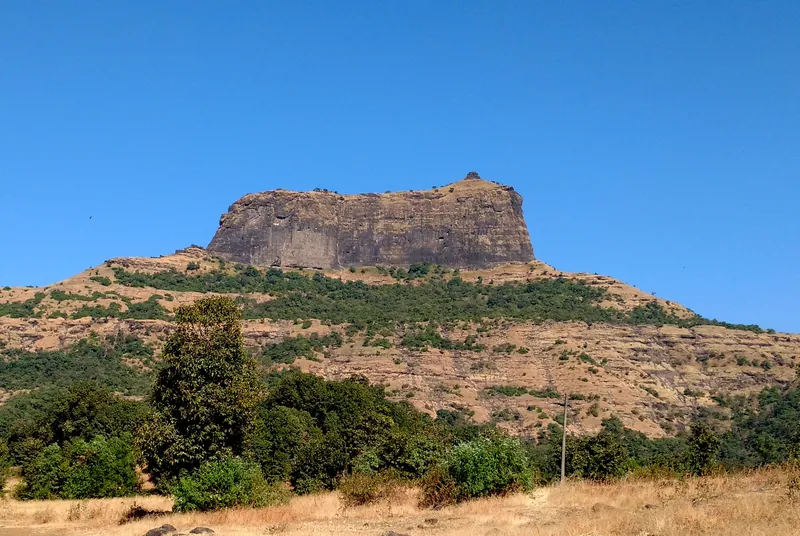
Harihar is the fort that went viral. A triangular rock prism above the Trimbakeshwar hills, it is climbed by a staircase cut straight into the rock face, steep enough that you use the hand-holds carved beside the steps. Photographs of it have drawn enormous crowds, and that has brought accidents and, in 2026, a daily cap. This guide covers the route, the rules and how to climb it without becoming part of the problem.
Harihar at a Glance
- Also known as: Harshagad
- Location: the Trimbak range, about 40 km from Nashik
- Base villages: Nirgudpada and Harshewadi
- Climb time: about 2 to 2.5 hours from Nirgudpada
- Difficulty: moderate overall; the rock-cut steps are steep and exposed
- Best season: October to February
The 2026 Rules
In 2026 the Nashik forest administration limited Harihar to 300 visitors a day, made prior permission mandatory, and stopped all entry after 2 pm. Groups of more than 20 must register 72 hours in advance, and are turned away if they have not. Alcohol is banned, and photography, selfies and reels are prohibited near forts and waterfalls under the district's monsoon orders. The fort has also been closed outright at short notice when weather or crowding made it unsafe.
These rules followed years of weekend crowds in which queues formed on the narrowest part of the climb, the place where a queue is most dangerous.
Check with the Trimbakeshwar forest range office or the Nashik West forest division before you travel, and expect the fort to close during heavy-rain alerts.
The Route From Nirgudpada
Most groups start from Nirgudpada, a small village near the Trimbakeshwar-Ghoti road. The trail crosses farmland and climbs steadily through scrub to a col below the fort, where the prism of rock rises directly ahead. This first part takes about an hour and a half and is a straightforward Sahyadri walk.
From the base of the rock, the famous staircase begins: around a hundred-odd steps cut into a near-vertical face, each with notches cut into the rock beside it for your hands. Halfway up you pass through a gateway, then a short tunnel-like passage leads to a second, narrower flight of steps that brings you onto the top.
Climbing the Steps Safely
The steps are worn smooth in places, and descending them is harder than climbing. Most accidents on forts like this involve slips on the way down, often in wet weather or in a hurry to beat the dark.
- Face the rock on the way down, using the hand-holds, as you would on a ladder
- Move one at a time on the narrowest part; do not overtake
- Keep both hands free: everything goes in a small backpack
- Do not climb when the steps are wet or the wind is strong
- Never stop on the steps for photographs
- If you feel uneasy at the first flight, that is the place to turn back
On Top
The summit is a small plateau with a Hanuman and a Shiva temple, a pond, and a small storehouse. The view takes in Brahmagiri and the Trimbak hills, Bhaskargad and Utwad, and on clear days the long line of the Sahyadri to the south. Spend your time here, not on the steps.
Best Time to Go
- October to February: dry rock, clear views and cool air; the best season
- March to May: hot and exposed; start at dawn
- June to September: the steps run with water; restrictions and closures are likely
- Weekdays are far quieter than weekends at any time of year
Getting There
- From Nashik: about 1 hour by road via Trimbakeshwar
- From Mumbai: about 4 hours via Igatpuri and Ghoti; most groups travel overnight
- From Pune: about 5 hours via Sangamner and Nashik
- Shared transport from Trimbakeshwar reaches the base villages, but timing is unpredictable
Combine With
Trimbakeshwar, one of the twelve Jyotirlingas, is a few kilometres away, as is Brahmagiri, the hill where the Godavari is said to rise. Bhaskargad, a quieter fort with its own rock-cut entrance, is nearby for anyone who wants a second climb without the crowds.
Frequently Asked Questions
Climb Harihar With a Registered Group
Organised Harihar treks handle registration and timing within the daily cap.
Browse Upcoming TreksKeep Reading
More from the TrekVerse journal: