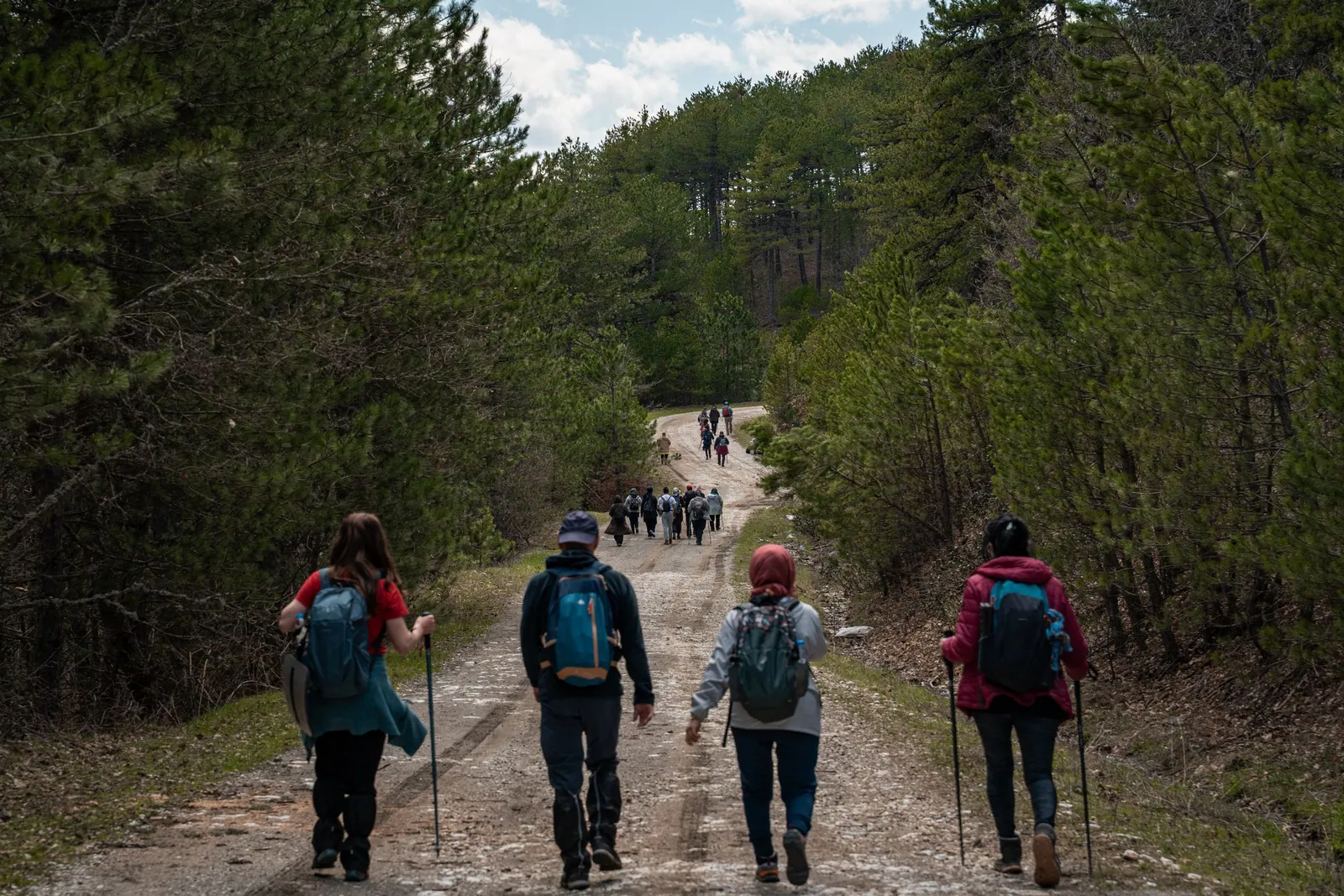
Finding people to trek with in India is easy. Finding people you can trust with a weekend, a few thousand rupees, and your physical safety is a different problem entirely. The Indian trekking scene runs largely on Instagram pages and WhatsApp forwards, which is wonderful for discovery and terrible for accountability. This guide covers where groups actually exist, how to tell a real operator from a well-designed page, and the specific questions and payment rules that protect you before you commit.
Where Indian Trekkers Actually Find Groups
There are four realistic channels, and each trades convenience against accountability. Instagram is where the largest trekking audiences live and where most weekend treks are advertised, but a page is not a business and a DM is not a contract. WhatsApp groups, usually passed along by a friend or a former participant, carry the highest trust when the chain is short and the lowest when you were added by a stranger. Booking platforms give you a record of what was promised and what you paid, which matters enormously the one time something goes wrong. College and workplace outdoor clubs are the most underrated option in India, because the group already knows each other and accountability is social rather than commercial.
None of these is inherently safer than the others. What varies is how much evidence survives if the trek is cancelled, if the itinerary changes, or if someone is injured. A trek that exists only as a WhatsApp message and a UPI transfer leaves you with almost nothing. The same trek with a written confirmation, a named organisation, and a listed emergency contact leaves you with a great deal.
- Instagram: the widest choice, the least accountability, easiest to fake
- WhatsApp groups: strong when a friend vouches for the organiser, weak otherwise
- Booking platforms: a written record of price, inclusions and cancellation terms
- College and workplace clubs: cheapest, most social, limited to their own calendar
- Local Sahyadri operators: often excellent and often invisible online — ask at gear shops
What Verified Should Actually Mean
The word verified gets used loosely in Indian trekking. A blue tick on a social profile verifies nothing about a trek. What you actually want to know is narrower and more boring: does a real, findable business stand behind this trek, and has it run this route before with groups like yours?
A meaningful verification is a chain of small, checkable facts. There is a registered business name. That name appears on the payment instrument you are asked to pay. A human being answers a phone number during working hours. Photographs of past groups on this specific route exist across more than one season. At least one review exists somewhere the organiser does not control. Any organiser clearing all five is very unlikely to be running a scam, whatever their follower count.
- A registered business name that matches the account you are paying
- A working phone number answered by a named person
- Photos of past groups on this specific route, across seasons
- Reviews on a surface the organiser does not control
- A written itinerary that names the trail, not just the destination
The Payment Rule That Matters More Than Any Other
If you remember one thing from this guide, make it this: do not transfer money to a personal UPI ID or a personal bank account. This is the single clearest dividing line between an operator who expects to be held accountable and one who does not. A legitimate trek business has a business account because it needs one for its own accounting, and asking to pay into it is a completely normal request that no genuine operator resents.
Beyond the account itself, insist on a written confirmation before you pay anything, even a token advance. It does not need to be a formal contract. A message that states the trek name, the date, the total fee, what the fee includes, what it excludes, and the cancellation terms is sufficient, and its real value is that it exists at all. Screenshot it. The overwhelming majority of disputes in Indian group trekking are not fraud but disagreements about what was promised, and those disputes end quickly when there is a message to point at.
- Pay a business account or a platform, never a personal UPI ID
- Get the trek name, date, fee, inclusions and cancellation terms in writing first
- Screenshot the confirmation — chat histories get deleted
- Be wary of full advance payment demanded well before the trek date
- Keep the transaction reference; it is your only proof in a dispute
Vetting an Organiser in Ten Minutes
You do not need to investigate anyone. You need a fast, repeatable check that catches the obvious problems, and ten minutes is genuinely enough. Start with the account age and posting history — an organiser advertising a Himalayan trek from an account created four months ago with no photographs of past groups is asking you to take an unusual amount on faith.
Then look at the photographs themselves rather than the captions. Real trek pages accumulate participant faces, tagged accounts, and the same trek leaders appearing across different trips. Stock landscape photography with no people in it is the most common tell of an operator who has not actually run the trek. Finally, call the number. A two-minute conversation with someone who can immediately describe the trailhead, the group size, and what happens if it rains tells you more than an hour of scrolling.
- Check how long the account has existed and whether it posts between treks
- Look for participant faces and tagged accounts, not stock landscapes
- Look for the same trek leaders recurring across trips
- Search the business name plus the word review outside their own page
- Call. Ask about the trailhead and the rain plan. Listen for hesitation.
Six Questions to Ask Before You Pay
Ask all six. The answers matter, but the confidence behind them matters just as much — an experienced operator has answered these hundreds of times and will not be thrown by any of them.
- How many people will be in the group, and how many trek leaders come with us?
- What is the plan if someone is injured or cannot continue — who evacuates them, and to where?
- What exactly does the fee include, and what will I need to pay for separately on the day?
- What happens if the trek is cancelled for weather, and what is the refund timeline?
- Has this group run this specific route before, and when was the last time?
- Who else is joining — roughly what mix of experience levels and ages?
A leader-to-participant ratio worse than roughly one to fifteen on a moderate Sahyadri trek, or one to ten at altitude, is worth questioning directly.
Reading the Group Before You Commit
Most people worry about the trail and underestimate the group, but who you trek with shapes the weekend far more than the route does. A beginner joining a group of experienced fast walkers will spend two days at the back feeling like a burden, and a fit trekker joining a large casual group will spend the day waiting. Neither is a safety problem, but both are the reason people finish their first group trek and never book another.
Ask directly about the mix. Good organisers segment their trips and will tell you honestly if a particular departure is not right for you. Be equally honest about your own fitness — overstating it is the most common cause of a miserable first trek, and trek leaders can plan around a candid answer far better than a flattering one.
When Something Goes Wrong
Most trek disputes are resolved by the organiser once you raise them clearly and in writing, so start there. Set out what was promised, what happened, and what resolution you want, and send it as a message rather than saying it on a call so a record exists. Attach the original confirmation.
If that fails, your options depend almost entirely on how you paid. A payment to a registered business or through a platform gives you a chargeback route, a consumer complaint route under Indian consumer protection law, and a paper trail. A payment to a personal UPI ID gives you a cybercrime complaint and very little else, which is why the payment rule earlier in this guide is worth following even when the organiser seems perfectly genuine. For anything involving injury or negligence rather than money, file a written complaint with the local police station nearest the trailhead as well, since jurisdiction follows the location of the incident.
- Raise it in writing with the organiser first, attaching the original confirmation
- Payments to business accounts and platforms support chargebacks and consumer complaints
- Report online payment fraud through the national cybercrime portal
- For injury or negligence, complain at the police station nearest the trailhead
- Leave a factual public review — it is what protects the next person
Starting Out, City by City
If you are in Pune or Mumbai, you have the densest weekend trekking scene in the country and the shortest learning curve. Start with a well-known one-day Sahyadri fort trek where the group will be large, the trail short, and the consequences of a mismatch small. Lohagad, Rajmachi and Tikona all work well as first treks, and once you have done one you will know several people who trek regularly, which is how most Indian trekkers actually build a circle.
In Bangalore, the scene skews toward day treks in the Nandi and Kudremukh directions and toward organised transport, since trailheads are further out. In Delhi NCR, weekend options are limited and most groups are organising toward Himachal and Uttarakhand, so expect longer commitments and plan for a full weekend rather than a day. Everywhere, the fastest route into a reliable circle is the same: do one trek with a group that has a track record, be useful and easy to travel with, and let the invitations follow.
Frequently Asked Questions
Find a Group You Can Actually Check
Browse upcoming treks from organisers with a verified profile, published inclusions and real participant reviews — so the checks in this guide are already done for you.
Browse Upcoming TreksKeep Reading
Next steps before you book your first group trek: