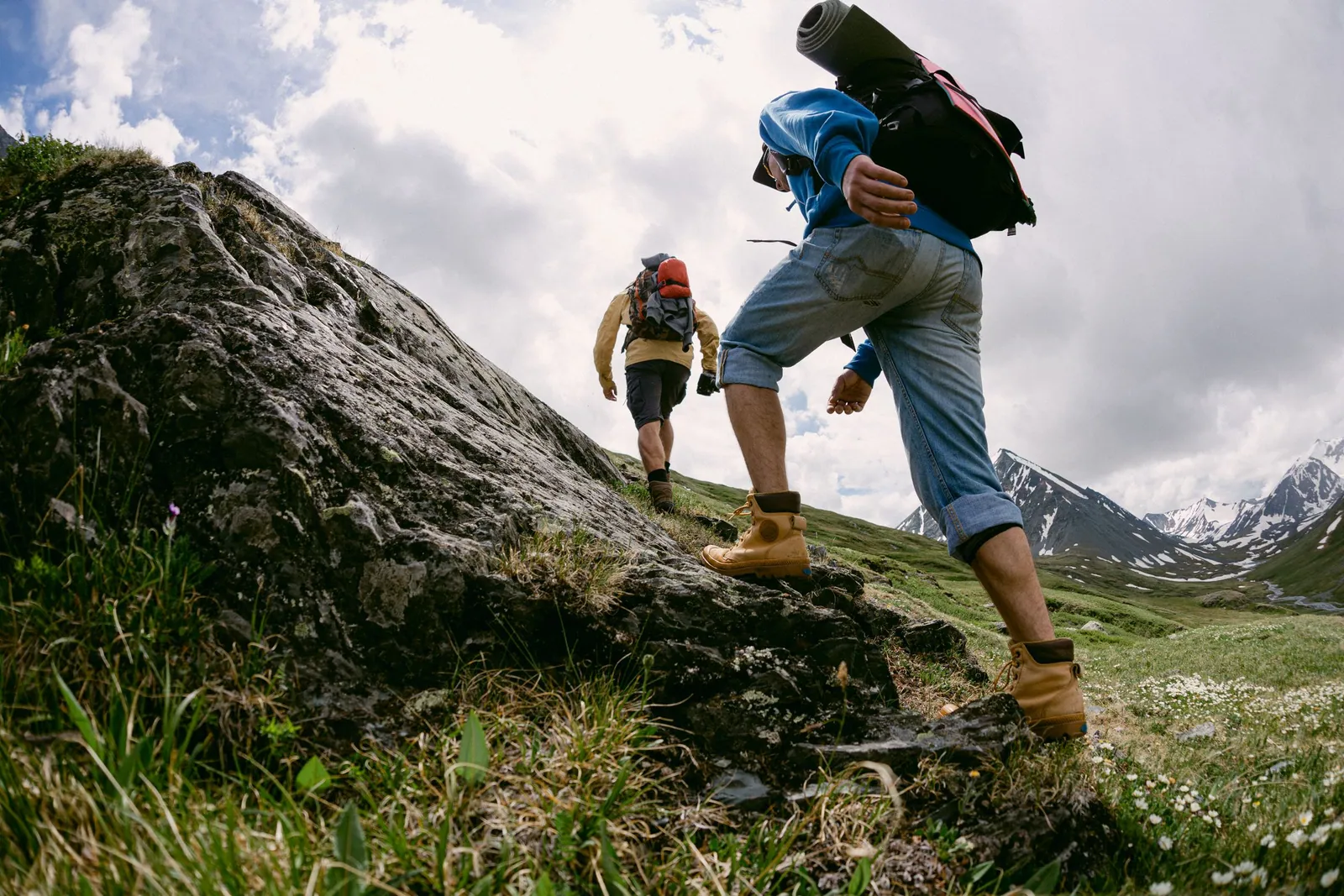
Most treks in India are not run by companies. They are organised by somebody who had done the route a few times, put a message in a group chat, and booked a vehicle. If you have trekked a handful of times and know one route well, you already have most of what hosting requires. What you need is a plan for six specific things — route, group, transport, safety, money, and the decision to turn back — and this guide covers each of them.
Start With a Route You Have Already Walked
The first rule of hosting is that you do not lead a trail you have not personally walked, in similar conditions, at least once. Not a trail you have researched thoroughly. One you have walked. The difference shows up at the exact moment it matters — an unmarked branch, a stream that is higher than expected, a section that looks trivial in photographs and is not.
For a first hosted trek, choose a route that is well marked, popular enough that other groups will be on it, short enough to finish comfortably within daylight with hours to spare, and free of any section where a fall would be serious. In the Sahyadris this points naturally at the well-trodden fort treks. Save the offbeat route you have been wanting to try for a trip where you are a participant, not the host.
- Only host a route you have personally walked in similar season and conditions
- Prefer well-marked, popular trails for your first few hosted treks
- Build in a large daylight buffer — descents always take longer than planned
- Avoid exposed sections, unmarked branches, and anything needing technical gear
- Walk it again shortly before if the season has changed since you last did
Size the Group Deliberately
Six to twelve people is the sweet spot for a first hosted trek. Below six, a shared vehicle gets expensive per head and the trip often collapses when two people drop out. Above twelve, the group naturally stretches out along the trail and you need a second reliable person at the back, because one person cannot be at the front and the rear simultaneously.
Whatever the size, recruit a sweeper — someone experienced who walks last and ensures nobody is behind them. This single arrangement prevents the most common failure in informal treks, which is a group unknowingly leaving somebody behind at a junction. Agree it explicitly before you start rather than assuming it will happen naturally.
Set Expectations Honestly, in Writing
The most common complaint about informally hosted treks is not danger — it is that the trek was much harder than people were told. Being straightforward about difficulty costs you a couple of participants and saves you a miserable day managing somebody who should not have come.
Put the details in the group chat before anyone commits: the specific route, total distance and elevation gain, realistic timings including the descent, what the terrain is actually like, what the night halt is if there is one, and what people need to bring. State the difficulty in plain language rather than reassuring language. If a section involves a scramble where hands are needed, say so explicitly. People opt out appropriately when they have real information, and that is a good outcome.
- Name the specific route, not just the fort or peak
- Give distance, elevation gain, and honest timings including the descent
- Describe the hardest section explicitly, including any scrambling
- State the fitness baseline you expect in concrete terms
- Share the full packing list at least three days ahead
Transport and Logistics
For a group of eight to twelve, hiring a tempo traveller with a driver is usually the simplest and safest arrangement, and splitting the fixed cost across the group makes it comparable to a commercial trek's transport component. Book it a few days ahead, confirm the pickup points and time in writing, and share the driver's number with the group.
If you are carpooling instead, keep the arrangement transparent: who is driving, who is in which car, and a shared location or a checkpoint where the cars regroup. Overnight departures are common and cost-effective in the Sahyadris because they avoid a night's accommodation, but they put a driver on the road at the worst hours — if you are the one driving after an overnight trek, you are the fatigue risk, and swapping drivers or adding a rest stop on the return leg is not optional.
The Safety Kit and the Information You Collect
Two lists. The first is what you carry; the second is what you collect from participants before departure, which matters just as much and is far more often skipped.
- Carry: a first aid kit with antiseptic, bandages, pain relief, ORS, blister care
- Carry: a headlamp, whistle, power bank, spare water, and offline maps
- Carry: a rope only if the route has a known scramble and you know how to use it
- Collect: every participant's emergency contact name and number
- Collect: any medical conditions, allergies and regular medication, privately
- Collect: an honest self-assessment of fitness and previous trekking experience
- Share: your route plan and expected return with someone not on the trek
Collecting medical declarations feels excessive for a casual weekend trek right up until the moment somebody has an asthma attack and nobody knows they carry an inhaler.
Handling Money Without Creating a Problem
Keep it a transparent cost share rather than a fee. Estimate the total for transport, food and permits, divide it, collect it, and then share the actual accounts with the group afterwards and refund any surplus. This takes ten minutes and removes the single most common source of friction in informally organised treks, which is the quiet suspicion that the organiser made money.
It also keeps you on the right side of a real line. Collecting a cost share among participants is one thing. Charging a margin and advertising publicly is operating a business, with the tax, registration and liability implications that come with it. Many excellent Indian trek operators started exactly this way and made that transition deliberately — the mistake is drifting across it without noticing.
On the Day: Running the Group
Brief the group before you start walking. Two minutes: the route, where the breaks are, roughly when the hard section comes, what the turnaround time is, who is sweeping at the back, and the rule that nobody steps off the trail without telling someone. Saying it out loud once prevents most of what goes wrong afterwards.
While walking, set a pace the slowest person can sustain rather than the pace you would walk alone — this is the adjustment most new hosts find hardest and the one that matters most. Regroup at every junction without exception. Take breaks on a schedule rather than when someone asks, because the people who most need a break are the least likely to request one. And watch the group rather than the trail: people go quiet before they say they are struggling.
- Brief the group before the first step, not on the drive
- Walk at the slowest sustainable pace, not your natural one
- Regroup at every junction, every time
- Break on a schedule, not on request
- Watch for people going quiet — it precedes trouble by about twenty minutes
The Turnaround Decision
Set a turnaround time before you start — a clock time at which the group descends whether or not it has reached the top — and tell everyone what it is. Having stated it in advance turns a difficult judgement call into the enforcement of an agreement, which is enormously easier both socially and practically.
Then be willing to use it, along with the broader decision to abandon the trek if weather, an injury, or the group's condition demands it. This is the responsibility that distinguishes hosting from simply walking in front. Inexperienced hosts consistently push on because turning around feels like failure and disappointing people is uncomfortable. Nobody remembers the trek that turned back at the col. Everybody remembers the one that descended in the dark.
Afterwards, and Doing It Again
Share the accounts and the photographs, and ask the group directly what could have been better. People will tell you honestly if you ask specifically, and the second trek you host is substantially better than the first almost entirely because of that conversation.
Hosting is also the fastest way to build a trekking circle. Participants who had a good day become the people who join your next one, then propose their own, and within a season a group exists that plans its own weekends. This is how most of the trekking community in Pune, Mumbai and Bangalore actually formed — not through companies, but through individuals who were willing to organise something and take responsibility for it.
Frequently Asked Questions
List Your Trek and Let People Find It
Publish the trek you are organising on TrekVerse — set the group size, difficulty and cost share, and let trekkers near you request a place.
Host a TrekKeep Reading
Useful before you host your first trek: