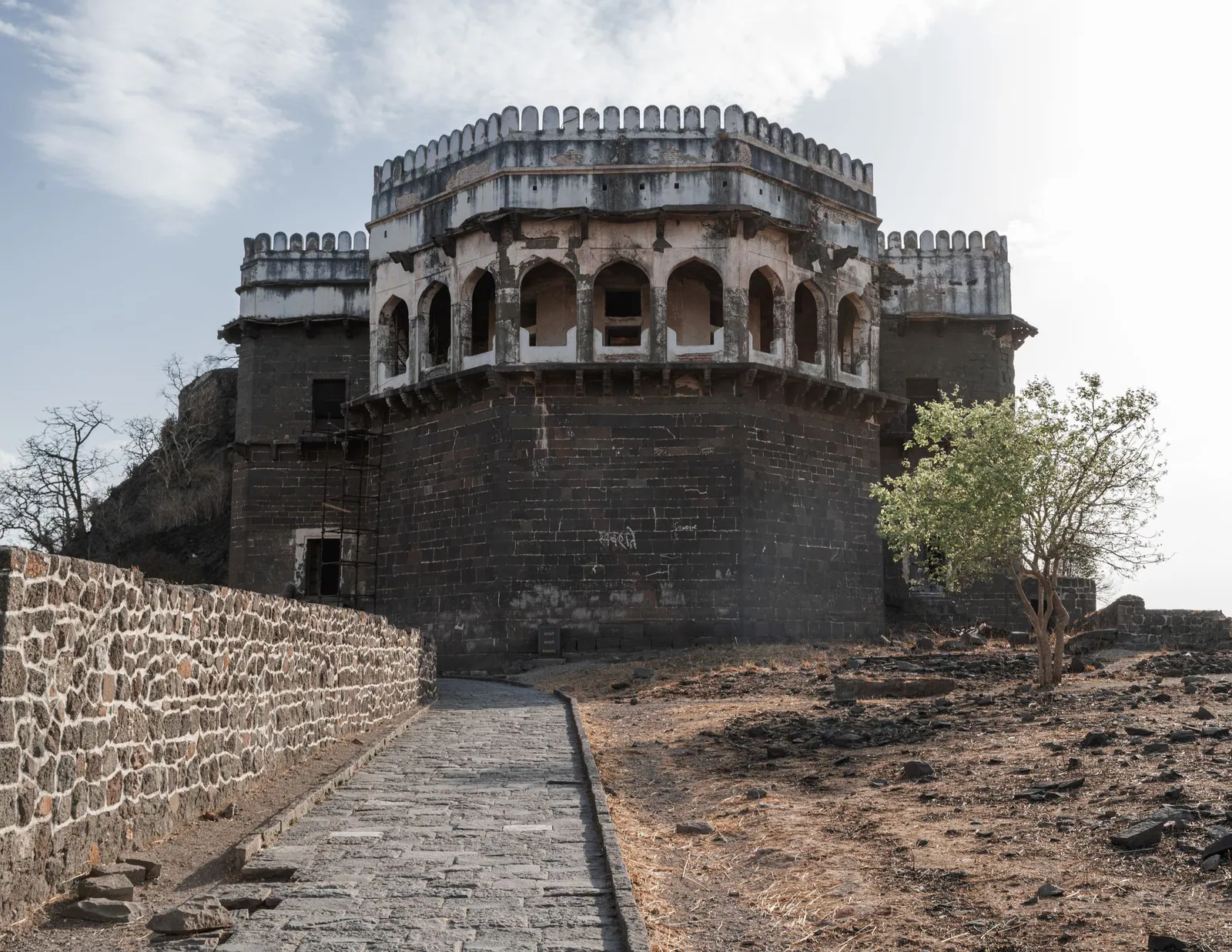
India's hill forts are where trekking and history meet — centuries-old fortifications perched on ridgelines and plateaus, built by dynasties from the Marathas to the Rajputs to the Sultanates of Malwa and Gujarat. Here's a cross-state roundup of the best fort treks worth visiting, from the Sahyadris of Maharashtra to the granite hills of Karnataka and the historic strongholds of Madhya Pradesh and Gujarat.
Fort treks offer something a pure nature trek doesn't — layers of history, architecture, and legend stacked on top of the physical climb itself. Maharashtra's Sahyadri forts are mostly Maratha-era strongholds that demand genuine trekking effort, their ramparts built directly into cliff faces that already did half the defensive work for them. Karnataka's forts swing between rock-scramble monuments carved straight out of granite hillsides and well-preserved citadels you can walk through almost like a museum. Madhya Pradesh's forts are grander and more road-accessible, heritage sites you explore on foot once you arrive rather than climb to reach. And Gujarat's forts, coastal and hill alike, carry a distinct Sultanate-era character shaped by trade routes and centuries of contested coastline. Together they form a cross-country trail for anyone who wants their trekking with a side of history.
What ties all of these together is a design logic that predates modern trekking by centuries — these hills were chosen for defence long before anyone thought of them as scenic, and the paths up them were cut for soldiers and supply mules, not tourists. That's exactly why fort treks tend to have such a distinct character compared with a pure nature trail: the steps are deliberate, the vantage points are chosen for sightlines rather than photographs, and the water cisterns, granaries, and lookout posts scattered along the route are functional remnants rather than decoration. Walking one of these routes today means retracing a piece of military and political history with your own legs, which is a large part of why fort treks tend to stay memorable long after a purely scenic hike has faded from memory.
Why Fort Treks Are Worth Prioritising
Maharashtra: The Sahyadri Fort Treks
Raigad Fort was the capital of the Maratha empire under Chhatrapati Shivaji Maharaj, and it still carries that weight — you can reach it either by a steep trek up cut stone steps or by a ropeway. The payoff is the same: the sheer drop at Takmak Tok, once used to execute traitors, and Shivaji Maharaj's samadhi at the summit.
Rajgad Fort is the more demanding cousin — one of the largest and toughest Sahyadri fort treks, built around three fortified machis, or ridges, each stretching out from a central citadel like the arms of a star. Harishchandragad takes a different shape entirely: an ancient fort plateau crowned by the dramatic Konkan Kada cliff.
For something gentler, Lohagad and Rajmachi near Lonavala are the forts beginners and weekend groups gravitate to — forested, monsoon-friendly climbs that turn a fort trek into a relaxed day out.
- Raigad: Maratha capital, ropeway or steep steps
- Rajgad: hardest, three fortified machis
- Harishchandragad: Konkan Kada cliff, cave routes
- Lohagad & Rajmachi: easy, monsoon-friendly
Karnataka: Granite Citadels and Rock Fortresses
Chitradurga Fort earns its nickname, the 'stone fortress', from seven concentric walls built directly into the natural granite boulders of the hill it sits on, so that in places you genuinely can't tell where the rock ends and the wall begins.
Bidar Fort, in the far north of Karnataka, is a different kind of impressive: a well-preserved Bahmani-era fortress with a massive triple-moat defence system and Persian-influenced architecture, alongside a city dotted with domed tombs.
Madhugiri Fort, near Tumkur, climbs one of Asia's largest monolithic hills via rock-cut steps that wind up a single, near-featureless slab of granite to panoramic Deccan plateau views.
- Chitradurga: seven concentric granite walls
- Bidar: Bahmani-era, triple moat
- Madhugiri: monolithic hill, rock-cut steps
Madhya Pradesh: Grand Heritage Forts
Gwalior Fort is one of India's most imposing hill forts by any measure — Babur himself is said to have called it 'the pearl among fortresses of India'. The Man Singh Palace, with its blue-tiled facades, and the intricately carved Sas-Bahu temples reward a full morning of unhurried walking.
Because the fort is road-accessible, visiting it is less a physical trek than an immersive heritage walk. Mandu Fort, in the Malwa region, is less a single structure than an entire hilltop fort city spread across a wide plateau that takes a full day to properly cover.
The Jahaz Mahal, or Ship Palace, seems to float between two lakes, and the Rani Roopmati Pavilion at the plateau's edge offers views that made it a favourite retreat centuries before it became a tourist stop.
- Gwalior: Man Singh Palace, Sas-Bahu temples
- Mandu: Jahaz Mahal, full-day plateau city
- Access: road-accessible, heritage walk
Gujarat: Coastal and Hill Forts
Uparkot Fort in Junagadh is believed to date back more than 2,000 years, and the layers of history show in everything from the rock-cut Buddhist caves carved into its interior to the two remarkable stepwells, Adi Kadi Vav and Navghan Kuvo, that plunge dramatically into the rock below.
The fort's elevated position still commands a clear view over Junagadh city. Pavagadh Fort, a UNESCO World Heritage hill complex near Champaner, combines a working fort with the Kalika Mata temple perched at its summit and a scatter of Indo-Islamic ruins along the slopes below.
A ropeway covers a good part of the Pavagadh ascent for those who want it, but a walking trail handles the rest, so you can choose exactly how much of the climb you want to do on foot.
- Uparkot: 2,000+ years old, Buddhist caves, stepwells
- Pavagadh: UNESCO site, ropeway or walking trail
Planning a Multi-State Fort Trekking Trip
If you're keen to see more than one region's forts, it helps to group the trip by state rather than trying to hop between them, since Maharashtra, Karnataka, Madhya Pradesh, and Gujarat each reward a slightly different pace.
A Sahyadri weekend built around two or three forts — say Lohagad and Rajmachi for beginners, or Rajgad and Harishchandragad for a tougher combination — works well as a Pune or Mumbai base trip. Karnataka's forts pair naturally with a Bangalore-based itinerary.
Madhya Pradesh's Gwalior and Mandu sit far enough apart that they're better treated as two separate short trips, while Gujarat's Uparkot and Pavagadh can anchor a coastal-and-hill itinerary through Junagadh and Champaner.
How Fort Treks Differ from Nature Treks in Practice
Trekking a fort asks something slightly different of you than a pure nature climb does, and it's worth adjusting your pace and expectations accordingly. Where a summit trek is largely about the climb and the view at the top, a fort trek is about everything you do once you arrive — walking a full circuit of ramparts, ducking into old granaries and water cisterns, tracing a defensive wall.
This means fort treks generally reward a slower, more exploratory pace than a straightforward nature hike; rushing up and back down misses most of what makes the destination worth visiting.
It also means timing matters differently — arriving with enough daylight left to actually explore the complex is usually more important than an early start purely for cooler climbing temperatures.
Fort Treks as an Entry Point into Trekking
For someone completely new to trekking, fort treks are often a gentler on-ramp than a pure nature summit, precisely because the destination has a built-in reason to exist beyond the view. A first-timer who might feel daunted by the idea of climbing 'just to see a peak' often finds a fort far more approachable.
This is part of why so many trekking groups across Maharashtra and Karnataka use fort treks as their standard beginner itinerary: the grading is forgiving, the payoff is immediate and photogenic, and the history gives even a short, easy climb a sense of occasion.
If you're introducing a friend or family member to trekking for the first time, a well-chosen fort — Lohagad, Gwalior, or Madhugiri, depending on where you're based — is usually a safer bet than starting them on a demanding nature trail.
The History Worth Knowing Before You Climb
A little background reading before you set out changes a fort trek from a physical exercise into something closer to walking through a history book. Knowing that Raigad was chosen as the Maratha capital partly for its natural defensibility, or that Rajgad served as Shivaji Maharaj's residence for over two decades, adds real weight to standing on those ramparts.
The same goes for Gwalior's centuries of shifting rulers, from the Tomars to the Mughals to the Scindias, each leaving their own mark on the fort's architecture, or Uparkot's layered history spanning Buddhist, Hindu, and Islamic periods within a single fortified hill.
None of this is essential to enjoying the climb itself, but trekkers who arrive with even a rough sense of what they're walking into consistently describe these treks as more memorable.
Frequently Asked Questions
Explore India's Fort Treks
Find upcoming fort treks and heritage trips across Maharashtra, Karnataka, Madhya Pradesh, and Gujarat on TrekVerse.
Explore TreksTips for Visiting Fort Treks
A little preparation goes a long way on fort treks, since many of the specific hazards here differ from a pure nature hike. Carry plenty of water and sun protection, since fort plateaus like Rajgad, Chitradurga, and Pavagadh are exposed with almost no shade once you're at the top. Wear proper trekking or grip-soled shoes for the stone steps that most of these forts are built around — they get noticeably slippery, especially on Sahyadri forts during monsoon, when smooth-soled footwear turns a simple climb into a genuine hazard. If you're visiting a fort with a ropeway option, like Raigad or Pavagadh, check opening hours and timings in advance so you're not stuck waiting or forced into an unplanned full climb. Hiring a local guide where one is available is well worth it, too — the history layered into these forts is far richer with context than a self-guided walk alone tends to reveal. And wherever you go, treat these as the protected and often archaeologically sensitive sites they are: avoid climbing on unstable ramparts and never remove anything from the site.
More Fort and Destination Guides
Continue exploring India's forts and trails with TrekVerse: