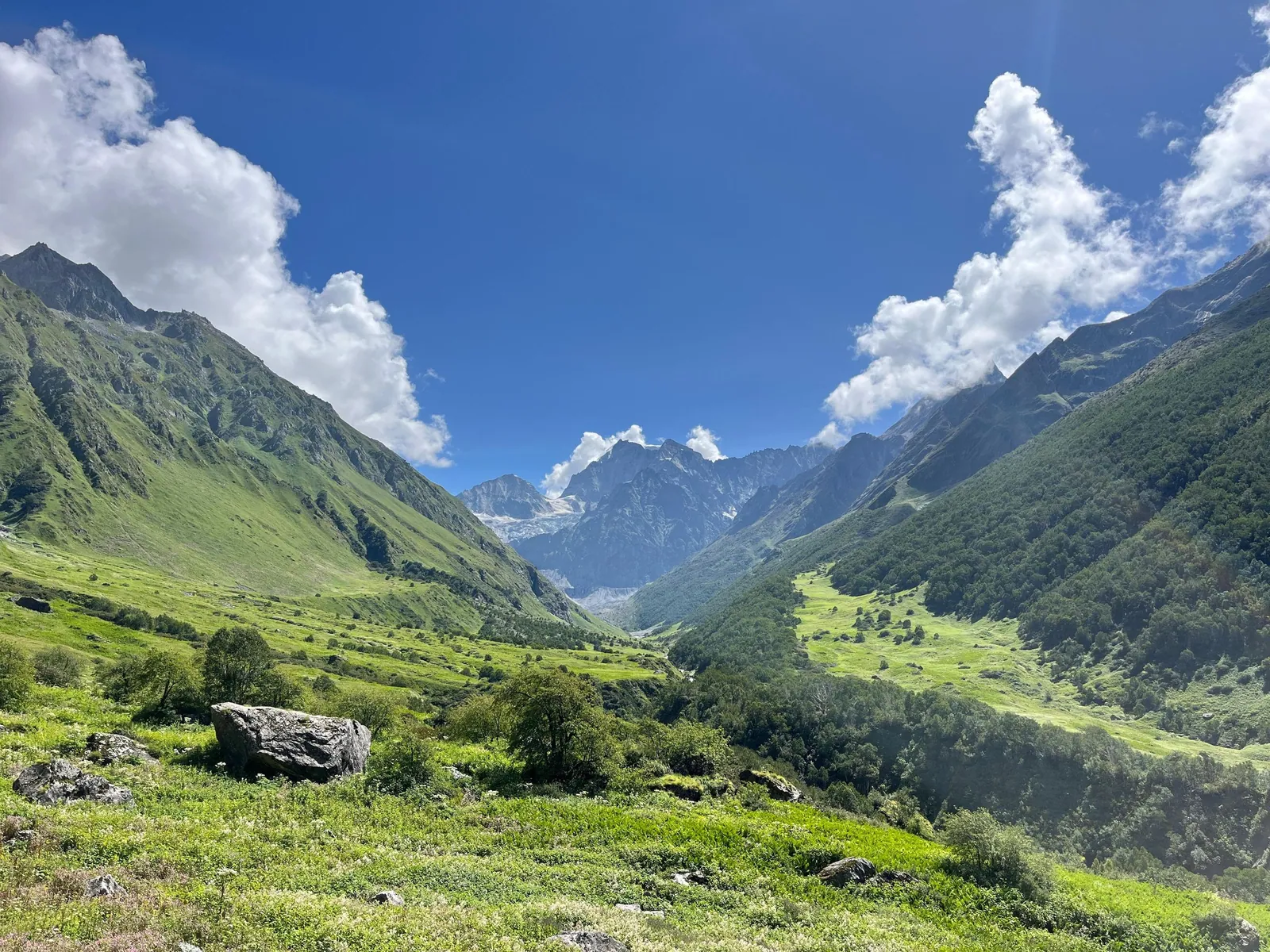
The Valley of Flowers is one of India's most extraordinary trekking destinations — a UNESCO World Heritage Site in Uttarakhand's Chamoli district, where an alpine valley bursts into hundreds of species of wildflowers each monsoon. It's not a technical trek, but the timing, permits, and approach all need planning. Here's the complete guide.
Discovered by mountaineer Frank Smythe in 1931 and later declared a UNESCO World Heritage Site, the Valley of Flowers sits at roughly 3,600–3,700m, cradled by the Zanskar range. What makes it unusual as a trek is that the reward isn't a summit or a view — it's the valley floor itself, carpeted in wildflowers that bloom in waves through the monsoon.
The trek is genuinely achievable for a reasonably fit beginner, but the full trip — including the approach to the base village — takes real planning around season, permits, and altitude.
Why Valley of Flowers Is Unlike Any Other Indian Trek
- A UNESCO World Heritage Site — one of very few trekking destinations in India with that status.
- Home to hundreds of species of alpine flowers, many found nowhere else, blooming in waves through the monsoon.
- A well-maintained national park trail — no technical climbing, making it accessible to fit beginners.
- Often combined with the nearby Hemkund Sahib pilgrimage trek from the same base village.
- Best season: mid-June to early October, peak bloom mid-July to mid-August
- Trek distance: roughly 17 km round trip from Ghangaria
- Difficulty: easy to moderate
- Permit required: yes, obtained at Ghangaria
- Nearest base: Govindghat, via Rishikesh or Haridwar
Here's the detail on route, season, and how to plan the trip.
When the Flowers Actually Bloom
The valley opens in June, but the famous carpets of flowers come later. Early June brings snowmelt and the first blooms; from mid-July to mid-August, at the height of the monsoon, the valley is at its fullest, with hundreds of species flowering at once. By September the colours fade towards gold, and the park closes for the winter at the end of October.
The best flowers coincide with the heaviest rain, so expect wet days, cloud and occasional landslides on the approach road. Build a buffer day into your plan.
Day Visits Only: No Camping in the Valley
The Valley of Flowers National Park allows only day visits. You stay in Ghangaria, the village at the base, and walk into the valley in the morning, returning the same evening. Entry is permitted only during daytime hours, with a fee paid at the forest check post, and overnight stays inside the park are not allowed.
This makes the trek gentler than it sounds: one long day from Govindghat to Ghangaria, then light day walks into the valley.
Hemkund Sahib
From Ghangaria, a separate steep trail climbs about 6 km to Hemkund Sahib, a Sikh shrine beside a glacial lake at around 4,300 m. Most trekkers visit it on a separate day from the valley. It is a stiff climb with significant altitude gain; walk slowly, and turn back if you develop altitude symptoms.
Frequently Asked Questions
Plan Your Himalayan Trek
Discover more Himalayan treks, connect with fellow trekkers, and find your next adventure on TrekVerse.
Explore TreksPlanning Your Valley of Flowers Trek
Route Overview
- Govindghat (base, road access) → Ghangaria (trek base village, ~9–10 km, also reachable by mule/palki)
- Ghangaria → Valley of Flowers (~3–4 km one way, day trip, must return to Ghangaria by evening)
- Ghangaria → Hemkund Sahib (~6 km one way, often combined as a separate day trek from the same base)
Best Time to Visit
- June: valley opens, early blooms begin, trails can still have snow patches.
- Mid-July to mid-August: peak bloom — the most flower species visible at once, but also peak monsoon rain.
- September: fewer flowers but clearer weather and thinner crowds.
- Closed roughly October to May under snow.
Suggested Itinerary (5–6 Days)
- Day 1: Travel from Rishikesh/Haridwar to Govindghat or Pulna.
- Day 2: Trek from Govindghat/Pulna to Ghangaria.
- Day 3: Day trek into the Valley of Flowers and back to Ghangaria.
- Day 4: Optional day trek to Hemkund Sahib, or trek back to Govindghat.
- Day 5–6: Return travel to Rishikesh/Haridwar, with a buffer day for weather.
Permits & Entry
- Entry permit required, obtained at the Forest Department counter in Ghangaria — carry a valid photo ID.
- A daily visitor quota applies, so arrive at the counter early in the morning.
- Permits are typically valid for a set number of days, allowing repeat entry within that window.
What to Pack
- Waterproof jacket and pack cover — monsoon rain is near-guaranteed during peak bloom season.
- Sturdy trekking shoes with good grip for wet, sometimes slippery trail sections.
- A basic first-aid kit, water bottle, and energy snacks for the day trek into the valley.
- A good camera or phone with extra battery — you will want to photograph this one.
Who This Trek Is Right For
Valley of Flowers suits a wide range of trekkers:
- Beginners wanting a genuinely achievable Himalayan trek with an extraordinary payoff.
- Nature and flower photography enthusiasts — this is a bucket-list destination for both.
- Trekkers combining it with the Hemkund Sahib pilgrimage from the same base.
- Anyone who prefers a trek where the reward is the destination itself, not just the climb.
Safety & Responsible Trekking
A protected national park comes with its own rules:
- Camping and staying overnight inside the Valley of Flowers itself is not permitted — you must return to Ghangaria each evening.
- Stay strictly on marked trails — the ecosystem is fragile and protected.
- Do not pick flowers or remove anything from the park — it's both illegal and damages the ecosystem for future visitors.
- Check weather before setting out each day — monsoon rain can make river crossings and trail sections risky.
More Himalayan Trekking Guides
Continue planning your Himalayan trip: