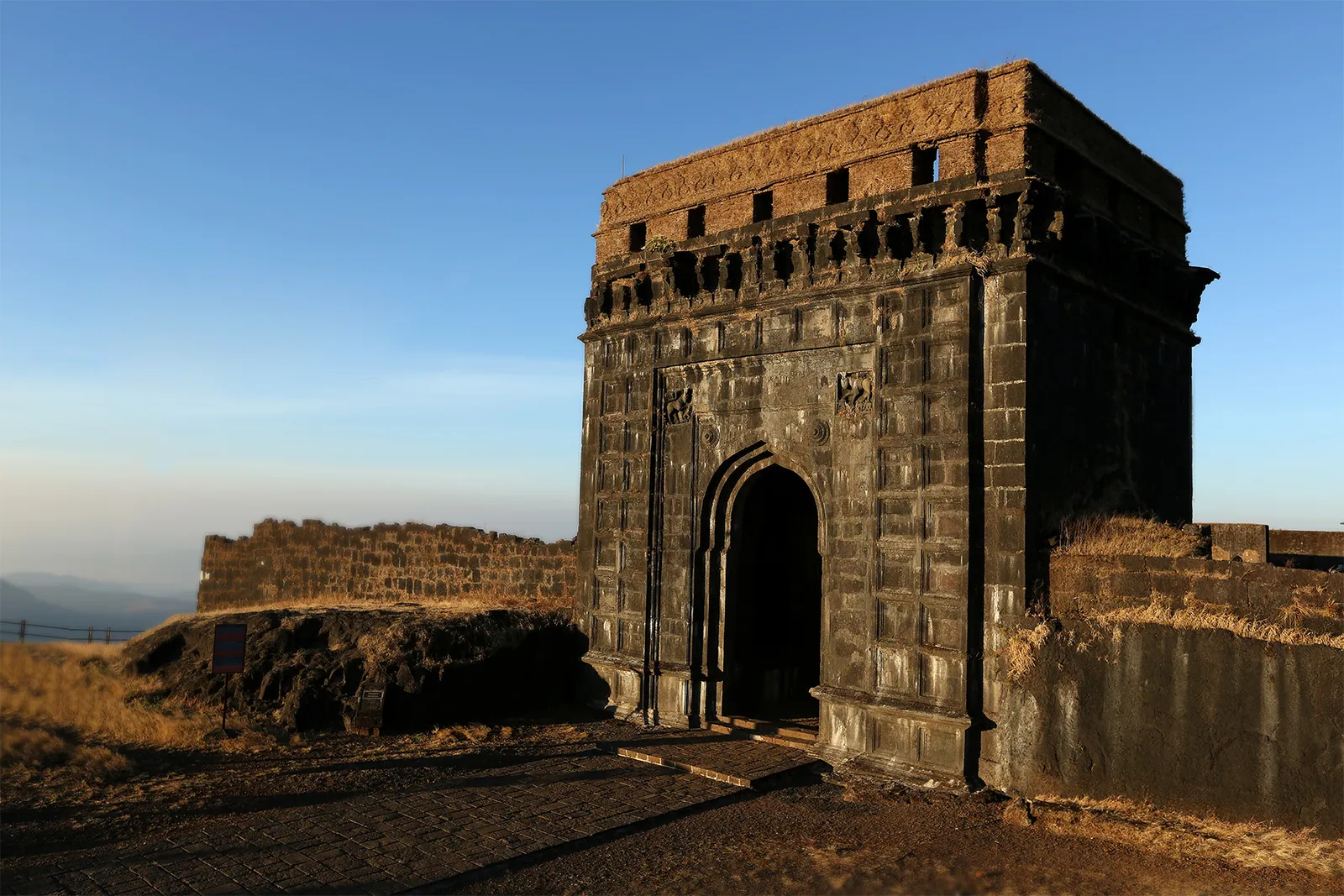
Raigad is where Shivaji Maharaj was crowned Chhatrapati in 1674, and where he died six years later. It was the capital of the Maratha Swarajya, and its huge summit still holds the outlines of a royal city: palace foundations, a market street, the coronation platform and his samadhi. You can reach it by a long stone staircase or by a ropeway in a few minutes. Either way, it deserves a full day.
Raigad at a Glance
- Location: Mahad taluka, Raigad district, in the Sahyadri above the Konkan
- Base: Pachad village, near the ropeway's lower station
- Steps: commonly put at about 1,400 to 1,700, depending on how they are counted
- Climb time by the steps: about 1.5 to 2.5 hours
- Ropeway: a few minutes to the top
- Fort entry: a small ticket, reported at 10 rupees for Indian visitors
Why Raigad Matters
Shivaji Maharaj took the fort, then called Rairi, in the 1650s and rebuilt it as his capital, moving the seat of the Swarajya from Rajgad. On 6 June 1674 he was formally crowned here in a ceremony that proclaimed the Maratha state as an independent kingdom. He died at Raigad in 1680, and his samadhi stands near the Jagadishwar temple on the summit.
The fort was later besieged and taken by the Mughals, and in 1818 it was bombarded and captured by the British, which is why so much of the royal city survives only as foundations.
The Steps or the Ropeway
The traditional way up is the stone staircase from Pachad, through the Chit Darwaja and the Maha Darwaja. It is long rather than technical: steady steps for much of the way, increasingly exposed to sun higher up. Fit walkers take about an hour and a half; families should allow longer. Climbing it is part of the experience, and it lets you see the fortifications the way an arriving visitor would have.
The Raigad ropeway runs from near Pachad to the summit in a few minutes and is the only practical option for many older visitors. Queues can be long on weekends and holidays. A good plan for mixed groups is ropeway up, steps down, which is easier on the lungs and gives you the gateways on the way out.
Ropeway fares and timings vary by season and are not listed here; check with the operator before your visit. Fort entry is commonly reported at around 10 rupees for Indians and 100 for foreign visitors.
What to See on Top
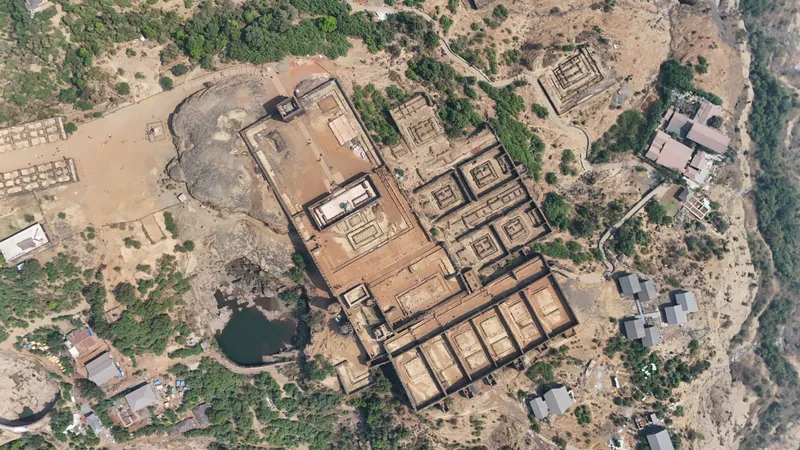
The summit is large, and walking all of it takes three to four hours. Hire one of the local guides at the top if you want the stories: they are good and they make the ruins legible.
- Raj Sadar and the coronation site, where the throne once stood
- The Nagarkhana, the grand gateway facing the Raj Sadar
- The palace and queens' quarters, now foundations
- Holicha Mal and the long market street, the Bajarpeth
- Jagadishwar temple and the samadhi of Shivaji Maharaj
- Takmak Tok, a sheer cliff point once used for executions
- Hirkani Buruj, the bastion tied to the story of the milkmaid Hirkani
- Gangasagar lake
When to Go
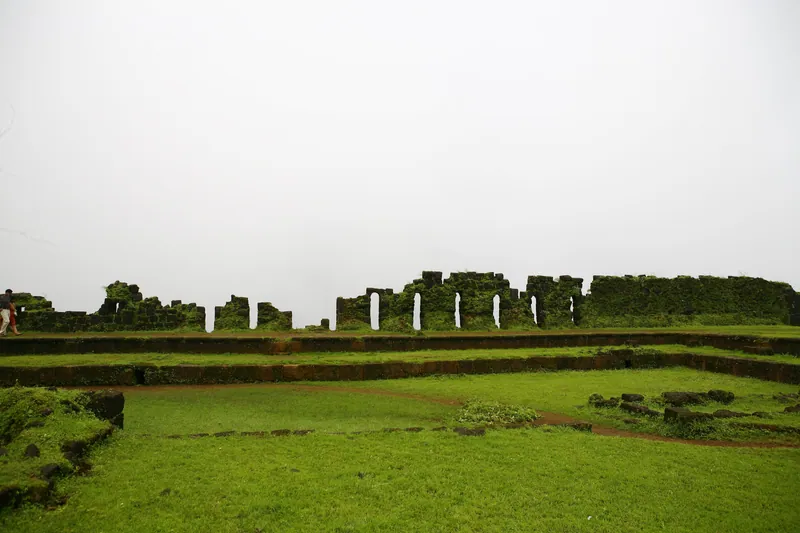
October to February is the most comfortable time, with clear skies and cooler air for walking the summit. The monsoon makes Raigad dramatically green and cloud-wrapped, but the steps are slippery and the ropeway can stop in bad weather. The heat from March to May is intense on an exposed summit; start early.
Shiv Rajyabhishek Din, the anniversary of the coronation in early June, brings very large crowds to the fort. It is a remarkable event to witness, but plan for queues and heavy traffic.
Getting There
- From Pune: about 125-135 km via Bhor and the Varandha ghat, or via Tamhini ghat
- From Mumbai: about 165-175 km via the Mumbai-Goa highway to Mahad
- Nearest town: Mahad, about 25 km from the base
- ST buses run to Mahad and, less frequently, to Pachad
Tips
- Carry water and a hat; the summit has little shade
- Start early to beat both the heat and the ropeway queue
- Wear proper shoes even if you take the ropeway; the summit is uneven
- Respect the samadhi and memorials, which are places of real reverence
- Stay away from the edge at Takmak Tok, which has no barrier in places
Frequently Asked Questions
Explore Maharashtra's Forts
Browse the forts of the Sahyadri, with history, routes and trek details for each.
Explore FortsKeep Reading
More from the TrekVerse journal: