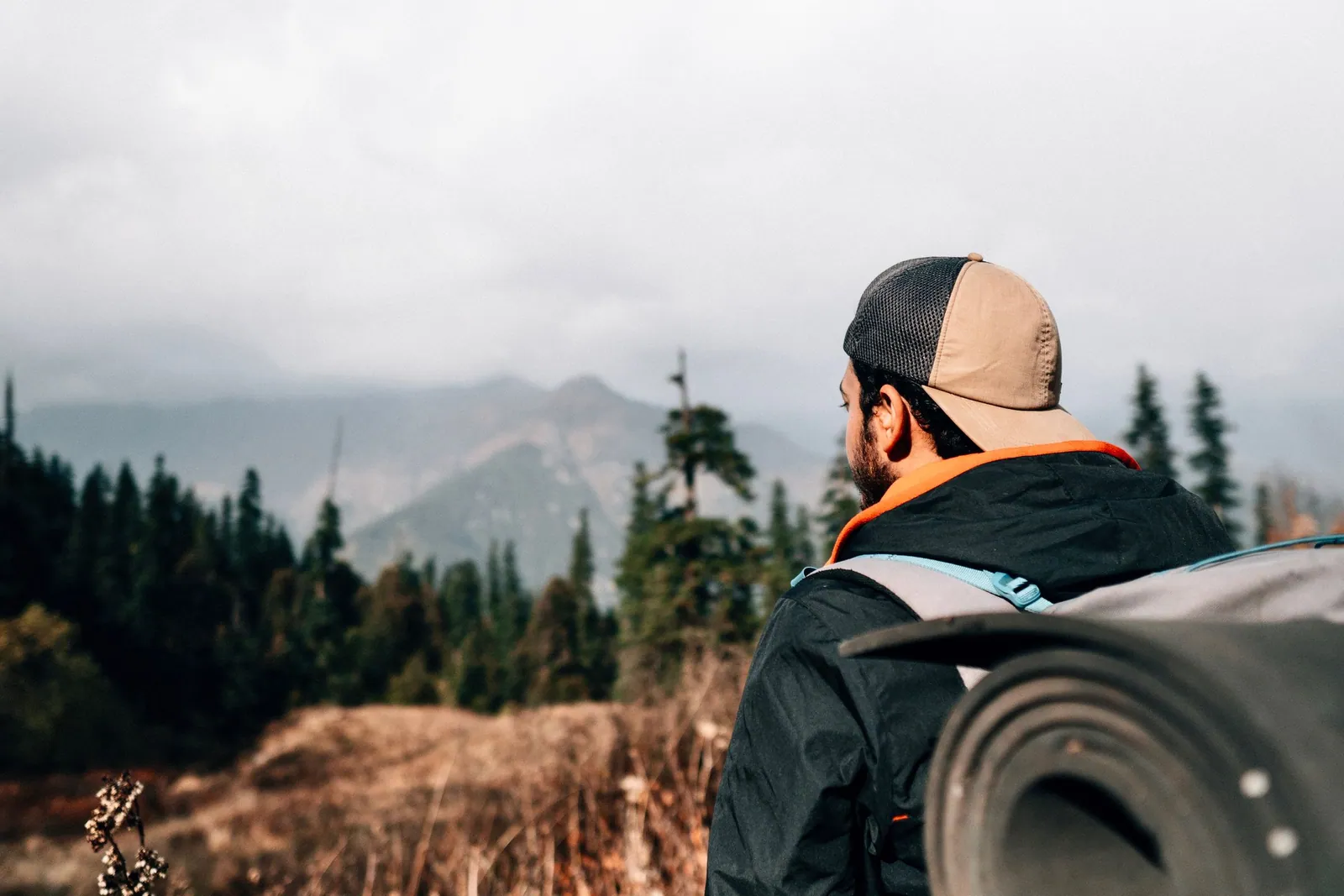
Solo trekking has a real appeal — your own pace, your own decisions, and a kind of self-reliance you don't get on a group trek. It can also go wrong quickly if you're unprepared, especially in the mountains where help isn't a phone call away everywhere. This guide covers what actually matters for solo trekking safety in India — before you leave, while you're on the trail, and how to decide when solo isn't the right call.
Solo trekking isn't inherently reckless, but it removes a layer of safety that group treks provide by default — a second pair of eyes on the weather, someone who knows first aid, and someone who notices immediately if you're in trouble. That doesn't mean you shouldn't trek solo; it means the preparation you'd normally split across a group now falls entirely on you.
The right approach is to match the trek to your solo-readiness: well-marked, moderately trafficked trails at reasonable altitude are far more forgiving for a first solo attempt than remote, high-altitude, or technically demanding routes. Build up gradually rather than starting solo on your hardest trek yet.
Before You Go: Planning and Permits
Good solo trekking starts long before you reach the trailhead, and the research you do at home is what actually keeps you safe on the mountain. Look up recent trip reports for the specific trail rather than relying on general information about the region — trail conditions, water availability, and whether the route is even open all change seasonally.
Permits deserve equal attention: many Himalayan routes that pass through forest divisions or border-adjacent states require permits, and some mandate a registered guide or a minimum group size, meaning solo entry simply isn't allowed on certain trails no matter how well prepared you are.
Once the trail checks out, the planning shifts to making sure someone else knows exactly where you are. Share your precise itinerary with at least two people, check the weather forecast for your exact dates and altitude, and go in with a clear turnaround decision already in mind. Where forest check-posts or police registration is required, use it — it's what makes a search-and-rescue effort possible if something goes wrong.
What to Carry for Solo Safety
The gear list for solo trekking isn't dramatically different from a group trek, but a few items stop being optional:
- Fully charged phone with offline maps + power bank
- Self-treatment first-aid kit — blister care, pain relief, personal medication, sprain support
- Physical map or compass as backup (needs no signal or charge)
- Whistle — three short blasts is the universal distress signal
- Extra food and water beyond what you think you'll need
On the Trail: Habits That Actually Matter
A handful of habits do more for your safety than any single piece of gear:
- Start early — most trail accidents happen in the afternoon
- Check in at agreed times with your emergency contact whenever you have signal
- Turn back if weather worsens or the trail becomes hard to follow
- Avoid technical sections needing a rope team or spotter — high-water crossings, exposed ridges, glacier travel
- Trust discomfort — treat a bad gut feeling as data worth acting on
Building Up to Solo Trekking Gradually
Nobody should attempt their first-ever trek as a solo, remote, high-altitude expedition, and the trekkers who solo trek most safely tend to be the ones who worked up to it deliberately. Start with a trail you've already done once with a group, so the route and terrain are familiar and you're only removing the company, not also navigating unknown ground.
From there, a natural progression looks like: a well-marked, well-trafficked low-altitude trail solo first, then a moderately trafficked mid-altitude route, and only then a quieter or higher trail once you've built genuine confidence in your own judgment under pressure.
This matters because solo trekking tests decision-making skills that simply don't get exercised the same way in a group. On a group trek, someone else often makes the call to slow down or turn back; solo, every one of those calls is yours alone, and the only way to get good at them is to practice on progressively harder trails.
Mental Preparation: The Part Nobody Talks About
Most solo trekking guides focus almost entirely on gear and logistics, but the mental side deserves just as much attention, because it's often what determines whether the experience feels empowering or unsettling. It's completely normal to feel a spike of unease on your first night camping alone — that discomfort tends to fade with experience rather than being a sign you should quit solo trekking altogether.
What helps most is having a plan for those moments before you're in them. Decide in advance how you'll handle boredom or loneliness on a long stretch, and how you'll handle fear if it comes up sharply — pausing to eat something, calling your emergency contact, or simply sitting down for ten minutes rather than making a rushed decision.
Trekkers who solo regularly often describe a specific turning point on an early trip where fear gave way to a calmer self-reliance — that shift is really the whole point of solo trekking, not the absence of nerves but learning you can handle them on your own.
Choosing Your First Solo Trail
What to look for in a first solo trek:
It also helps to pick a trail you can complete comfortably within daylight, rather than one requiring a pre-dawn start or a return after dark, since navigating solo in low light is better saved for once you've built up experience.
Many first-time solo trekkers in India choose an established Sahyadri fort trek or a well-known lower-Himalayan day hike for exactly these reasons. Once that first trail goes well, the natural next step is a slightly longer or higher route, always keeping the increase in difficulty incremental rather than dramatic.
- Clear, well-marked path that's hard to lose
- Moderate rather than extreme foot traffic
- Modest altitude ceiling within your known fitness
- Mobile network coverage for at least part of the route
- Completable within daylight hours
Emergency Scenarios and How to Actually Respond
It helps to think through a few realistic solo-trekking emergencies before you're actually in one, because clear thinking is much harder in the moment than sitting at home planning. If you twist an ankle, stop, assess whether you can bear weight at all, and resist the instinct to push on quickly — slowing down to strap it properly and using trekking poles for support often gets you out faster than powering through on an unstable ankle.
If weather closes in suddenly, find the nearest safe shelter and wait rather than attempt to outrun a storm, since visibility and trail-finding both deteriorate fast in heavy rain, fog, or snow.
If you realise you've lost the trail, stop moving immediately rather than continuing forward hoping to stumble back onto it — backtrack to the last confirmed point and use your offline map or compass to reorient. If you do need to call for help, noted landmarks, approximate GPS coordinates, and the time you last had signal all speed up a rescue considerably.
When to Choose a Group Trek Instead
Solo isn't always the right call, and knowing when to opt for an organised group trek instead is as much a part of solo-trekking maturity as the solo trips themselves. High-altitude routes above roughly 4,000 m, glacier crossings, or exposed ridgelines are places where a second person genuinely changes the outcome of an emergency, so these are worth trekking with others regardless of how experienced you are solo. The same goes for your first attempt on a specific route or region where you have no local trail knowledge to fall back on, or for areas where permits explicitly mandate group trekking or a registered guide.
There's also a case for choosing a group simply because you want the social experience — trekking alongside a batch of strangers who become trail friends by the descent is a big part of why community trekking has grown so much in India in recent years. Platforms like TrekVerse exist specifically to connect solo trekkers with verified organisers and vetted batches, so choosing a group trek for a particular route doesn't mean handing your safety to an unknown, unaccountable crowd — it means trading some of the solo independence for a properly organised setup when the trail calls for it.
Safety Notes for Women Trekking Solo
Solo trekking is genuinely doable for women in India, and a growing number of women trek solo on popular routes every year, but a few extra precautions do make a real difference. Prefer trails and base villages with active foot traffic, especially for your first solo attempts, rather than remote, low-traffic routes where help is scarce if you need it. Arrive at unfamiliar base villages in daylight, and book accommodation in advance where possible rather than arriving after dark to figure it out on the spot.
Share your live location with a trusted contact for the entire duration of the trip, not just the itinerary you send before leaving — a static plan can't tell anyone if you've deviated from it. Be selective about who you share detailed solo-travel plans with on public social media before the trip itself; posting the adventure after you're safely back removes a layer of risk that broadcasting real-time location to strangers online creates. And if solo simply doesn't feel right for a particular trail or region, joining a verified women-friendly or mixed group trek isn't a compromise on the solo-trekking spirit — it's a legitimate way to get much of the same experience with a built-in safety net.
Frequently Asked Questions
Trek Solo, But Never Alone in Spirit
Whether you trek solo or want a vetted group to join, find verified trek organisers and upcoming batches on TrekVerse.
Explore TreksRelated Reading
More on trekking safety and community treks: