5,364m
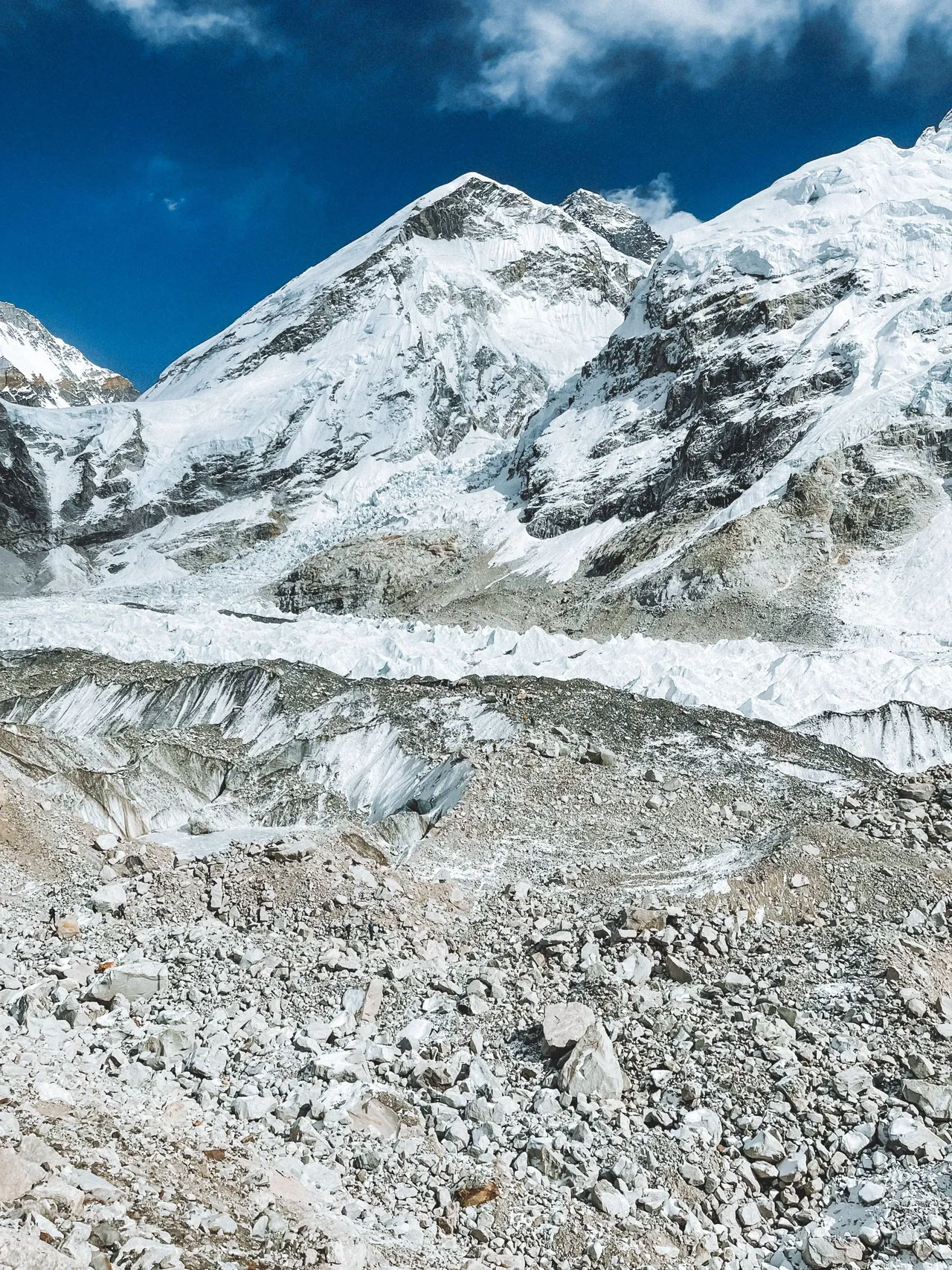
Everest Base Camp
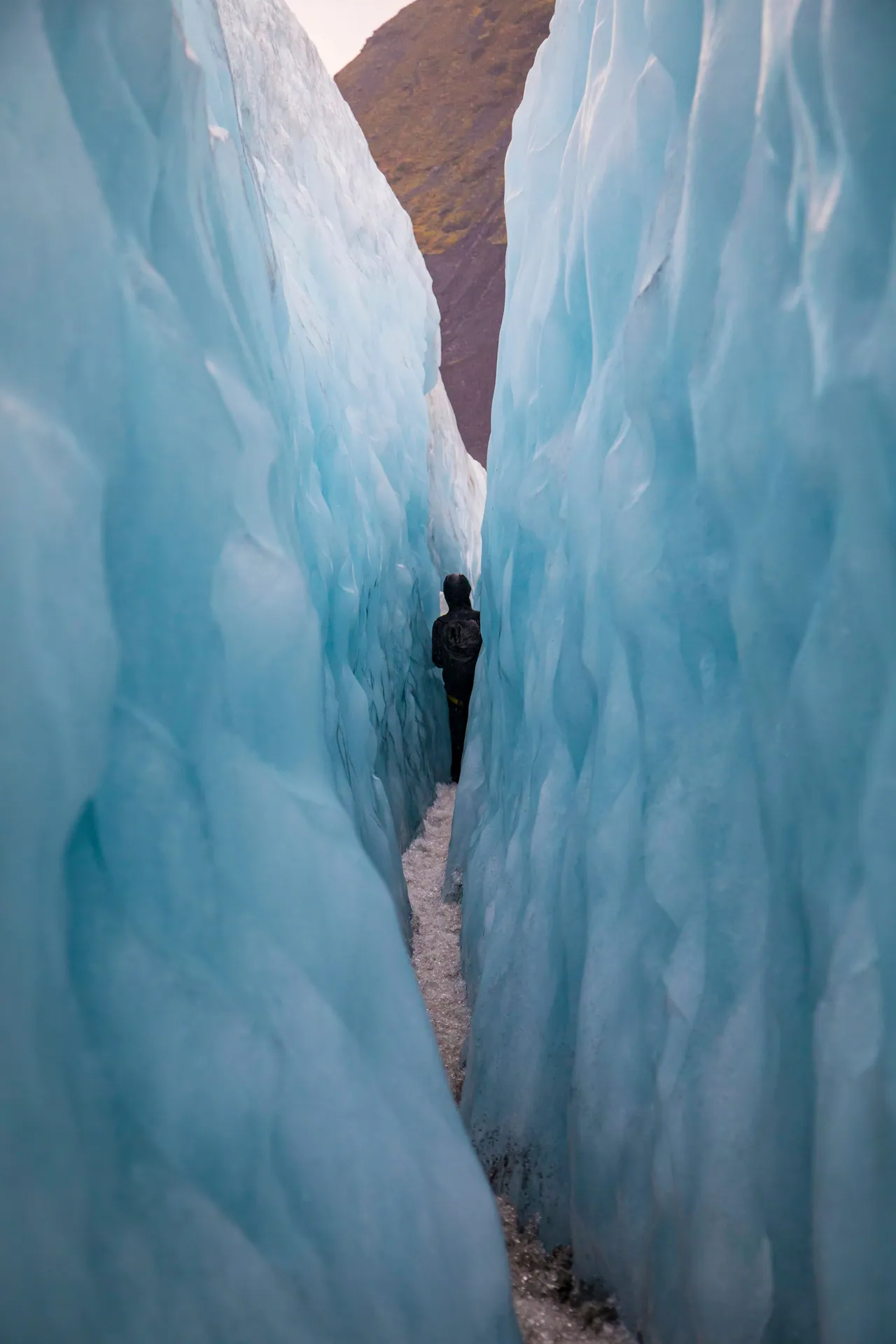
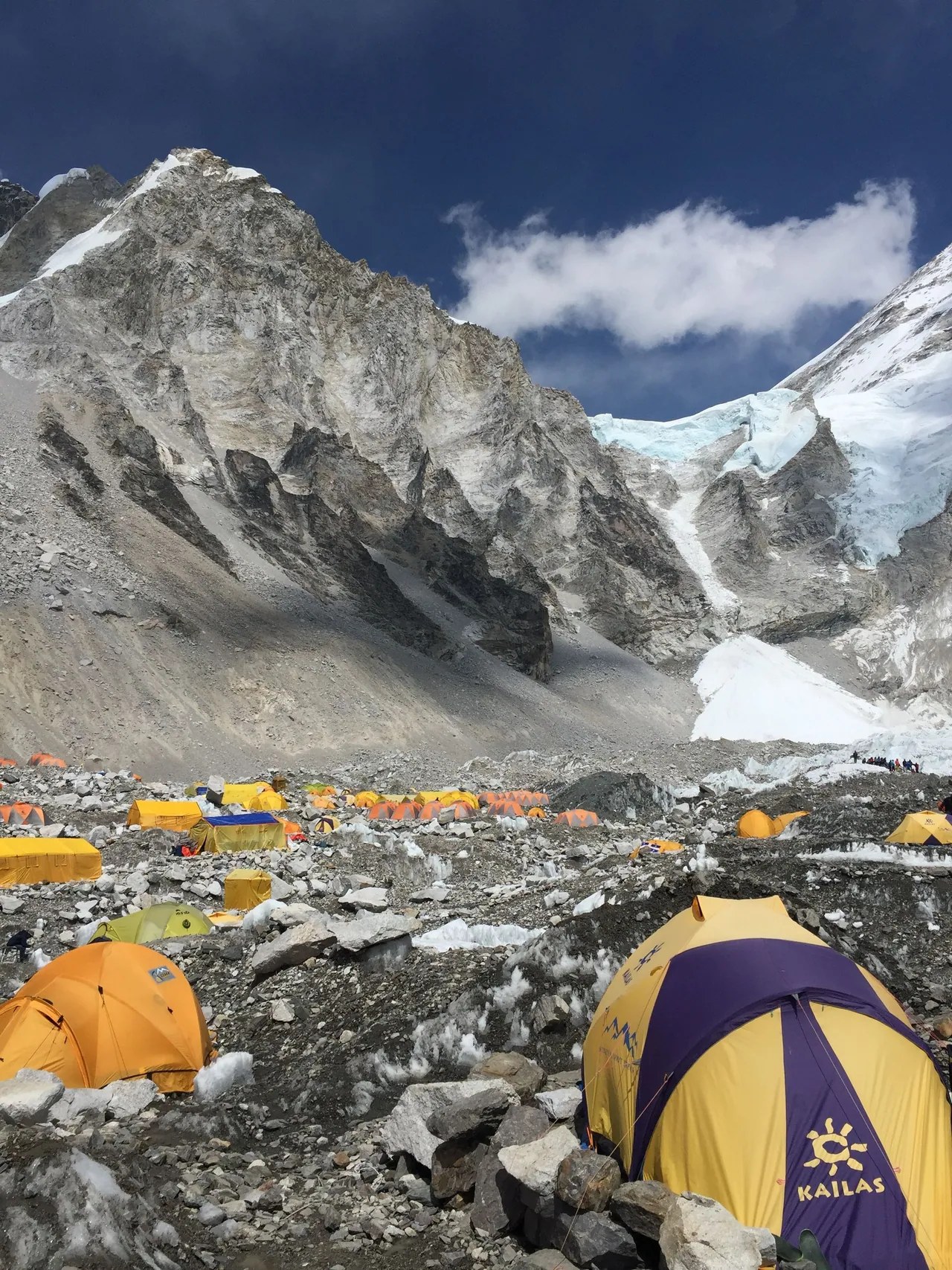
A temporary town of several hundred tents on the moving Khumbu Glacier. Climbers spend most of the expedition here, with dining tents, communications, medical support and the puja altar.
Almost every climber uses this route from Nepal. It gains about 3,500 m from Base Camp and splits into two very different halves: a glacier route below Camp 2, where the danger is moving ice, and a steep altitude route above it, where the danger is the thin air itself.
Approximate altitudes from the Technical Guide. Camp heights shift by about 100 m year to year.
The rule under each entry is that camp's height as a share of the summit. Above 8,000 m the body stops acclimatising entirely — it is only ever running down.
A temporary town of several hundred tents on the moving Khumbu Glacier. Climbers spend most of the expedition here, with dining tents, communications, medical support and the puja altar.
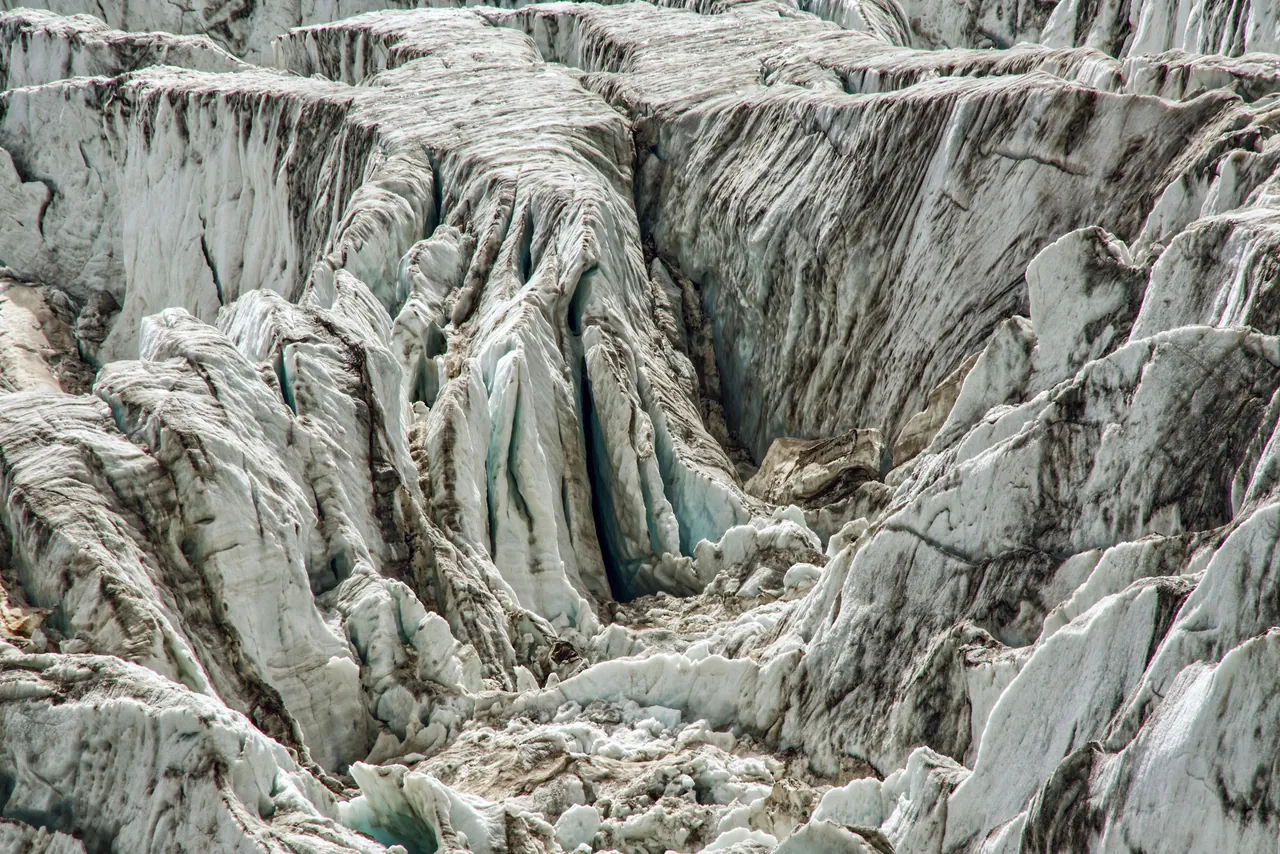
Reached by climbing the Khumbu Icefall in the dark — the single most dangerous section of the route, crossed on ladders between collapsing seracs. Camp 1 sits at the icefall's top, where the Western Cwm opens out.
The expedition's forward base, tucked under the Southwest Face at the head of the Western Cwm. The Cwm is a windless sun-trap that can feel brutally hot by day and bitterly cold the moment cloud arrives.
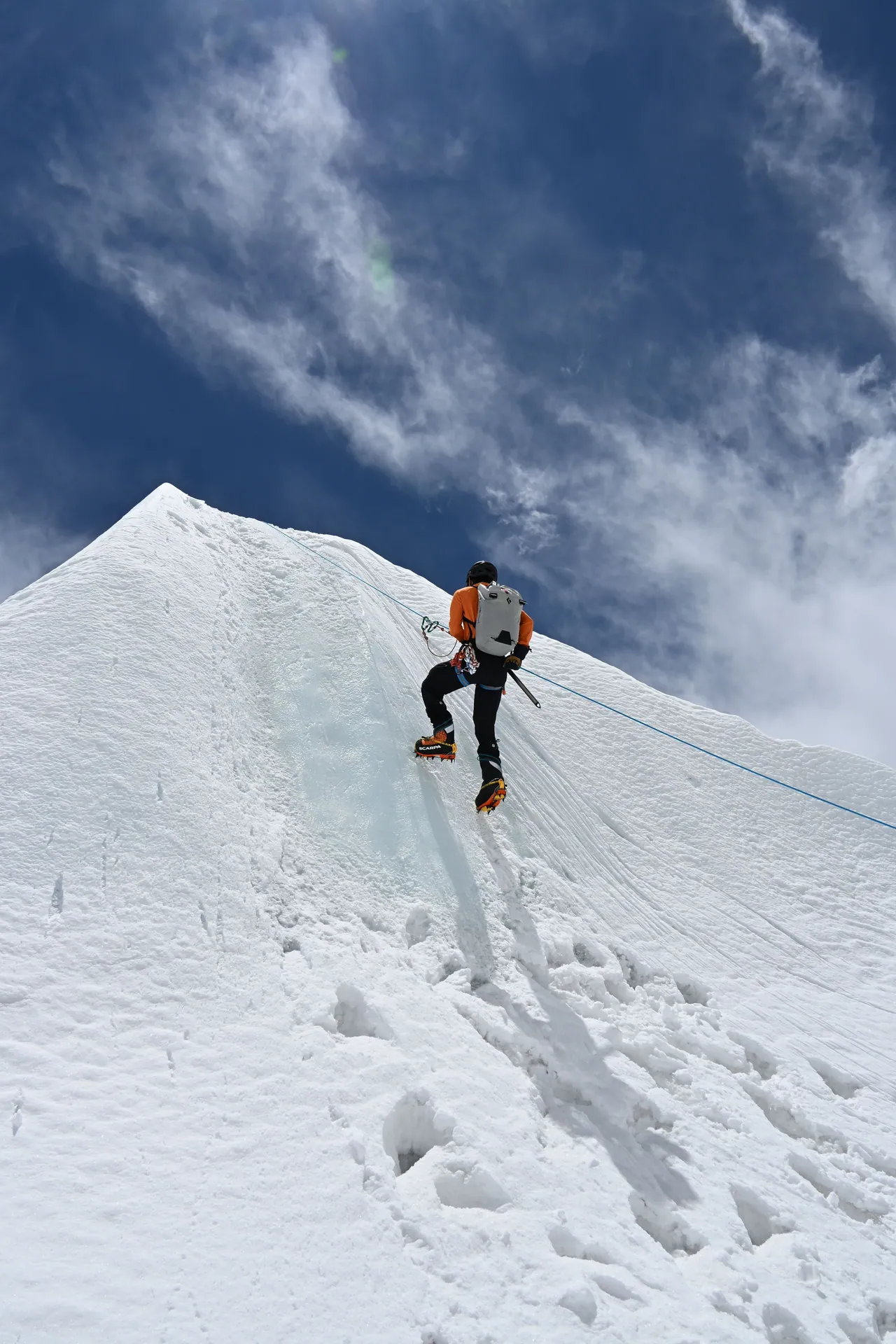
Tent platforms chopped into the open blue ice of the Lhotse Face, reached on fixed rope. There is nowhere safe to unclip, and falling ice and rock from above is a constant hazard.
A windswept saddle of rock and ice between Everest and Lhotse, and the start of the death zone. The body cannot acclimatise here — it is only ever losing ground. Most teams arrive, rest a few hours, and leave for the summit that night.
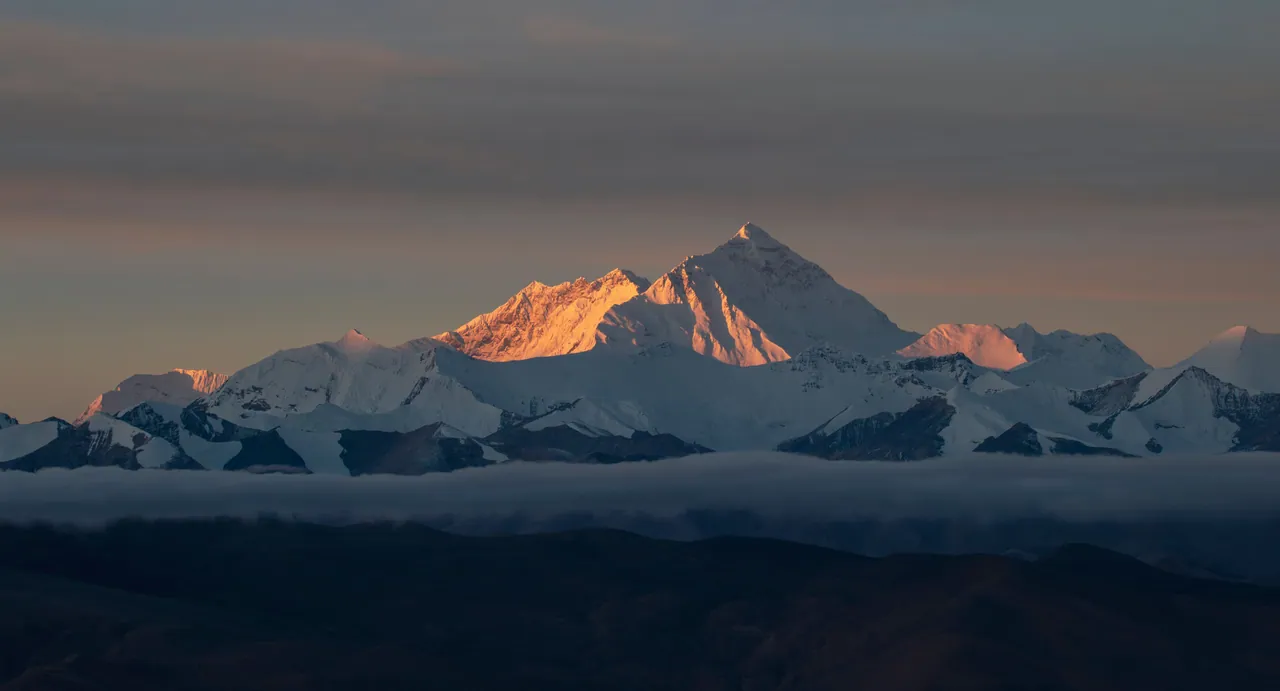
A small snow dome hung with prayer flags, typically reached between 5 and 10 am after leaving the South Col before midnight. Most climbers stay 10-20 minutes — the descent is where most accidents happen.
The trek from Lukla to Base Camp is not an approach — it is the first half of the acclimatisation. Gaining height too fast here is what ends most expeditions before the climbing even starts.