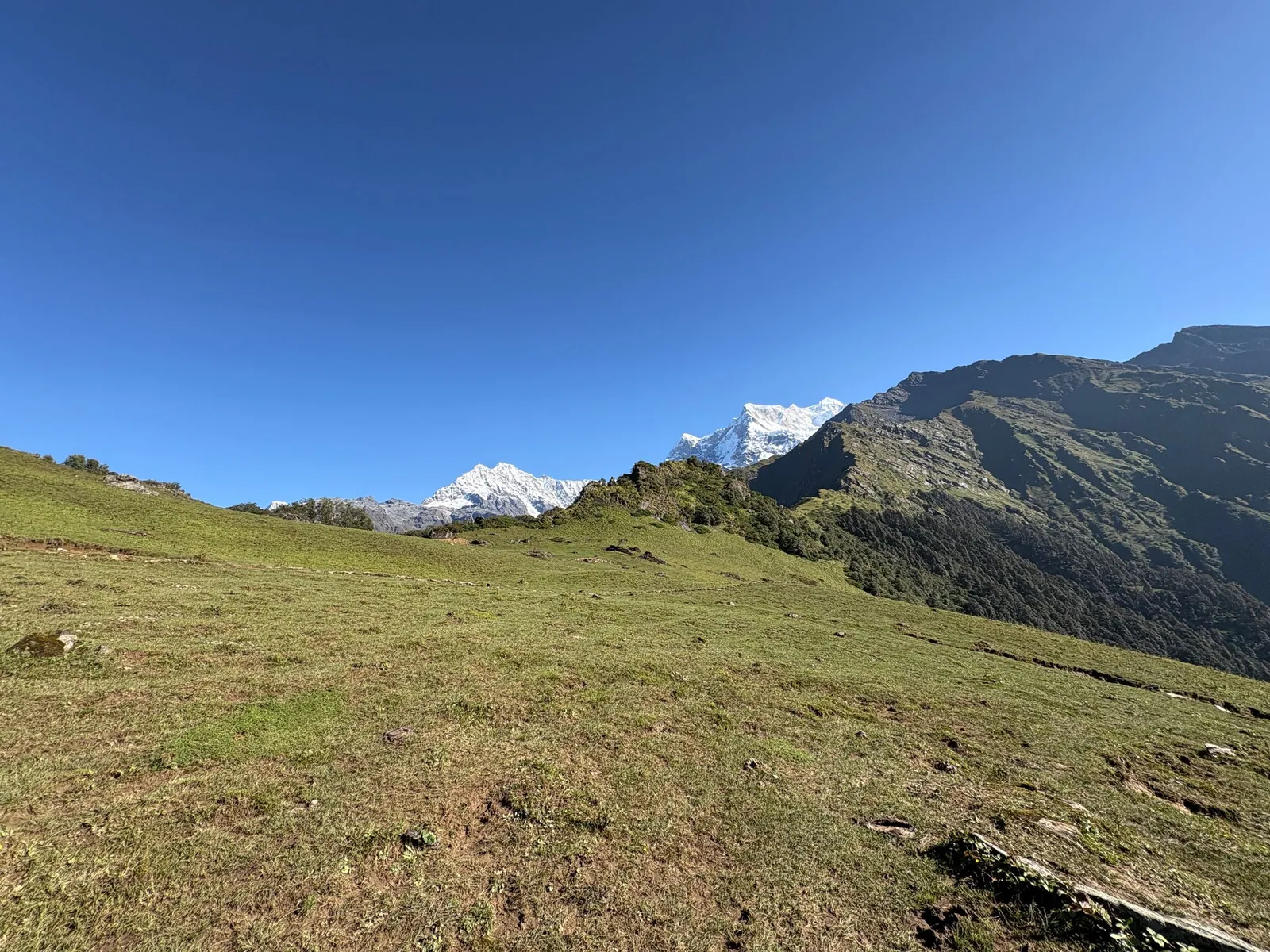
Above the treeline in the Garhwal Himalayas lie the bugyals — vast, rolling alpine meadows that turn emerald green in summer, gold in autumn, and pure white under winter snow. They're some of the most rewarding landscapes in Indian trekking, offering wide-open views without the technical difficulty of a high pass. Here are the bugyals worth building a trek around, and how to pick the right one for your season and fitness level.
The word 'bugyal' comes from the Garhwali language and refers specifically to high-altitude meadows found roughly between 3,000 m and 4,000 m, above where trees stop growing but below the permanent snowline of the higher peaks. Unlike a rocky ridge or a glacier, a bugyal is soft, grassy, open terrain, traditionally grazed by shepherds who moved their flocks up from the valleys each summer as the snow retreated. That pastoral history is part of what makes them special: many bugyals still carry small stone shepherd huts known as chhanis, along with grazing trails worn into the grass over generations, so you're walking through a working landscape rather than an untouched wilderness.
For trekkers, bugyals offer a rare combination: big mountain views without needing technical skill or extreme altitude. Most bugyal treks top out well under 4,000 m, which keeps them within reach of reasonably fit beginners, yet they still deliver 360-degree views of snow peaks like Trishul, Nanda Ghunti, Chaukhamba, and the Gangotri group. Because the terrain is open rather than boxed in by forest or rock walls, the views tend to build gradually through the day instead of being saved for one final push to a summit, which is part of why so many first-time Himalayan trekkers end up choosing a bugyal for their debut.
- Dayara Bugyal (Uttarkashi) — 3,024 m, 4-5 days, one of the largest and most accessible bugyals
- Bedni Bugyal & Ali Bugyal (Chamoli) — 3,354 m / 3,750 m, part of the Roopkund trek route
- Gorson Bugyal (Auli, Chamoli) — 3,056 m, 1-2 days, easiest bugyal to reach
- Chandrashila-Tungnath meadows (Chopta, Rudraprayag) — 3,680 m summit, 2-3 days
- Panwali Kantha (near Kedarnath, Rudraprayag) — 3,200 m, 4-5 days, less crowded
1. Dayara Bugyal — The Classic First Bugyal Trek
Dayara Bugyal is reached via a gentle, gradual ascent through oak and rhododendron forest that opens, almost without warning, into rolling grassland stretching further than most first-time visitors expect. It's one of the largest bugyals in the Garhwal Himalayas, and once you clear the treeline the views of Bandarpoonch and the wider Gangotri range unfold in every direction.
What makes Dayara the classic entry point into bugyal trekking is how forgiving the grading is. The climb through the forest is steady rather than punishing, the trail is well trodden, and the campsites on the meadow are flat and sheltered enough that even a first-time camper sleeps comfortably.
May and June bring the meadow to life with wildflowers and fresh green grass, while December through February buries the same slopes under snow and turns Dayara into one of Uttarakhand's most popular winter treks — the kind of trail where the landscape changes completely between seasons.
- Altitude: ~3,024 m
- Duration: 4–5 days
- Base villages: Barsu or Raithal (Uttarkashi)
- Difficulty: Easy, gradual ascent
- Best season: May–June (green meadow) or Dec–Feb (snow trek)
2. Bedni Bugyal & Ali Bugyal — The Most Scenic Meadow Duo
Bedni Bugyal and the adjoining Ali Bugyal lie in Chamoli district, on the route to Roopkund. Most trekkers experience them as part of a longer Roopkund expedition, though a shorter standalone Bedni Bugyal trek covers the meadows without pushing on to the mystery lake.
This pair of adjoining meadows is often called the most beautiful bugyal landscape in India, and it's easy to see why once you're standing on the open grass with Trishul (7,120 m) and Nanda Ghunti filling the skyline with nothing in between to block the view. Ali Bugyal, being higher and more exposed, gives an especially wide panoramic sweep that feels almost aerial.
At the edge of Bedni's meadow sits Bedni Kund, a small glacial lake considered sacred by local communities and linked to the Nanda Devi Raj Jat pilgrimage — a reminder that these meadows carry cultural weight well beyond their scenery.
- Altitude: Bedni ~3,354 m, Ali ~3,750 m
- Duration: 4–5 days standalone, or 7–8 days as part of Roopkund
- Base: Lohajung (Chamoli district)
- Highlight: Bedni Kund, a sacred glacial lake
3. Gorson Bugyal — The Easiest Bugyal to Reach
Gorson Bugyal sits above Auli, already a well-developed base better known for its ski slopes in winter, which makes Gorson the most convenient bugyal for anyone short on time.
A half-day walk along Auli's forest trail is enough to bring you out into a huge open meadow with clear views of Nanda Devi and Kamet on a good day, though peak winter buries the meadow in snow that makes it a completely different kind of walk. For travellers already headed to Auli for the ropeway or skiing, adding Gorson Bugyal onto the itinerary costs very little extra time for a disproportionately large payoff in views.
- Altitude: ~3,056 m
- Duration: 1–2 days
- Base: Auli (Chamoli district) — ropeway or moderate hike
- Best season: April–June and October–February
4. Chandrashila-Tungnath Meadows — Meadows With a Summit
Chopta, nicknamed the 'mini Switzerland of India' for its rolling green slopes, serves as the base for the walk up to Tungnath and onward to the Chandrashila summit. Unlike most Himalayan routes, it barely passes through dense forest — you're on open meadow for almost the entire climb, so the views open up early and stay with you.
Tungnath itself, sitting among the meadow slopes en route, adds a pilgrimage dimension to what is otherwise a straightforward scenic climb. Push on to Chandrashila's summit and the reward is a genuine 360-degree Himalayan panorama, taking in peaks from the Kedarnath range through to Trishul and Nanda Devi on a clear day. By December the whole trail is under snow, which some trekkers actively seek out for a winter version of the climb.
- Altitude: 3,680 m (Chandrashila summit)
- Duration: 2–3 days
- Base: Chopta, Rudraprayag district
- Highlight: highest Shiva temple in the world (Tungnath)
- Best season: April–June and September–November
5. Panwali Kantha — A Quieter Alternative Near Kedarnath
Panwali Kantha sits near Kedarnath, usually approached from Sari village, and is very often combined with the popular Deoriatal lake, turning it into a longer circuit rather than a there-and-back walk.
What sets Panwali Kantha apart is how much quieter it is than Dayara or Bedni Bugyal, despite offering scenery that's just as impressive. Because it doesn't sit on a headline route like Roopkund, far fewer trekkers make it out here, which means you're more likely to have the meadow largely to yourself — a genuine draw for anyone who wants the same open-grassland experience without the queue of tents.
- Altitude: ~3,200 m
- Duration: 4–5 days
- Base: Sari village (Deoriatal side, Rudraprayag)
- Best season: May–June and September–November
What to Pack for a Bugyal Trek
Packing for a bugyal trek sits somewhere between a standard Himalayan trek kit and something slightly lighter, because you're rarely dealing with technical terrain, but the exposure to wind and weather on open meadow still demands proper layering.
Trekking shoes with ankle support matter more than the gentle gradient might suggest, since grassy slopes get slippery when damp with dew or light rain, and a rolled ankle is one of the more common minor injuries on these trails.
- Base layer + fleece/light down mid layer + windproof-waterproof shell
- Wide-brimmed hat and sunscreen — no shade above the treeline
- Lightweight backpack rain cover (essential in the June–July wildflower window)
- Enough snacks and water for the day — most campsites have no shops past the base village
Fitness and Preparation for a Bugyal Trek
Even though bugyal treks are gentler than most rocky ridge or glacier routes, they still deserve real preparation, because a sustained multi-day walk at altitude is a different physical demand from an occasional weekend hike at sea level. Building a base of cardio fitness in the four to six weeks before you go — brisk walking, jogging, stair climbing, or cycling a few times a week — makes a genuine difference to how much you enjoy the trek rather than merely survive it.
Altitude is the other variable worth respecting even on treks that stay under 4,000 m. Most bugyal treks are graded easy to moderate specifically because the altitude gain is gradual, but mild symptoms like headache or breathlessness are still possible for anyone, and the right response is always to slow down, hydrate, and let your body adjust rather than push through.
Drinking more water than feels necessary, avoiding alcohol the night before a big ascent, and eating properly even when appetite drops at altitude are small habits that meaningfully reduce how rough those first couple of days at height feel. None of this should be intimidating — bugyal treks remain some of the most forgiving multi-day Himalayan routes available.
Why Bugyals Are Worth Trekking To
Bugyals offer a genuinely different kind of Himalayan experience compared to summit or high-pass treks. Because the terrain is open and rolling rather than a single ridge leading to one viewpoint, the views build gradually and stay with you for most of the trek instead of being reserved for a final push.
- Gentler gradients than rocky ridge treks — approachable for beginners and families
- Alpine wildflower blooms through June–July, in miniature echo of Valley of Flowers
- Rich birdlife and small mammals thriving in open grassland
- Cultural layer: grazing trails, shepherd huts, and legends like the Nanda Devi Raj Jat
Frequently Asked Questions
Ready to Trek to a Bugyal?
Find upcoming Dayara Bugyal, Bedni-Ali Bugyal, and Chandrashila batches, and connect with verified trek organisers on TrekVerse.
Explore TreksBugyal Trekking Tips and Etiquette
Bugyals are fragile grassland ecosystems, and a few practices matter more here than they would on a rocky trail.
- Camp only in designated campsites — repeated camping on open grass compacts soil and kills vegetation
- Carry all litter back down; there's no waste collection at altitude
- Avoid open fires on the meadow — use a stove instead
- Pack proper layers even in summer; temperatures drop sharply once the sun sets above the treeline
- Check the season carefully — a green-meadow trek in May looks nothing like the same trail under snow in January
Plan Your Himalayan Meadow Trek
Continue your Himalayan trip research with these guides: